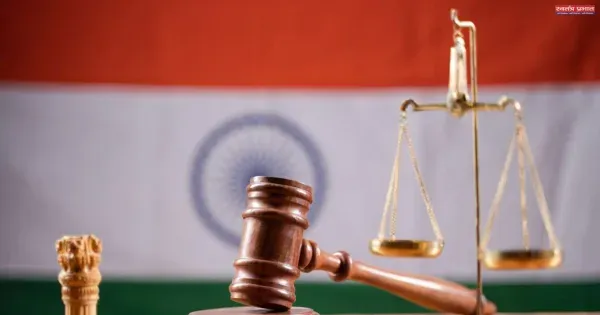
Bureau Prayagraj. The Delhi High Court on Monday rejected the petitions filed by Aam Aadmi Party chief Arvind Kejriwal and other accused seeking removal of Justice Swarn Kanta Sharma from hearing the liquor policy case. Justice Swarn Kanta Sharma remarked that just because his children are panel lawyers of the Central Government, it cannot be assumed that they have any prejudice against Kejriwal. The judge further said that no politician can be allowed to assess judicial competence.
“The competence of a judge is decided by the High Court, not by a litigant… A politician cannot be allowed to overstep his bounds and judge judicial competence… A litigant may not always be successful, and only the High Court can decide whether a decision is wrong or one-sided. A decision of a District Court can be upheld by the High Court. The same applies to the High Court, whose decisions are reviewed by the Supreme Court. The general apprehension of the litigant that perhaps it The court not granting him relief cannot be a basis for accusing the judge of bias.”
Justice Sharma further said that no judge can step back from his judicial responsibility when faced with allegations. This kind of threat will not only reach the High Courts but will also reach the District Courts… If this court, by giving its decision to withdraw from the hearing, gives the message that it can do so under the pressure of a litigant, then it will create an impression in the public mind that the judges work in favor of some political party…”
The judge further said that the “story” created in the pleas for withdrawal from the hearing was found to be entirely based on “speculation”. Furthermore, the motion to withdraw from the hearing did not present any evidence, but merely expressed “aspersions, innuendos and doubts” about the judge’s honesty and impartiality.
She said, “Had I accepted these petitions, it would have set a disturbing precedent. Now it becomes my solemn duty to respond without fear. Unfortunately, today I have to resolve not a dispute between two litigants, but a dispute between a litigant and me—a judge.
-
UK Set to Implement Groundbreaking Anti-Smoking Legislation

-
Morrisons to close UK branch as supermarket giant confirms 'difficult decision'

-
US nuclear chief 'escorted out Pentagon' as probe launched into 'sensitive leak'

-
Heartbreaking truth behind Jimmy Bullard's sudden I'm a Celeb exit revealed

-
Michael Jackson movie biopic Part 2 release date teased by studio