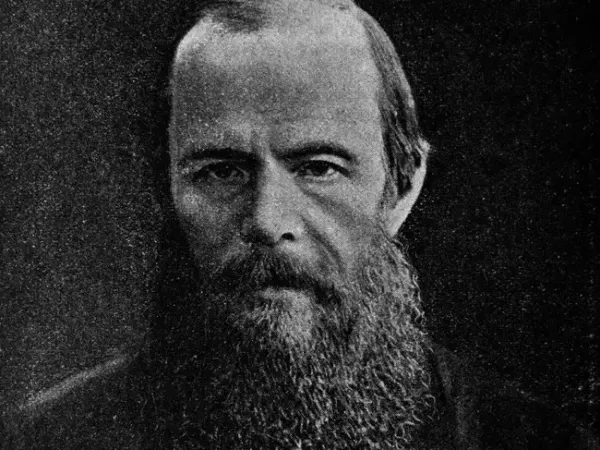
Fyodor Dostoevsky was one of the most influential Russian thinkers of the 19th century. He is best known for his powerful novels that explore human psychology, virtue, sin and faith. Dostoevsky, although a novelist, can also be attributed as a philosopher who is widely regarded as a pioneer of psychological fiction and existential thought, known for delving into the deepest and often darkest corners of the human mind. His writings, shared as daily reflections, continue to find relevance across generations, not for comfort but because they speak directly to emotional struggle, self-awareness, and moral conflict, rooted in honesty
One of the quotes attributed to Fyodor Dostoevsky talks about how people can be controlled most effectively when they are unaware of the limitations placed on them, whether by society, systems, or even their own beliefs. It goes like this, ‘The best way to keep a prisoner from escaping is to make sure he never knows he is in prison.
Quote of the day by Fyodor Dostoevsky: Invisible limits
Fyodor Dostoevsky reflects on a subtle but powerful form of control, one that does not rely on force but on lack of awareness. The idea suggests that when individuals do not recognise the boundaries influencing their thoughts and choices, those boundaries become almost impossible to challenge. In real life, this can be seen in the way societal expectations, cultural norms, and internalised beliefs quietly shape decisions. People may follow certain life paths, adopt specific roles, or suppress their true preferences simply because they have been conditioned to do so over time.
Since these influences feel natural, they rarely invite scrutiny. This creates a situation where limitations exist, yet remain unquestioned, allowing them to persist across generations. Whether it is career choices driven by societal approval, fear of judgment holding someone back, or self-doubt restricting ambition, the absence of awareness becomes a barrier in itself. The thought ultimately underlines that recognising these unseen influences is the first step toward reclaiming control. Without that realisation, individuals may continue to operate within invisible boundaries, believing they are acting freely while their choices are quietly being shaped by forces they have never paused to examine.
Fyodor Dostoevsky quote of the day: Comfort of familiarity
Another layer of Fyodor Dostoevsky’s idea lies in how familiarity can quietly anchor people to situations that may not serve them. When routines, environments, and relationships become deeply ingrained, they begin to feel safe, even if they are limiting or unfulfilling. In everyday life, many individuals stay in jobs that no longer inspire them, maintain relationships that lack growth, or follow routines that offer little sense of purpose. This is not always due to a lack of opportunity, but often because stepping into the unknown feels far more daunting than staying where things are predictable.
Over time, comfort can blur the line between contentment and stagnation. People may convince themselves that things are ‘good enough’, avoiding the discomfort that comes with change or self-reflection. The familiarity of a situation can create a false sense of security, making it harder to question whether something better exists beyond it. This perspective highlights how growth often requires disruption, a willingness to confront discomfort and reassess long-held patterns. It serves as a reminder that while familiarity can offer stability, it can also limit potential when it discourages individuals from exploring new paths or imagining a different way of living.
More about Fyodor Dostoevsky
Fyodor Dostoevsky, born on November 11, 1821, in Moscow, had a difficult life. After studying engineering, he turned to writing. His early success came after his first novel, Poor Folk, but the fame was interrupted when he was arrested for involvement in a political discussion group. In 1849, Dostoevsky was sentenced to death, only to be pardoned at the last moment. Instead, he spent 4 years in a Siberian prison camp. This harsh experience shaped his worldview, pushing him to explore themes of suffering, redemption, and faith in his later works.
Fyodor Dostoevsky wrote several masterpieces that continue to influence readers today, mainly due to the complex characters. His novel 'Crime and Punishment' dives deep into guilt and moral conflict through the character Raskolnikov. Another major work, 'The Brothers Karamazov', explores faith, doubt, and family relationships. His book 'Notes from Underground' is considered one of the first existentialist texts. His ideas later influenced major philosophers like Friedrich Nietzsche and Jean-Paul Sartre. Dostoevsky passed away in 1881.