
Listen to this article in summarized format
Loading...
××
Subscribe to

Unlock AI Briefing and Premium Content
New Year Offer 24 Hours Left
Subscribe NowAlready a member? Sign In
What's Included
- Exclusive Stories
- Daily ePaper Access
- Smart Market Tools
- Curated Investment Ideas
- Ad-lite Experience
Subscription

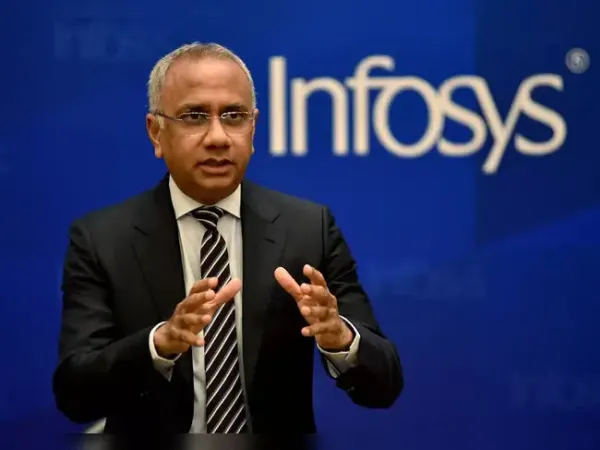
The board of Infosys Technologies is expected to discuss leadership transition, two sources aware of the development told ET, as incumbent chief executive Salil Parekh (61) is unlikely to receive a third five-year term due to the superannuation norms at India’s second-largest software exporter by market value. The board is scheduled to meet on Thursday to announce fourth-quarter FY26 earnings.
Parekh’s current five-year term as chief executive ends in March 2027, and he would likely receive an extension of two years, one of the sources cited above told ET.
The normal retirement age at Infosys is 60. “I don’t think there can be more than a two-year extension. The extension will be used to run and manage a succession plan,” said the source cited immediately above. “Parekh’s term was very stable and the company wants to avoid the kind of management upheaval that came with previous CEO changes.” The market capitalisation of Infosys, currently at Rs 5.44 lakh crore, has surged more than two and a half times under Parekh’s watch.
Chairman’s role
This is despite the recent AI-spawned weakness in the valuations of tech services companies. From Rs 520 apiece on the last trading day in 2017, the stock has climbed to Rs 1,314.50 apiece on the National Stock Exchange. The stock's all-time high was around Rs 2,000 apiece in December 2024.
Parekh formally took office on January 2, 2018.
Recent media reports said Parekh could assume the chairman’s role after his truncated third term as the chief executive ends, but ET could not independently verify that report.
“I do not think even Parekh is interested in a full third term. He would be nearly 68 by the time it ends. But he is extremely focused on avoiding disruption to the company,” the second source told ET.
Parekh’s latest employment contract with Infosys, signed in 2022 when his second term at the helm began, says he would ‘retire from the company on March 31, 2027’.
He has already passed the retirement age stated in the first employment agreement signed in 2017.
Extensions
“However, the Executive (Parekh) will retire upon reaching the age of sixty (60), unless the company agrees to continue to employ the Executive,” the 2017 agreement stated.
Parekh and Infosys Chairman Nandan Nilekani did not respond to messages seeking their comments on a clarification sent on Monday. Infosys, which is in its silent period ahead of Q4 earnings, did not respond to ET’s email seeking comments.
A smooth management change is crucial for Infosys, as it already faces AI-spawned disruptions that have caused stock valuations to fall more than a quarter from their peaks.
In 2014, when founder NR Narayana Murthy returned to the company, Infosys lost a slew of top talent, as it was clear the company was looking for an external executive. When Vishal Sikka joined the company, his induction of top officials from Silicon Valley also resulted in the exodus of talent at Infosys.
“Parekh’s tenure brought a lot of stability to Infosys. He worked with Nilekani very closely to deal with the overhang of the Sikka years. Keeping that stability is important for everyone,” a second source told ET.
Infosys’ management change is being closely watched across the industry and by investors. In meetings with 30 Asian Investors, including hedge funds and other institutions, brokerage BNP Paribas said this issue was at the top of mind when it came to investing in Infosys shares.
“The winding down of the Daimler deal and potential CEO transition are some of the key concerns investors had on Infosys,” Kumar Rakesh, analyst, BNP Paribas, said in a recent IT sector report.
Parekh’s current five-year term as chief executive ends in March 2027, and he would likely receive an extension of two years, one of the sources cited above told ET.
The normal retirement age at Infosys is 60. “I don’t think there can be more than a two-year extension. The extension will be used to run and manage a succession plan,” said the source cited immediately above. “Parekh’s term was very stable and the company wants to avoid the kind of management upheaval that came with previous CEO changes.” The market capitalisation of Infosys, currently at Rs 5.44 lakh crore, has surged more than two and a half times under Parekh’s watch.
Chairman’s role
This is despite the recent AI-spawned weakness in the valuations of tech services companies. From Rs 520 apiece on the last trading day in 2017, the stock has climbed to Rs 1,314.50 apiece on the National Stock Exchange. The stock's all-time high was around Rs 2,000 apiece in December 2024.
Parekh formally took office on January 2, 2018.
Recent media reports said Parekh could assume the chairman’s role after his truncated third term as the chief executive ends, but ET could not independently verify that report.
“I do not think even Parekh is interested in a full third term. He would be nearly 68 by the time it ends. But he is extremely focused on avoiding disruption to the company,” the second source told ET.
Parekh’s latest employment contract with Infosys, signed in 2022 when his second term at the helm began, says he would ‘retire from the company on March 31, 2027’.
He has already passed the retirement age stated in the first employment agreement signed in 2017.
Extensions
“However, the Executive (Parekh) will retire upon reaching the age of sixty (60), unless the company agrees to continue to employ the Executive,” the 2017 agreement stated.
Parekh and Infosys Chairman Nandan Nilekani did not respond to messages seeking their comments on a clarification sent on Monday. Infosys, which is in its silent period ahead of Q4 earnings, did not respond to ET’s email seeking comments.
A smooth management change is crucial for Infosys, as it already faces AI-spawned disruptions that have caused stock valuations to fall more than a quarter from their peaks.
In 2014, when founder NR Narayana Murthy returned to the company, Infosys lost a slew of top talent, as it was clear the company was looking for an external executive. When Vishal Sikka joined the company, his induction of top officials from Silicon Valley also resulted in the exodus of talent at Infosys.
“Parekh’s tenure brought a lot of stability to Infosys. He worked with Nilekani very closely to deal with the overhang of the Sikka years. Keeping that stability is important for everyone,” a second source told ET.
Infosys’ management change is being closely watched across the industry and by investors. In meetings with 30 Asian Investors, including hedge funds and other institutions, brokerage BNP Paribas said this issue was at the top of mind when it came to investing in Infosys shares.
“The winding down of the Daimler deal and potential CEO transition are some of the key concerns investors had on Infosys,” Kumar Rakesh, analyst, BNP Paribas, said in a recent IT sector report.