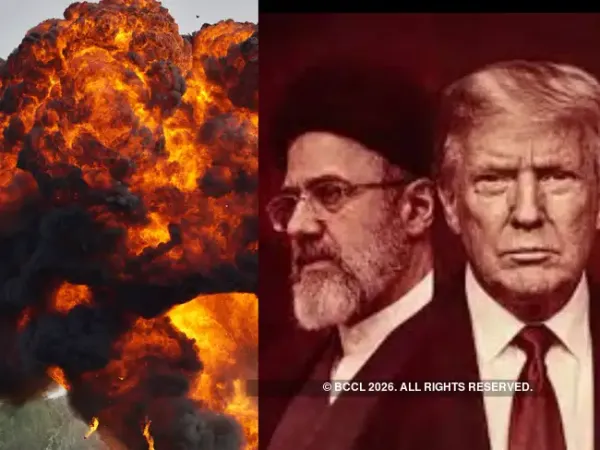
As the US-Iran war 2026 entered day 54, US President Donald Trump announced an indefinite extension of the ceasefire with Iran to allow more time for diplomacy, even as uncertainty looms over whether Tehran or US ally Benjamin Netanyahu will agree to the move. The development comes amid escalating Middle East conflict, fragile Iran peace talks, and ongoing disruption to global energy markets.
With the Iran war 2026, US naval blockade, and Strait of Hormuz tensions continuing, the ceasefire extension has created only a temporary pause in hostilities. Key questions remain over whether meaningful negotiations will resume or if the conflict will escalate further.
Here's what we know so far:
US-Iran ceasefire
US naval blockade continued
Read more: Tehran received signs indicating US ready to end naval blockade, says Iraian envoy to UN Iravani
Pakistan mediation and uncertain peace talks
Read more: Strait of Hormuz open or closed? Trump has a warning for Iran if deal with US fails
US-Iran war impact: Civilian deaths, displacement and global oil crisis
Trump’s mixed signals
Nuclear tensions and key sticking points
With the Iran war 2026, US naval blockade, and Strait of Hormuz tensions continuing, the ceasefire extension has created only a temporary pause in hostilities. Key questions remain over whether meaningful negotiations will resume or if the conflict will escalate further.
Here's what we know so far:
US-Iran ceasefire
- In a statement posted on social media, Trump said the decision followed mediation efforts led by Pakistan, which has been hosting negotiations in Islamabad.
- “We have agreed to hold our attack on the Country of Iran until such time as their leaders and representatives can come up with a unified proposal… and discussions are concluded, one way or the other,” Trump said.
US naval blockade continued
- Despite extending the Iran ceasefire extension 2026, Trump confirmed that the US naval blockade on Iran would remain in place, targeting Iranian trade and oil shipments, a move Tehran considers an act of war.
- The dual approach of diplomacy and pressure underscores the ongoing US-Iran tensions, with Washington maintaining strategic leverage while signalling openness to negotiations.
- However, early reactions from Tehran suggest scepticism. Iran-affiliated Tasnim News Agency reported that Iran had not requested any ceasefire extension and reiterated threats to break the blockade if necessary.
- Advisers to Iranian leadership also dismissed Trump’s announcement as lacking credibility.
Read more: Tehran received signs indicating US ready to end naval blockade, says Iraian envoy to UN Iravani
Pakistan mediation and uncertain peace talks
- Pakistan’s leadership continues to play a key role in facilitating US-Iran peace talks in Islamabad, aiming to end a conflict that has killed thousands and destabilised the global economy.
- However, the next round of talks remains uncertain. US Vice President JD Vance has delayed his planned visit to Islamabad, signalling potential diplomatic hurdles.
- Before the announcement, Iranian officials indicated willingness to negotiate only if the US abandons its “pressure and threats” approach, rejecting any deal perceived as forced surrender.
Read more: Strait of Hormuz open or closed? Trump has a warning for Iran if deal with US fails
US-Iran war impact: Civilian deaths, displacement and global oil crisis
- The conflict, which began on February 28 with US and Israeli airstrikes on Iran, has expanded across the region, including Lebanon, where Hezbollah joined the fighting.
- According to estimates, more than 5,000 civilians have been killed, with hundreds of thousands displaced, particularly in Iran and Lebanon. The war has also triggered a major Strait of Hormuz crisis, disrupting one of the world’s most vital oil routes between Iran and Oman.
- The near closure of the Strait has intensified global oil price volatility, raised fears of recession, and highlighted risks to global energy security.
Trump’s mixed signals
- Trump’s rhetoric throughout the conflict has fluctuated sharply between diplomacy and escalation. While extending the ceasefire, he has also issued strong warnings about possible military action.
- In a recent statement, he doubled down on maintaining pressure: “Lifting the blockade would undermine any chance of a deal… unless we blow up the rest of their Country, their leaders included.”
- Earlier, Trump had threatened strikes on Iranian infrastructure, including power plants and bridges, comments criticised by António Guterres, who warned that targeting civilian infrastructure violates international humanitarian law.
Nuclear tensions and key sticking points
- A central issue in the stalled negotiations remains Iran’s nuclear programme.
- The US has pushed for restrictions on Iran’s stockpile of highly enriched uranium, aiming to prevent potential weaponisation.
- Iran, however, maintains that its programme is for peaceful purposes and asserts its rights under international agreements.