
BusinessWire India
Mumbai (Maharashtra) [India], April 22: The Federation of Indian Manpower Companies has called for an urgent strategic overhaul of India's overseas employment ecosystem, highlighting that recent geopolitical disruptions in West Asia have led to significant job losses among Indian workers and exposed the absence of a structured system to rapidly redeploy displaced talent into new global markets.
In a policy note released by the organisation, FIMCA stated that while India possesses a large and skilled workforce with strong global demand, the current framework remains overly focused on emigration clearance and compliance, limiting its ability to respond dynamically to global labour market disruptions.
"India has the talent, the demand, and the recruitment capability. What is missing is a coordinated, promotion-led system that actively builds and sustains global labour markets," said Alijan Rajan, Director, FIMCA.
FIMCA noted that the current situation underscores the urgent need to build scalable, demand-linked international employment pipelines to absorb workforce displacement and prevent prolonged income disruption for returning workers.
Shift from Regulation to Global Market Development
FIMCA emphasized that India must transition from a regulatory approach to a promotion-driven model, where overseas employment is treated as a strategic export sector supported by structured government and industry collaboration.
The organisation called for the integration of labour mobility into bilateral trade frameworks, proactive international outreach, and sustained engagement with foreign employers to create long-term manpower demand pipelines. According to FIMCA, global labour markets are actively developed through continuous state and industry participation, rather than passive regulation.
Strengthening Employer-Side Accountability
The policy note identified structural limitations in the current system, particularly the continued reliance on worker-side classifications such as ECR and ECNR passports, which FIMCA described as outdated in assessing risk.
Instead, the organisation recommended a shift toward employer-side accountability, including robust foreign employer accreditation mechanisms covering verification, wage validation, working conditions, and enforceable grievance redressal systems. This becomes especially critical in emerging markets across Eastern Europe, CIS, and the Balkans.
Mobility Corridors and Market Development Mechanism
FIMCA proposed the creation of sector-specific mobility corridors to operationalise existing labour mobility agreements. These corridors would be built around pre-approved employers, standardised contracts, defined skill requirements, and structured welfare provisions.
The organisation also recommended establishing an Overseas Labour Market Development Cell to systematically map global labour demand, build verified employer databases, conduct international outreach, and convert diplomatic engagement into employment pipelines.
Leveraging Industry and Institutional Capacity
FIMCA highlighted that India's licensed recruitment agencies already represent a strong execution backbone and should be formally integrated into policy implementation.
The organisation recommended empanelment of compliant agencies, their inclusion in government-led delegations, and streamlined operational processes under platforms such as the eMigrate system.
It also called for alignment of skill development initiatives with global demand through institutions such as the National Skill Development Corporation, ensuring demand-linked training and verifiable certification standards.
Strengthening Worker Support and Data Systems
FIMCA identified post-deployment support as a critical gap and proposed the establishment of Overseas Worker Support Desks in priority Indian missions abroad to handle grievances, wage disputes, and emergency assistance.
The organisation further recommended upgrading the eMigrate platform into a comprehensive labour mobility intelligence system to enable real-time data tracking, policy coordination, and informed decision-making.
Industry Position
FIMCA reiterated that India already has the foundational infrastructure--including bilateral agreements, institutional frameworks, and a licensed recruitment network--but lacks coordinated execution and strategic direction.
The organisation stressed that without a shift toward promotion-led policy, employer accountability, and structured market development, India risks underutilising its global workforce potential at a time when international demand remains strong.
Further details of the policy note can be accessed here:
https://fimca.in/images/pdf/from-clearance-to-competitiveness-rebuilding-india-global-workforce-strategy.pdf
(ADVERTORIAL DISCLAIMER: The above press release has been provided by BusinessWire India. ANI will not be responsible in any way for the content of the same)
-
2006 Malegaon blasts case hits dead end; HC raps NIA for ignoring evidence

-
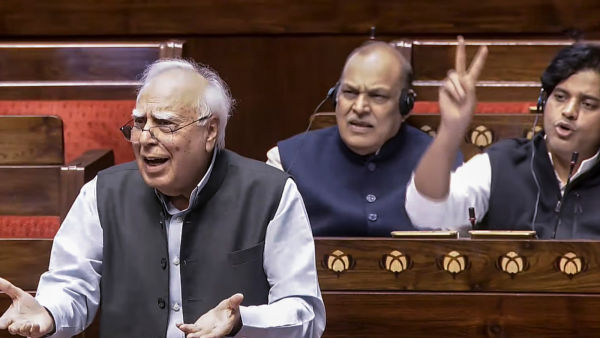
Why have an election: Kapil Sibal slams EC, Gyanesh Kumar
-
Karnataka govt cancels homestay’s licence after US tourist sexual assault

-
India tough nut to crack: US representative as trade talks wrap up

-
Who was Divyanka Sirohi? Haryanvi actress dies suddenly at 30