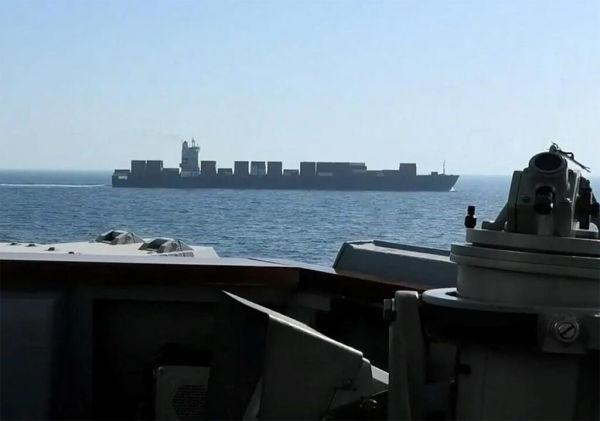
Iran has escalated tensions in the Middle East after opening fire on at least two container ships in the strategically crucial Strait of Hormuz, raising fresh concerns over global trade and energy security. The attacks come at a time when ceasefire talks have failed to materialise, further intensifying the ongoing Iran Strait of Hormuz attack.
According to the United Kingdom Maritime Trade Operations (UKMTO), the first ship was targeted around 7:55 AM when Iranian gunboats reportedly opened fire without issuing any prior warning. The vessel sustained damage, but authorities confirmed that no crew members were injured and there was no environmental impact.
Shortly after, a second cargo ship reported that it had also been fired upon and forced to stop in the water. However, it escaped without any visible damage. These back-to-back incidents have heightened concerns around maritime safety in one of the world’s busiest oil transit routes, marking a serious escalation in the Iran Strait of Hormuz attack.
Ceasefire Uncertainty Fuels Tensions
The Iran Strait of Hormuz attack came just hours after US President Donald Trump announced an “indefinite” extension of the US-Iran ceasefire, stating that Washington was waiting for a “unified proposal” from Tehran. However, Iran has not yet responded to the announcement, leaving the situation uncertain.
Both nations have warned that they are prepared to resume hostilities if negotiations fail, adding to fears that the Iran Strait of Hormuz attack could trigger a broader conflict. The situation has already been tense following recent US actions, including the seizure of an Iranian-linked container ship and the boarding of an oil tanker tied to Iran’s oil trade in the Indian Ocean.
Iran Defends Its Actions
Iran’s semi-official Fars and Tasnim news agencies confirmed the incidents, with Fars claiming that Iran was “lawfully enforcing” its control over the Strait of Hormuz. The narrow waterway is critical to global energy supply, with nearly 20 per cent of the world’s crude oil passing through it.
This justification has further intensified the Iran Strait of Hormuz attack narrative, as global powers closely monitor the region for any signs of escalation. Analysts warn that continued disruptions could impact oil prices and international trade.
What Happens Next
With ceasefire talks stalled and military actions increasing, the Iran Strait of Hormuz attack signals a fragile and volatile phase in the region. Any further escalation could have far-reaching consequences, not just politically but economically as well.
FAQs
Q: What is the Iran Strait of Hormuz attack?
A: The Iran Strait of Hormuz attack refers to Iran firing on commercial ships in the key global oil route, escalating regional tensions.
Q: Why is the Iran Strait of Hormuz attack significant?
A: It threatens global oil supply routes and increases the risk of wider geopolitical conflict.
Q: Were ships damaged in the Iran Strait of Hormuz attack?
A: One ship was damaged, while another reported no visible damage. No casualties were reported.
Q: What caused the Iran Strait of Hormuz attack?
A: The attack follows failed ceasefire talks and rising tensions between the US and Iran.
-
RGI orders village-wise mapping of vulnerable areas to ensure fair Census

-
Meet Alan Sindhu Dinsha, Kerala youth who built AI-powered armour for paralysed patients moved by his father's condition

-
One person diagnosed with cancer every 80 seconds in UK, report reveals

-
Is Karl-Anthony Towns playing tonight? New York Knicks star cleared after elbow injury ahead of Atlanta Hawks clash

-
"I can't afford to pay": Dwyane Wade's wife Gabrielle Union opens up about financial strain despite massive combined net worth with the NBA legend