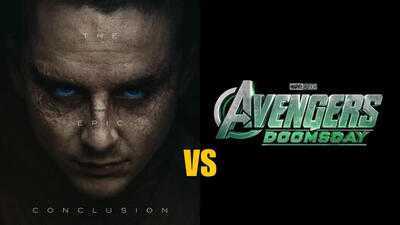
A Clash of Titans: Marvel vs. Dune
Marvel’s Avengers Doomsday and Dune Part Three are set to premiere on the same date, December 18. This release, dubbed Dunesday, is shaping up to be one of the most intriguing competitive moments in Hollywood in recent years. However, this rivalry reveals deeper issues regarding the shifting landscape of cinematic power, premium formats, and a potentially misguided strategy that may not resonate well in one of Marvel’s key markets – India. Central to this discussion is Disney’s newly launched Infinity Vision concept, an ambitious last-minute innovation that highlights the studio's reactive approach after losing a significant advantage in IMAX screenings.
Marvel's IMAX Setback
The conflict initiated when Denis Villeneuve's Dune: Part Three, featuring Timothée Chalamet and Zendaya, obtained an exclusive IMAX screening window for its release. This effectively barred Avengers Doomsday from utilizing this format during its critical opening weeks. Reports indicate that Dune Part Three will dominate IMAX screens for up to three weeks, leaving Marvel’s film without access to one of its most profitable formats. This is a significant setback, as IMAX screenings are known to substantially enhance box office earnings due to higher ticket prices and an exceptional viewing experience. For a film of Marvel’s magnitude, losing the opportunity for IMAX showcasing is akin to a premium format missing out during its peak earning period. The rationale behind this decision is equally revealing. Dune: Part Three was filmed extensively with IMAX cameras, making it a natural fit for the format and a higher technical priority from a practical standpoint. This indicates that IMAX prioritized spectacle authenticity over franchise dominance, resulting in a loss for Marvel and Disney.
Infinity Vision: A Reactive Strategy?
In response, Disney and Marvel launched Infinity Vision, a new certification system aimed at identifying high-quality “Premium Large Format” (PLF) theaters. This is significant because Infinity Vision is not a new projection technology; rather, it serves as a branding label for existing cinemas that meet specific criteria such as large screens, laser projection, and premium audio. This initiative was officially announced at CinemaCon 2026 and is positioned as Marvel and Disney’s counter to IMAX – an effort to assure fans that they can still enjoy Avengers Doomsday in a premium viewing setting. While it appears to be a clever workaround, it also presents a challenge. Infinity Vision is not a distinct format; it is merely a certification. Unlike IMAX, which employs patented cameras, projection systems, and standardized screen dimensions (1.43:1 aspect ratio), Infinity Vision lacks a unique identity and is simply a seal of approval for existing theaters.
The Importance of Distinction and the Indian Market
This distinction is crucial because IMAX offers a clearly defined, globally recognized experience. Conversely, Infinity Vision remains ambiguous. It could encompass Dolby Cinema, laser projection systems, or other PLF setups, but without a consistent identity. For Indian audiences, this ambiguity may lead to confusion rather than excitement. India is one of Marvel’s largest international markets, with films like Avengers: Endgame and Spider-Man: No Way Home performing exceptionally well, partly due to premium formats like IMAX. However, Infinity Vision faces a significant hurdle: there are currently no Infinity Vision-certified theaters in India.
While Disney claims that hundreds of theaters worldwide may qualify for certification, the reality is that the rollout is still limited and uneven. In India, the premium cinema landscape is dominated by IMAX, Dolby Cinema, and proprietary large-screen formats from chains like PVR and INOX, leaving Infinity Vision without an established presence. Additionally, it lacks marketing visibility and consumer awareness in the country, rendering it effectively invisible to Indian audiences.
Challenges of Infinity Vision in India
The challenges facing Infinity Vision in India stem from several factors. Without infrastructure, there can be no impact. A premium format can only thrive if audiences have access to it. Without Infinity Vision-certified theaters in India, the initiative becomes irrelevant for local viewers. In contrast, IMAX has a recognizable presence in major Indian cities and will likely serve as a significant draw for Dune: Part Three.
Brand recognition is another issue affecting the format. IMAX is already a trusted name globally, and audiences know what to expect. In contrast, Infinity Vision is new and undefined. For Indian viewers familiar with IMAX and Dolby, this lack of clarity diminishes the value proposition as the release of Doomsday approaches. Furthermore, competition exists in India through IMAX, Dolby Cinema, 4DX, and local PLF screens. Infinity Vision does not introduce anything fundamentally new and merely rebrands existing capabilities, making it ineffective in a market that already offers similar or superior experiences. Lastly, premium formats justify higher ticket prices through clear quality upgrades. If Infinity Vision is merely a certification layered on existing theaters, it risks raising prices without providing a noticeably different experience, which could lead to backlash in price-sensitive markets like India, where audiences are already selective about premium upgrades.
Marvel's Broader Strategic Issues and Screenmaxxing
For years, Marvel has dominated premium formats, often securing IMAX screens by default. The fact that Dune: Part Three has surpassed Avengers Doomsday in this arena indicates a shift in industry dynamics. Does the rollout of Infinity Vision highlight a larger issue regarding Marvel’s changing status in the cinematic hierarchy?
The introduction of Infinity Vision is also part of a broader Hollywood trend known as “screenmaxxing” – the race to create increasingly premium viewing experiences. Studios are focusing on large format technologies to entice audiences back to theaters, leading to a fragmented landscape filled with competing formats and branding. For Indian audiences, this creates confusion: What distinguishes IMAX from Infinity Vision? Is it worth the extra cost? Moreover, is it even available?
The Future of Dune Part Three and Avengers Doomsday in India
Dune: Part Three benefits from IMAX buzz and premium positioning, while Avengers Doomsday relies on standard PLF formats. Currently, Infinity Vision has minimal impact in India. In practical terms, Indian audiences will likely experience Avengers Doomsday similarly to any other Marvel film, but not in IMAX. Infinity Vision may assist Marvel in recovering losses in markets where premium formats are available and adaptable. However, in India, the real issue is not the absence of a new certification but rather the lack of IMAX screens. No amount of rebranding can substitute for that. In India, Infinity Vision appears less like a groundbreaking innovation and more like a corporate workaround that may work in theory but struggles in practice. For the Indian audience, it is not the future; for now, it is a non-factor.
-
What Surprises Await in Salem? Major Character Returns Shake Up the Daytime Drama!

-
India Ranks Among Top Four in Wind Energy Production on Earth Day

-
Ishan Kishan's Captaincy Under Scrutiny as SRH Eyes Pat Cummins' Return

-
Amjad Khan's Unique Love for Tea: A Behind-the-Scenes Story

-
What Happened in the Strait of Hormuz? Iranian Forces Target Commercial Vessels