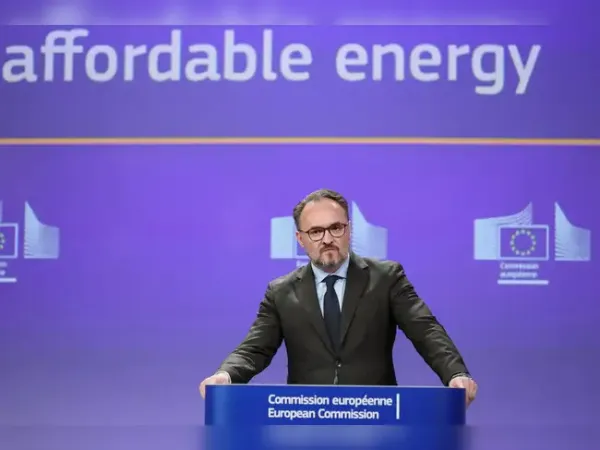
European Union Energy and Housing Commissioner Dan Jørgensen has warned that Europe is staring at years of elevated energy prices even in the most optimistic scenario, as the Iran conflict continues to batter global energy markets and damage critical gas infrastructure across the Gulf.
"Even if peace is declared tomorrow, we are facing weeks, months, and even years of difficulties when it comes to energy prices," EU’s energy commissioner said during a press conference on the Iran crisis and its impact on Europe’s energy security.
Also Read: Trump signals 'possible' Iran talks within 36-72 hours as maritime tensions escalate in Hormuz
At the heart of the Commissioner's concern is the extent of destruction to natural gas infrastructure in Qatar, which he said could take years to fully recover, keeping prices structurally elevated. While oil markets may stabilise more quickly, Jørgensen cautioned that even brief disruptions could prove catastrophic for specific fuel categories.
"Just a few weeks can be crucial if we run out of jet fuel or diesel, or face supply problems," he warned.
QatarEnergy declared force majeure on its contracts last month and is still quantifying its losses, while the de facto closure of the Strait of Hormuz has stranded much of the Gulf's LNG supply and left Asian buyers outbidding European purchasers for spot cargoes.
Jørgensen ruled out any return to Russian energy imports, even in the event of a Ukraine peace deal. "We should never repeat the mistake of putting our economic destiny and our welfare in the hands of our enemy," he said, referring to Vladimir Putin.
Also Read: Iran tankers laden with crude go dark to sail past US blockade
On the question of short-term relief measures, he pushed back against fuel tax cuts that several EU member states have already implemented, arguing they would worsen the situation. "In a situation of scarcity, the goal should be to reduce consumption, not increase it," Jørgensen said, adding that the European Commission would instead propose a menu of demand-reduction options, leaving implementation to individual member states.
The crisis, he argued, should function as a structural turning point. "This must be a major wake-up call. It must show us that the transition to renewable energy sources is absolutely necessary," Jørgensen said.