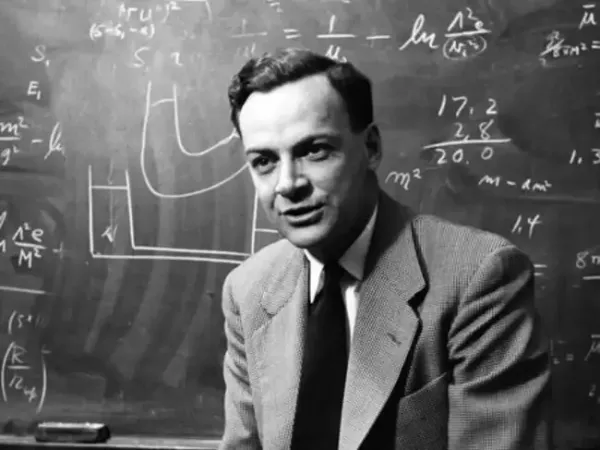
In a time where degrees, titles and long resumes often get seen as proof that someone is smart, this quote by Richard Feynman still manages to cut through that belief in a very simple way. Feynman, who spent years inside top institutions and worked with some of the sharpest minds in science, had seen up close how knowledge on paper and actual thinking ability do not always match.
The quote of the day goes: “Never confuse education with intelligence, you can have a PhD and still be an idiot.”
He believed that a person can go through years of formal study, collect impressive titles, and still fail to apply basic reasoning or common sense. In his view, education can sharpen a sharp mind, but it can also simply give more tools to someone who doesn’t think deeply. That is why the quote feels a bit uncomfortable, it calls out something many people quietly notice but rarely say.
Even now, the line holds up because the gap between qualification and capability is visible in many fields. People have seen situations where someone highly educated struggles with simple problem-solving, or where someone without formal degrees shows strong clarity and understanding. This does not mean degrees have no value, but it reminds people not to overestimate them.
Feynman’s thinking came from his own way of approaching knowledge. He was known to question everything, even accepted ideas, and preferred to understand concepts from the ground up instead of memorising them. That approach made him stand out, not just as a scientist but also as a teacher who focused on clarity rather than complexity.
After the war, he continued his academic journey, teaching at Cornell University and later spending most of his career at the California Institute of Technology. His work in Quantum Electrodynamics changed how scientists understood the interaction between light and matter.
In 1965, he was awarded the Nobel Prize in Physics along with Julian Schwinger and Shin’ichirō Tomonaga for their contributions to this field. One of his most widely used contributions, known as Feynman diagrams, helped simplify complex particle interactions in physics and became a common tool for scientists.
His lectures, especially those later published as “The Feynman Lectures on Physics,” became widely respected because they focused on making ideas understandable rather than just complicated. Students and readers often found his explanations more relatable compared to traditional academic texts.
He also played a public role later in life when he was part of the investigation into the 1986 space shuttle disaster. During those proceedings, he demonstrated, in a simple and clear way, how a small technical issue could lead to a major failure, again showing his preference for clarity over jargon.
Feynman’s broader philosophy was about not fooling oneself and not accepting ideas without understanding them. He believed that real knowledge comes from questioning, testing, and being willing to admit when you do not know something. That is where intelligence, in his sense, comes from.
So when he said that someone can have a PhD and still be an idiot, he was not attacking education. He was pointing to the danger of confusing external validation with real thinking ability. Degrees can open doors, but they do not automatically make someone wise or capable.
The quote of the day goes: “Never confuse education with intelligence, you can have a PhD and still be an idiot.”
What the quote really means
At a basic level, this line is pointing to a difference people tend to ignore. Education is something that can be measured with degrees, marks and qualifications, while intelligence is harder to pin down. It shows in how someone thinks, questions, and understands things beyond what they were taught. Feynman was not saying education is useless, far from it, but he was warning against treating it as the final proof of someone’s ability.He believed that a person can go through years of formal study, collect impressive titles, and still fail to apply basic reasoning or common sense. In his view, education can sharpen a sharp mind, but it can also simply give more tools to someone who doesn’t think deeply. That is why the quote feels a bit uncomfortable, it calls out something many people quietly notice but rarely say.
Even now, the line holds up because the gap between qualification and capability is visible in many fields. People have seen situations where someone highly educated struggles with simple problem-solving, or where someone without formal degrees shows strong clarity and understanding. This does not mean degrees have no value, but it reminds people not to overestimate them.
Feynman’s thinking came from his own way of approaching knowledge. He was known to question everything, even accepted ideas, and preferred to understand concepts from the ground up instead of memorising them. That approach made him stand out, not just as a scientist but also as a teacher who focused on clarity rather than complexity.
A look at Feynman’s life and work
Richard Feynman was born on May 11, 1918, in New York. He went on to study at the Massachusetts Institute of Technology and later completed his doctorate at Princeton University. Early in his career, he became part of the Manhattan Project, working on calculations related to nuclear research during World War II.After the war, he continued his academic journey, teaching at Cornell University and later spending most of his career at the California Institute of Technology. His work in Quantum Electrodynamics changed how scientists understood the interaction between light and matter.
In 1965, he was awarded the Nobel Prize in Physics along with Julian Schwinger and Shin’ichirō Tomonaga for their contributions to this field. One of his most widely used contributions, known as Feynman diagrams, helped simplify complex particle interactions in physics and became a common tool for scientists.
More than just a scientist
Feynman was not just known for his technical work. He had a reputation for being direct, curious, and sometimes unconventional. He questioned authority, avoided unnecessary formality, and often pushed back against what he saw as blind acceptance of ideas. This mindset also showed in how he looked at education and intelligence.His lectures, especially those later published as “The Feynman Lectures on Physics,” became widely respected because they focused on making ideas understandable rather than just complicated. Students and readers often found his explanations more relatable compared to traditional academic texts.
He also played a public role later in life when he was part of the investigation into the 1986 space shuttle disaster. During those proceedings, he demonstrated, in a simple and clear way, how a small technical issue could lead to a major failure, again showing his preference for clarity over jargon.
Feynman’s broader philosophy was about not fooling oneself and not accepting ideas without understanding them. He believed that real knowledge comes from questioning, testing, and being willing to admit when you do not know something. That is where intelligence, in his sense, comes from.
So when he said that someone can have a PhD and still be an idiot, he was not attacking education. He was pointing to the danger of confusing external validation with real thinking ability. Degrees can open doors, but they do not automatically make someone wise or capable.