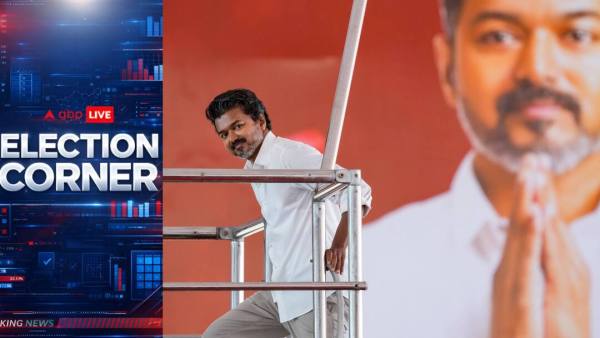
Tamil Nadu Election 2026: Tamil Nadu’s political theatre has, for over half a century, revolved around the enduring dominance of the Dravidian duopoly, Dravida Munnetra Kazhagam and All India Anna Dravida Munnetra Kazhagam, both ideological offshoots of the Dravidar Kazhagam. Election after election, new entrants have attempted to disrupt this bipolar order, often generating noise but rarely altering outcomes.
The 2026 Tamil Nadu Legislative Assembly election, however, presents a more layered challenge. While voting began at 7 am across all 234 constituencies and early turnout trends remain brisk, this is no longer a simple two-way contest. Instead, it has evolved into a four-cornered battle, between the DMK led by MK Stalin, the AIADMK under Edappadi K Palaniswami, the debutant Tamilaga Vettri Kazhagam helmed by Vijay, and Naam Tamilar Katchi led by Seeman.
Legacy vs disruption
Tamil Nadu’s political history is deeply intertwined with cinema. From MG Ramachandran, the three-time, undefeated chief minister who broke away from the DMK to form the AIADMK, to later figures like Vijayakanth, film personalities have repeatedly reshaped electoral equations. Yet, over time, many such movements either merged into alliances or faded in influence. Even Kamal Haasan’s MNM has now gravitated toward the DMK-led front.
What sets 2026 apart is that the disruption is not singular. Instead, two distinct forces, Vijay and the Special Intensive Revision (SIR) of electoral rolls, are simultaneously exerting pressure on the traditional order.
Vijay: The disruptor with mass recall
The entry of Vijay and his TVK has injected a new intensity into the contest. Unlike previous challengers, his influence is not confined to urban pockets or media visibility, it is visibly translating into on-ground enthusiasm.
TVK has tapped into a young voter base, with under-30 voters forming over a percentage of the electorate. In several constituencies, the party’s appeal appears to transcend candidate recognition, with voters rallying around Vijay’s persona rather than local faces. His campaign symbolism--the whistle--has quickly evolved into a recognisable political marker, distributed widely and reinforced through rallies.
Importantly, TVK has positioned itself within Tamil Nadu’s familiar populist and secular framework, while consciously avoiding explicit “Dravidian” branding. Vijay’s decision to contest from both Perambur in Chennai and Tiruchirappalli East reflects an attempt to bridge urban and semi-urban constituencies, signalling ambitions beyond symbolic participation.
Yet, the key question remains unresolved: whose vote bank does TVK erode? Whether it cuts into the DMK’s urban base, the AIADMK’s traditional support, or merely fragments anti-incumbency votes will determine how disruptive this entry truly is on the day of vote counting.
SIR: Electoral arithmetic under scrutiny
The Election Commission of India’s Special Intensive Revision (SIR) has emerged as a politically sensitive factor. The DMK and its allies have raised concerns that the exercise, conducted close to the election, could lead to arbitrary deletions, disproportionately affecting minorities and marginalised communities.
The ECI, however, maintains that SIR enhances electoral integrity by removing duplicate, deceased, and non-existent voters. The latest revision reportedly saw the deletion of around 97 lakh names and the addition of approximately 30 lakh new voters, bringing the total electorate to about 5.73 crore.
Historically, similar revisions in 2002 and 2005 led to a reduction in voter rolls but coincided with improved turnout percentages, suggesting that a “cleaner” roll may encourage more efficient polling.
Still, opacity around the socio-political profile of removed voters leaves room for speculation. In a tightly contested election, even marginal shifts in voter composition could tilt results in unpredictable ways.
Social media: The invisible amplifier
While Tamil Nadu is no stranger to political messaging through media, the scale and intensity of social media influence in 2026 marks a qualitative shift. Platforms are no longer just campaign tools, they are battlegrounds shaping perception, narrative, and momentum in real time.
Actor Sivakarthikeyan captured this sentiment succinctly after casting his vote, noting that this election feels “exciting” precisely because of the unprecedented sway of social media. His remark reflects a broader acknowledgement that digital discourse is now inseparable from electoral politics.
However, this influence is double-edged. Social media ecosystems often promote homogenised viewpoints, driven by algorithmic amplification and echo chambers. The rapid spread of curated narratives can create a herd effect, where voters align with dominant online sentiment rather than independent evaluation. This can both energise participation and distort democratic deliberation.
A three-pronged test for the duopoly
Taken together, these three factors, Vijay’s emergence, the SIR exercise, and the dominance of social media, represent a structural shift rather than a fleeting disturbance. Unlike past elections where a single “third force” briefly unsettled the system, 2026 presents a convergence of disruptions operating at different levels: emotional (celebrity appeal), institutional (electoral rolls), and technological (digital influence).
For the DMK and AIADMK, the challenge is no longer just defeating each other, it is navigating an evolving political landscape where voter behaviour is less predictable, alliances are more fluid, and influence extends beyond traditional campaign machinery.
Whether this election merely tightens margins or fundamentally alters Tamil Nadu’s political equilibrium will only be clear once the votes are counted. But one thing is evident already: the era of a straightforward Dravidian duopoly is facing one of its most complex tests yet.
-
Swedberg: único aprobado del Celta

-
People Who Aren’t Afraid To Make Mistakes Usually Have A Major Advantage In Life

-
The Luckiest Day Of The Week For Each Zodiac Sign From April 27 – May 3, 2026

-
US urges travelers to complete declaration before arriving in Ho Chi Minh City
-
Office or home, spend a long time in AC? Do these things to avoid lung damage