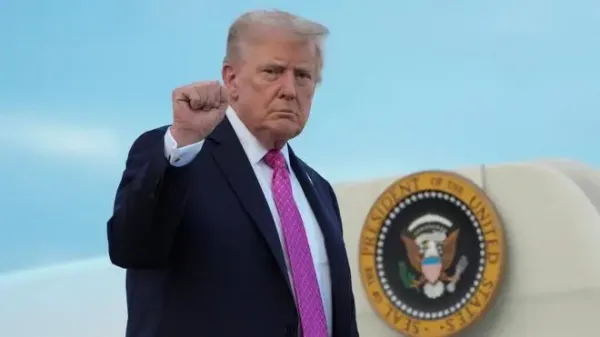
Washington: US President Donald Trump has ordered the US military to “shoot and kill” Iranian small boats choking the Strait of Hormuz.
In a social media post Thursday morning, he said the military is intensifying its mine-clearing efforts in the critical waterway. The move intensified the US-Iran standoff in the Persian Gulf and raised questions about efforts to end the war.
Meanwhile, the US military said it seized another tanker Thursday associated with smuggling Iranian oil, the Majestic X, in the Indian Ocean, deepening confusion over efforts to end the war.
The seizure comes a day after Iran attacked three cargo ships in the Strait of Hormuz, capturing two of them. Ship-tracking data showed the Majestic X in the Indian Ocean between Sri Lanka and Indonesia.
The standoff between the US and Iran has effectively choked off nearly all exports through the Strait of Hormuz, where 20 per cent of the world’s traded oil passes in peacetime, with no end in sight.
US stocks edge back from their records and oil prices yo-yo
The US stock market is edging back from its all-time high following mixed profit reports from Tesla and other big companies. Oil prices are yo-yoing on continued uncertainty about what will happen next in the war with Iran.
The S&P 500 slipped 0.3 per cent in the early going Thursday following a big rally that erased all its losses because of the war. The Dow Jones Industrial Average fell 193 points, and the Nasdaq composite fell 0.4 per cent.
Oil prices wavered as uncertainty continues about what will happen with the Strait of Hormuz. Brent crude rose 0.5 per cent to USD 102.43 a barrel.
Hezbollah says it attacked Israeli positions in southern Lebanon
The group said in a statement that it targeted Israeli soldiers in the southern village of Taybeh and downed a drone in Majdal Zone Thursday. Earlier, the Israeli army said it intercepted an “aerial target” in southern Lebanon.
The group reiterated that its attacks, which resumed Tuesday, were in retaliation for Israeli violations of the 10-day ceasefire that took effect Friday. The Israeli army has been launching near-daily strikes on southern Lebanon since the ceasefire.
Israel has also been accusing Hezbollah of breaching the ceasefire.
Trump claims leadership rift is confounding Iran
“Iran is having a very hard time figuring out who their leader is! They just don’t know!,” Trump said in a social media post. “The infighting is between the Hardliners,’ who have been losing BADLY on the battlefield, and the Moderates,’ who are not very moderate at all (but gaining respect!), is CRAZY!”
Trump has repeatedly said over the course of the ceasefire that began April 8 that his team is dealing with Iranian officials who want to make a deal, while acknowledging his decision to kill several top leaders has come with some complications.
He announced earlier this week that he was extending the truce to give the battered Iranian leadership more time to come with a “unified proposal” on ending the war.
The next UN peacekeeping force in Lebanon could be smaller than the current one
The head of the UN’s peacekeeping operations says he expects the possible replacement for its force in southern Lebanon will “probably be smaller” than the current one that’s been in place for nearly a half-century.
Jean-Pierre Lacroix said the UNIFIL operation, which has inhabited a tense zone where militants from Hezbollah and Israeli forces have battled repeatedly, has recently faced pressure from funding cuts.
The force’s mandate ends at the end of the year. UN officials are facing a June 1 deadline to present a proposal for the force that could replace it.
Trump likes a naval blockade. But Iran presents big differences from Venezuela and Cuba
President Trump has turned to naval blockades to pressure the governments of Venezuela, Cuba and now Iran to meet his demands, but his preferred tactic is confronting a very different reality in the Middle East than in the Caribbean.
Unlike Cuba or Venezuela, Iran choked off a crucial trade route for energy shipments, meaning the longer the standoff persists the more the global economy will suffer.
Tehran also poses a greater military threat – beyond those posed by the adversaries in America’s own hemisphere – and requires a sustained military presence far from US shores.
Iran’s leverage over the Strait of Hormuz gives it power during a shaky ceasefire because the widening economic risks – especially higher US gas prices in an election year – could force Trump’s Republican administration to end its blockade on Iran’s ports and coastline, experts say.
“It’s really a question now of which country, the US or Iran, has a greater pain tolerance,” said Max Boot, a military historian and senior fellow for national security studies at the Council on Foreign Relations.
Three killed inside vehicle in the central Gaza Strip
An Israeli drone strike killed three men inside a car Thursday in central Gaza Strip, health officials said.
Those killed were taken to al-Aqsa Martyrs Hospital in Deir al-Balah. Two of them were inside the vehicle targeted on Salah al-Din Street near Maghazi camp, while a third was nearby, hospital director Raed Hussein told The Associated Press. Three others were injured.
The Israeli military didn’t immediately respond to a request for comment.
A fragile Israel-Hamas ceasefire has held since October, but renewed strikes have killed 791 people and wounded 2,235, according to the latest figures released by Gaza’s health ministry, which doesn’t distinguish between civilians and combatants in its toll.`
Orissa POST – Read’s No.1 English Daily
-
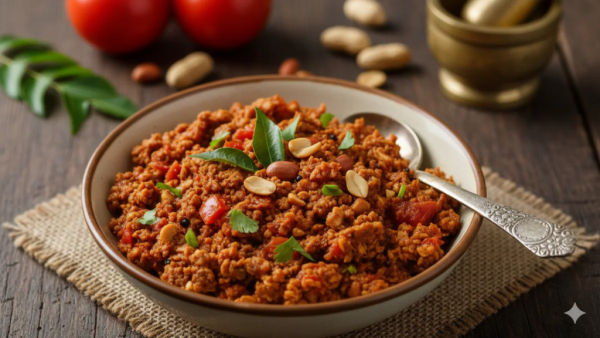
A Simple Tomato Chutney That Adds Protein To Your Breakfast Plate
-
Urine infection increases due to consumption of ‘these’ sparkling foods in daily diet, take care of delicate organs in such a way

-
Realme C81 smartphone to launch in India soon; 4GB RAM, 6300mAh battery and…

-
MI vs CSK: Sanju Samson stormed Wankhede, scored his second century of this season against Mumbai.

-
Pistons Beat Magic 98-83 in Game 2 to Even Series