
Listen to this article in summarized format
Loading...
××
Subscribe to

Unlock AI Briefing and Premium Content
New Year Offer 24 Hours Left
Subscribe NowAlready a member? Sign In
What's Included
- Exclusive Stories
- Daily ePaper Access
- Smart Market Tools
- Curated Investment Ideas
- Ad-lite Experience
Subscription

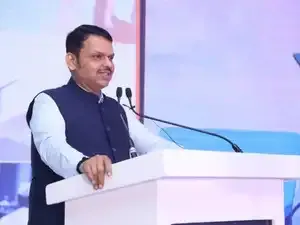
Maharashtra has set an ambitious goal of attracting Rs 30 lakh crore in investments as it seeks to position itself as a global investment hub, Chief Minister Devendra Fadnavis said on Thursday, outlining a strategy anchored in infrastructure-led growth, logistics expansion, and clean energy.
Speaking at The Economic Times Maharashtra Business Summit 2026 in Mumbai, Fadnavis said the state is building “not just roads, but economic corridors” to drive industrial expansion and improve connectivity across regions.
Also read: India’s richest state is said to prepare for power utility IPO
Flagging maritime infrastructure as a key growth lever, India's richest state's chief minister described the upcoming Vadhvan Port as a “game-changer” that will reshape the state’s logistics ecosystem and boost India’s trade capacity.
The summit’s opening day laid out Maharashtra’s broader roadmap focused on integrated infrastructure, port-led development, and the emergence of data centres powered by clean energy. The strategy aims to create next-generation urban ecosystems that can sustain long-term economic growth.
Guest of Honour Madhuri Meera Satish Misal, Minister for Urban Development, Transport, Social Justice, Medical Education, Minority Development, and Auqaf Department, Government of Maharashtra, explained the importance of inclusive growth, saying development must go beyond asset creation to support jobs, enterprise, and competitiveness. “Growth must improve standards of living and ensure sustainable outcomes,” she said.
Offering an international perspective, Juan Antonio March Pujol, Spain’s Ambassador to India, cautioned against unplanned urban expansion, stressing that integrated city planning would be critical to managing mobility, services, and quality of life as cities grow.
Senior bureaucrats and industry stakeholders highlighted execution and policy predictability as key to unlocking investments. P. Anbalagan, Principal Secretary, Industries, Government of Maharashtra, called for removing bottlenecks and fostering trust-based regulation, saying businesses should be allowed to operate with greater autonomy.
Also read: Maharashtra agri input dealers call for a strike on April 27
Sector-specific discussions pointed to both opportunities and challenges. Sanjay Mukherjee, Metropolitan Commissioner, Mumbai Metropolitan Region Development Authority (MMRDA), noted that metro systems alone cannot address urban transport needs, while Abha Shukla, Additional Chief Secretary, Energy Department, Government of Maharashtra, emphasised the need to align energy supply with economic growth, including sourcing 50% of power from renewables by 2030.
In the pharmaceutical sector, industry leaders flagged concerns over investment shifts and long-term capital needs. Bhushan Akshikar, Managing Director, GSK Pharmaceuticals India, observed that new investments are increasingly moving to other states, while Bhavin Mehta, Vice Chairman, Pharmexcil, stressed that innovation requires sustained funding over decades.
Speaking at The Economic Times Maharashtra Business Summit 2026 in Mumbai, Fadnavis said the state is building “not just roads, but economic corridors” to drive industrial expansion and improve connectivity across regions.
Also read: India’s richest state is said to prepare for power utility IPO
Flagging maritime infrastructure as a key growth lever, India's richest state's chief minister described the upcoming Vadhvan Port as a “game-changer” that will reshape the state’s logistics ecosystem and boost India’s trade capacity.
The summit’s opening day laid out Maharashtra’s broader roadmap focused on integrated infrastructure, port-led development, and the emergence of data centres powered by clean energy. The strategy aims to create next-generation urban ecosystems that can sustain long-term economic growth.
Guest of Honour Madhuri Meera Satish Misal, Minister for Urban Development, Transport, Social Justice, Medical Education, Minority Development, and Auqaf Department, Government of Maharashtra, explained the importance of inclusive growth, saying development must go beyond asset creation to support jobs, enterprise, and competitiveness. “Growth must improve standards of living and ensure sustainable outcomes,” she said.
Offering an international perspective, Juan Antonio March Pujol, Spain’s Ambassador to India, cautioned against unplanned urban expansion, stressing that integrated city planning would be critical to managing mobility, services, and quality of life as cities grow.
Senior bureaucrats and industry stakeholders highlighted execution and policy predictability as key to unlocking investments. P. Anbalagan, Principal Secretary, Industries, Government of Maharashtra, called for removing bottlenecks and fostering trust-based regulation, saying businesses should be allowed to operate with greater autonomy.
Also read: Maharashtra agri input dealers call for a strike on April 27
Sector-specific discussions pointed to both opportunities and challenges. Sanjay Mukherjee, Metropolitan Commissioner, Mumbai Metropolitan Region Development Authority (MMRDA), noted that metro systems alone cannot address urban transport needs, while Abha Shukla, Additional Chief Secretary, Energy Department, Government of Maharashtra, emphasised the need to align energy supply with economic growth, including sourcing 50% of power from renewables by 2030.
In the pharmaceutical sector, industry leaders flagged concerns over investment shifts and long-term capital needs. Bhushan Akshikar, Managing Director, GSK Pharmaceuticals India, observed that new investments are increasingly moving to other states, while Bhavin Mehta, Vice Chairman, Pharmexcil, stressed that innovation requires sustained funding over decades.