
Listen to this article in summarized format
Loading...
××
Subscribe to

Unlock AI Briefing and Premium Content
New Year Offer 24 Hours Left
Subscribe NowAlready a member? Sign In
What's Included
- Exclusive Stories
- Daily ePaper Access
- Smart Market Tools
- Curated Investment Ideas
- Ad-lite Experience
Subscription

Djavad Salehi-Isfahani
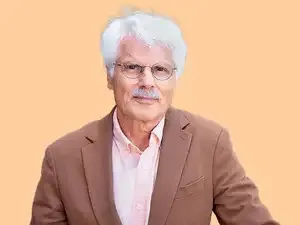
Djavad Salehi-Isfahani is Professor of Economics at Virginia Tech University. Speaking with Srijana Mitra Das in ET Evoke, he explains the complex 'resistance economy' of Iran — and the deadly consequences the war on it might have on generations of striving:
Q. You’ve written on Iran’s ‘resistance economy’ — could you elaborate on that and explain how, even before this war began, Iran’s economy functioned despite sanctions?
A. Well, it operated with difficulty — but it operated. One factor that was very helpful — and this is part of the resistance economy — was Iran’s reliance on markets. During the Iran-Iraq War in the 1980s, Iran mostly relied on coupons, rationing and non-market distributions. After the war, there was an attempt to bring back markets as the main mechanism for allocating resources — and Iran succeeded in doing that.
The late president, Akbar Rafsanjani, was the architect of pro-market, procapitalism views. Eventually, Iran became largely a capitalist country with some government interference, which is quite different from economies that reject markets, like Venezuela or communist nations. That has allowed Iran to get around the sanctions to a large extent.
The idea of a ‘resistance economy’ came from the late Supreme Leader, Ayatollah Khamenei, who thought Iran was too connected to countries that were not to be relied on, in particular, the United States and Western Europe. He was suspicious of their expressions of friendship with the Islamic Republic. He likely reasoned that because Iran would support Lebanon and Palestine, Tehran would run afoul of Western countries who backed Israel. So, he directed policy makers to carry out this shift from the West to the East — or diversify. He used the term ‘resistance economy’ as a catchphrase to describe these policies.
Importantly, Iran’s military was able to quickly decouple its hardware from the West and move to the East, in particular, to Russia. However, the private sector did not do that — they continued trading with the West way into the second decade of the Islamic Republic. Germany was the main trading partner while other European countries, even under sanctions, sent goods through Dubai and United Arab Emirates ports to Iran. Private firms delayed switching from European to Eastern sources, mainly China. As sanctions tightened, they perforce had to. But they were always behind the IRGC, the Revolutionary Guard, in moving from West to East — we could say the private sector resisted the resistance economy and wanted to stay with traditional suppliers of imports in Western Europe.
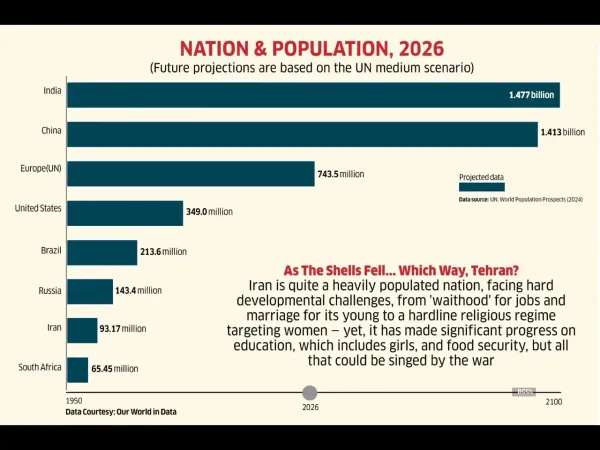
Q. What are the greatest economic impacts of this US-Israel war on Iran?
A. Some of it is obvious, such as the destruction of Iran’s physical capital, the bombing of its steel factories and petrochemical facilities. Of course, Donald Trump has often threatened to destroy the entire nation and civilisation. So, it’s hard to talk now about the damage the war has done when, according to Trump, much worse could be expected. An important point here is not only the cost of the war to the hardware or physical infrastructure we see but also to what you might call the software of the economy, institutions and rules of the game. As an example, after the IranIraq war, Iran invested heavily in trying to replace the rationing system with markets. President Rafsanjani said his mission was to make the accumulation of wealth a good thing in Iran, referring to the very strong anti-capitalist, antirich views that had developed after the revolution. He brought back a capitalistic outlook — now, we don’t know if that will survive this war, with the military getting stronger and some rationing creeping in. This is necessary in a war when the government has to intervene, sometimes directly on prices, but sometimes indirectly, as they’ve done in Iran, with cash transfers. Those fuel inflation as the government has to pump money into people’s accounts to prevent the poor from losing access to food and essential goods. In a sense, thus, the damage to institutions, the understanding of markets and the role they play in allocating resources, etc., could be even more than the physical damage of this war.
Q. Can you tell us more about food prices in Iran today?
A. Food prices were rising very rapidly last autumn. We don’t know exactly why but the food sector depends heavily on imports — in some years, about one-third of Iran’s wheat supplies, which is the staple, is imported. Other food items depend on imports of feedstock. All this becomes harder as foreign exchange grows scarce. Now, we don’t know exactly why last autumn, foreign exchange did grow scarce. It could have been because the government was using its limited supply to build up its defensive forces. Also, Scott Bessent, US Treasury Secretary, apparently claimed the US manipulated the dollar market, so Iranians had to pay more for the dollar, which fueled inflation — and uprisings. We don’t know the truth but there’s no question food prices have been rising faster than general prices and Iran has not imposed rationing or restrictions on purchases. It has allowed the market to work so far — this has caused dissatisfaction but the government has refused to go into rationing very quickly. That could happen though if food supplies further dwindle, as they can because the blockade is blind to what you’re importing. Sanctions allowed food to be delivered and Iran imported enough, so there was no problem with hunger though prices were high — now, with the blockade, there are no rules that say ships bearing food can go through but others can’t. I suspect Iran will have to search out food supplies through land routes but that will be more expensive. So, availability may not suffer much but food prices are already rising very fast. Inflation of food is more than 100% now — last year, this was 70% while general inflation was about 40%. The war has only worsened that condition.
Q. How are social development indicators in Iran faring now?
A. Those all depend on economic development — indicators include life expectancy, income per capita, years of education and nutrition. I can’t think of any there that wouldn’t suffer under sanctions and now, the war.
The surveys that capture consumption will be published in August. Right now, we see prices of commodities. Of course, the war may have caused the average income to go down by as much as 10% — before, incomes were stagnant. When sanctions hit very hard, incomes would drop by 6%-7%. In this last 12-month period, incomes could have gone down by as much as 10%. That’s huge. Iranians have seen economic growth. In some years in the 1980s and the 2000s, growth was over 6% — now, they are experiencing decline
Importantly though, Iranians are aware these are extraordinary conditions —earlier, when sanctions hurt their incomes, they blamed the government for that plus corruption and mismanagement. Now, there is an actual war recognised as causing the fall in their incomes. Earlier, the government was the problem — now, with the war, it’s becoming more the solution, the problem being Trump and Netanyahu.
Q. You’ve worked on the idea of ‘waithood’ in Iran — could you tell us about this?
A. We did this work on ‘waithood’ with the Brookings Institute for Middle Eastern countries some years ago. I was struck by how much harder life for Iranian youth was, compared to, say, Tunisia. They had the difficulty many youth have in most developing nations, which is striving to get an education and then finding the jobs aren’t there. It’s easier to provide education in a poor country than provide jobs, so you get more educated people and not many jobs — they have to wait to get employed. However, in most Middle Eastern countries, marriage markets don’t work very well either. A traditional village-based society, in the past, took care of youth who reached adulthood. Young people didn’t have to find their own spouse but now, when you move to urban areas, that becomes difficult. In Iran, additional difficulties came from the enforcement of Islamic rules. One part was the hijab rule that prevented young people from openly meeting. Today, those restrictions are gone after the ‘Woman, Life, Freedom’ movement succeeded in removing compulsory hijab on the streets. Yet, the other factor that prolonged ‘waithood’ for Iranian youth was the fact that divorce laws gave the primary or unilateral right of divorce to men — such patriarchy made women very hesitant about getting married and they started rejecting offers.
Imagine the harshness of that life — you can’t date, you can’t marry, you have to remain single. The age of marriage climbed quickly in Iran, partly because women feared getting married unless they had the right to divorce. That would probably have come if this war hadn’t happened because Iranian women have advanced a lot in education and asserted themselves very strongly by opposing the government’s compulsory hijab. They might have continued with those demands if the war hadn’t taken place — Iran’s youth has lost out as a result of this war, in part, because the institutional reforms they had been working on got derailed. The war killed the momentum young people had built up for improvements. So, ‘waithood’ continues in Iran — you grow up, you finish your education but you have to wait for adulthood, defined by employment, having a place of your own and forming a family. This is a problem most Middle Eastern nations have —but Iran’s is on steroids.
Q. Will growing economic pressure in Iran shape the end of this war?
A. It’s hard to imagine how it will not. If economic pressure becomes very severe, the US trying to intercept food imports into the country, it will make the end of the war very violent because Iran would hit back not just at American warships but also at whatever remains of American bases in the Persian Gulf countries. In an existential fight, Iran might even try to bring down these other economies with it — the downside is huge. It is like - l y Iran’s en- emies don’t really even care if Tehran hits the desalination plants of Saudi Arabia or UAE because they may think, now the Arabs will hate Iran, which is great for America and Israel. A potentially tragic situation is brewing — Iranians may not have an option other than raise the cost of the war on everybody, if they cannot feed their people.
However, the war could also end with a deal which would actually be much better than the situation was before. After facing deadly attacks by two nuclear powers, if you ask ordinary Iranians now, ‘Should we have nuclear weapons?’, they would say ‘Yes’ resoundingly. Yet, they have now discovered a weapon that’s far more usable than a nuclear bomb — that is closing the Strait of Hormuz. So, this war could end with an understanding that the next time Israel does the horrible things it calls ‘mowing the grass’ — here, attacking Iran frequently — the Strait of Hormuz will again be closed, causing another global shock. Then, it is possible the world will try to prevent Israel from becoming too aggressive. That way, there could be some peace in the region.
Views expressed are personal
Q. You’ve written on Iran’s ‘resistance economy’ — could you elaborate on that and explain how, even before this war began, Iran’s economy functioned despite sanctions?
A. Well, it operated with difficulty — but it operated. One factor that was very helpful — and this is part of the resistance economy — was Iran’s reliance on markets. During the Iran-Iraq War in the 1980s, Iran mostly relied on coupons, rationing and non-market distributions. After the war, there was an attempt to bring back markets as the main mechanism for allocating resources — and Iran succeeded in doing that.
The late president, Akbar Rafsanjani, was the architect of pro-market, procapitalism views. Eventually, Iran became largely a capitalist country with some government interference, which is quite different from economies that reject markets, like Venezuela or communist nations. That has allowed Iran to get around the sanctions to a large extent.
The idea of a ‘resistance economy’ came from the late Supreme Leader, Ayatollah Khamenei, who thought Iran was too connected to countries that were not to be relied on, in particular, the United States and Western Europe. He was suspicious of their expressions of friendship with the Islamic Republic. He likely reasoned that because Iran would support Lebanon and Palestine, Tehran would run afoul of Western countries who backed Israel. So, he directed policy makers to carry out this shift from the West to the East — or diversify. He used the term ‘resistance economy’ as a catchphrase to describe these policies.
Importantly, Iran’s military was able to quickly decouple its hardware from the West and move to the East, in particular, to Russia. However, the private sector did not do that — they continued trading with the West way into the second decade of the Islamic Republic. Germany was the main trading partner while other European countries, even under sanctions, sent goods through Dubai and United Arab Emirates ports to Iran. Private firms delayed switching from European to Eastern sources, mainly China. As sanctions tightened, they perforce had to. But they were always behind the IRGC, the Revolutionary Guard, in moving from West to East — we could say the private sector resisted the resistance economy and wanted to stay with traditional suppliers of imports in Western Europe.
Q. What are the greatest economic impacts of this US-Israel war on Iran?
A. Some of it is obvious, such as the destruction of Iran’s physical capital, the bombing of its steel factories and petrochemical facilities. Of course, Donald Trump has often threatened to destroy the entire nation and civilisation. So, it’s hard to talk now about the damage the war has done when, according to Trump, much worse could be expected. An important point here is not only the cost of the war to the hardware or physical infrastructure we see but also to what you might call the software of the economy, institutions and rules of the game. As an example, after the IranIraq war, Iran invested heavily in trying to replace the rationing system with markets. President Rafsanjani said his mission was to make the accumulation of wealth a good thing in Iran, referring to the very strong anti-capitalist, antirich views that had developed after the revolution. He brought back a capitalistic outlook — now, we don’t know if that will survive this war, with the military getting stronger and some rationing creeping in. This is necessary in a war when the government has to intervene, sometimes directly on prices, but sometimes indirectly, as they’ve done in Iran, with cash transfers. Those fuel inflation as the government has to pump money into people’s accounts to prevent the poor from losing access to food and essential goods. In a sense, thus, the damage to institutions, the understanding of markets and the role they play in allocating resources, etc., could be even more than the physical damage of this war.
Q. Can you tell us more about food prices in Iran today?
A. Food prices were rising very rapidly last autumn. We don’t know exactly why but the food sector depends heavily on imports — in some years, about one-third of Iran’s wheat supplies, which is the staple, is imported. Other food items depend on imports of feedstock. All this becomes harder as foreign exchange grows scarce. Now, we don’t know exactly why last autumn, foreign exchange did grow scarce. It could have been because the government was using its limited supply to build up its defensive forces. Also, Scott Bessent, US Treasury Secretary, apparently claimed the US manipulated the dollar market, so Iranians had to pay more for the dollar, which fueled inflation — and uprisings. We don’t know the truth but there’s no question food prices have been rising faster than general prices and Iran has not imposed rationing or restrictions on purchases. It has allowed the market to work so far — this has caused dissatisfaction but the government has refused to go into rationing very quickly. That could happen though if food supplies further dwindle, as they can because the blockade is blind to what you’re importing. Sanctions allowed food to be delivered and Iran imported enough, so there was no problem with hunger though prices were high — now, with the blockade, there are no rules that say ships bearing food can go through but others can’t. I suspect Iran will have to search out food supplies through land routes but that will be more expensive. So, availability may not suffer much but food prices are already rising very fast. Inflation of food is more than 100% now — last year, this was 70% while general inflation was about 40%. The war has only worsened that condition.
Q. How are social development indicators in Iran faring now?
A. Those all depend on economic development — indicators include life expectancy, income per capita, years of education and nutrition. I can’t think of any there that wouldn’t suffer under sanctions and now, the war.
The surveys that capture consumption will be published in August. Right now, we see prices of commodities. Of course, the war may have caused the average income to go down by as much as 10% — before, incomes were stagnant. When sanctions hit very hard, incomes would drop by 6%-7%. In this last 12-month period, incomes could have gone down by as much as 10%. That’s huge. Iranians have seen economic growth. In some years in the 1980s and the 2000s, growth was over 6% — now, they are experiencing decline
Importantly though, Iranians are aware these are extraordinary conditions —earlier, when sanctions hurt their incomes, they blamed the government for that plus corruption and mismanagement. Now, there is an actual war recognised as causing the fall in their incomes. Earlier, the government was the problem — now, with the war, it’s becoming more the solution, the problem being Trump and Netanyahu.
Q. You’ve worked on the idea of ‘waithood’ in Iran — could you tell us about this?
A. We did this work on ‘waithood’ with the Brookings Institute for Middle Eastern countries some years ago. I was struck by how much harder life for Iranian youth was, compared to, say, Tunisia. They had the difficulty many youth have in most developing nations, which is striving to get an education and then finding the jobs aren’t there. It’s easier to provide education in a poor country than provide jobs, so you get more educated people and not many jobs — they have to wait to get employed. However, in most Middle Eastern countries, marriage markets don’t work very well either. A traditional village-based society, in the past, took care of youth who reached adulthood. Young people didn’t have to find their own spouse but now, when you move to urban areas, that becomes difficult. In Iran, additional difficulties came from the enforcement of Islamic rules. One part was the hijab rule that prevented young people from openly meeting. Today, those restrictions are gone after the ‘Woman, Life, Freedom’ movement succeeded in removing compulsory hijab on the streets. Yet, the other factor that prolonged ‘waithood’ for Iranian youth was the fact that divorce laws gave the primary or unilateral right of divorce to men — such patriarchy made women very hesitant about getting married and they started rejecting offers.
Imagine the harshness of that life — you can’t date, you can’t marry, you have to remain single. The age of marriage climbed quickly in Iran, partly because women feared getting married unless they had the right to divorce. That would probably have come if this war hadn’t happened because Iranian women have advanced a lot in education and asserted themselves very strongly by opposing the government’s compulsory hijab. They might have continued with those demands if the war hadn’t taken place — Iran’s youth has lost out as a result of this war, in part, because the institutional reforms they had been working on got derailed. The war killed the momentum young people had built up for improvements. So, ‘waithood’ continues in Iran — you grow up, you finish your education but you have to wait for adulthood, defined by employment, having a place of your own and forming a family. This is a problem most Middle Eastern nations have —but Iran’s is on steroids.
Q. Will growing economic pressure in Iran shape the end of this war?
A. It’s hard to imagine how it will not. If economic pressure becomes very severe, the US trying to intercept food imports into the country, it will make the end of the war very violent because Iran would hit back not just at American warships but also at whatever remains of American bases in the Persian Gulf countries. In an existential fight, Iran might even try to bring down these other economies with it — the downside is huge. It is like - l y Iran’s en- emies don’t really even care if Tehran hits the desalination plants of Saudi Arabia or UAE because they may think, now the Arabs will hate Iran, which is great for America and Israel. A potentially tragic situation is brewing — Iranians may not have an option other than raise the cost of the war on everybody, if they cannot feed their people.
However, the war could also end with a deal which would actually be much better than the situation was before. After facing deadly attacks by two nuclear powers, if you ask ordinary Iranians now, ‘Should we have nuclear weapons?’, they would say ‘Yes’ resoundingly. Yet, they have now discovered a weapon that’s far more usable than a nuclear bomb — that is closing the Strait of Hormuz. So, this war could end with an understanding that the next time Israel does the horrible things it calls ‘mowing the grass’ — here, attacking Iran frequently — the Strait of Hormuz will again be closed, causing another global shock. Then, it is possible the world will try to prevent Israel from becoming too aggressive. That way, there could be some peace in the region.
Views expressed are personal