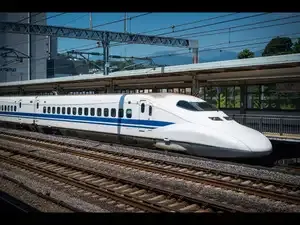
India’s first indigenous bullet train is set to make its debut on the Mumbai–Ahmedabad high-speed rail corridor, with the Railways deciding to run the domestically manufactured B28 trainset on the initial operational stretch between Surat and Vapi.
The decision was revealed in a report of the Parliamentary Standing Committee on Railways, which was tabled in both Houses of Parliament on Tuesday. The Railway Ministry informed the panel that operations on the 97-km Surat–Vapi section of the ambitious bullet train project are targeted to begin in August 2027 using the trainset being built by BEML.
Responding to queries about the project’s timeline, the ministry told the committee that the Mumbai–Ahmedabad High-Speed Rail (MAHSR) project involves advanced technology and international collaboration, particularly with Japan.
"Bullet train project is a very complex and technology intensive project. The project involves technology transfer and procurement/ supply from Japan and other countries. The development of the E10 series of Shinkansen is under way in Japan; therefore, detailed information regarding the same is not available. However, a decision has been taken to start the operation using B28 (Bharat made bullet trainset)," the ministry said.
The report noted that manufacturing of the B28 trainset is currently underway at BEML, marking a significant step toward India’s push for indigenisation in high-speed rail technology.
The ministry also informed the panel that work on critical systems is progressing. Tenders for alternative signalling systems based on ETCS Level 2 have been awarded and implementation has begun, it said.
While the ministry refrained from giving a definitive timeline for the entire corridor, it said the commencement of operations will depend on the completion of multiple components, including civil works, track laying, electrical systems, signalling and telecommunications, and supply of trainsets.
"However, efforts are underway to start ops using B28 (Bharat made bullet, 280 kmph) for Surat-Vapi (97km) in Aug 2027," the report said.
The committee also sought clarification on the cost escalation in the project. The ministry explained that the original estimated cost of Rs 97,636 crore, prepared in December 2015, was based on the feasibility report and assumed that construction would be partly on viaducts and largely on embankments.
Since then, several additional factors have pushed up costs. The ministry said expenses not accounted for in the initial estimate include taxes and cess (Rs 29,330 crore), utility shifting (Rs 2,625 crore), station approach development (Rs 2,195 crore), power sourcing arrangements (Rs 1,250 crore), indigenous trains and ETCS signalling system (Rs 16,500 crore), ticketing (Rs 283 crore), and statutory charges related to forest clearances (Rs 400 crore).
"In addition the escalation due to the rise in economic factors of production (inflation and price rise) is Rs 19,084 crore as the project was sanctioned in the year 2015. The substantial increase in land rates particularly in urban areas including cost of land at Mumbai, has led to the increase in the land, resettlement and rehabilitation cost to Rs 16,695 crore. The revised cost estimate for the project of Mumbai Ahmedabad High Speed Rail Line is under sanction," the ministry said.
The Mumbai–Ahmedabad High-Speed Rail project, India’s flagship bullet train initiative, is expected to transform intercity travel on the busy western corridor, eventually linking the two financial hubs with trains capable of speeds exceeding 300 kmph. The Surat–Vapi segment, once operational, will mark the first glimpse of India’s long-awaited bullet train era. (With inputs from TOI)
The decision was revealed in a report of the Parliamentary Standing Committee on Railways, which was tabled in both Houses of Parliament on Tuesday. The Railway Ministry informed the panel that operations on the 97-km Surat–Vapi section of the ambitious bullet train project are targeted to begin in August 2027 using the trainset being built by BEML.
Responding to queries about the project’s timeline, the ministry told the committee that the Mumbai–Ahmedabad High-Speed Rail (MAHSR) project involves advanced technology and international collaboration, particularly with Japan.
"Bullet train project is a very complex and technology intensive project. The project involves technology transfer and procurement/ supply from Japan and other countries. The development of the E10 series of Shinkansen is under way in Japan; therefore, detailed information regarding the same is not available. However, a decision has been taken to start the operation using B28 (Bharat made bullet trainset)," the ministry said.
The report noted that manufacturing of the B28 trainset is currently underway at BEML, marking a significant step toward India’s push for indigenisation in high-speed rail technology.
The ministry also informed the panel that work on critical systems is progressing. Tenders for alternative signalling systems based on ETCS Level 2 have been awarded and implementation has begun, it said.
While the ministry refrained from giving a definitive timeline for the entire corridor, it said the commencement of operations will depend on the completion of multiple components, including civil works, track laying, electrical systems, signalling and telecommunications, and supply of trainsets.
"However, efforts are underway to start ops using B28 (Bharat made bullet, 280 kmph) for Surat-Vapi (97km) in Aug 2027," the report said.
The committee also sought clarification on the cost escalation in the project. The ministry explained that the original estimated cost of Rs 97,636 crore, prepared in December 2015, was based on the feasibility report and assumed that construction would be partly on viaducts and largely on embankments.
Since then, several additional factors have pushed up costs. The ministry said expenses not accounted for in the initial estimate include taxes and cess (Rs 29,330 crore), utility shifting (Rs 2,625 crore), station approach development (Rs 2,195 crore), power sourcing arrangements (Rs 1,250 crore), indigenous trains and ETCS signalling system (Rs 16,500 crore), ticketing (Rs 283 crore), and statutory charges related to forest clearances (Rs 400 crore).
"In addition the escalation due to the rise in economic factors of production (inflation and price rise) is Rs 19,084 crore as the project was sanctioned in the year 2015. The substantial increase in land rates particularly in urban areas including cost of land at Mumbai, has led to the increase in the land, resettlement and rehabilitation cost to Rs 16,695 crore. The revised cost estimate for the project of Mumbai Ahmedabad High Speed Rail Line is under sanction," the ministry said.
The Mumbai–Ahmedabad High-Speed Rail project, India’s flagship bullet train initiative, is expected to transform intercity travel on the busy western corridor, eventually linking the two financial hubs with trains capable of speeds exceeding 300 kmph. The Surat–Vapi segment, once operational, will mark the first glimpse of India’s long-awaited bullet train era. (With inputs from TOI)