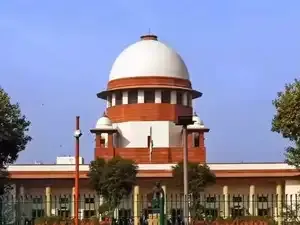
Striking down an NCLT ruling the Supreme Court reiterated that the insolvency law cannot be invoked as a mechanism for debt recovery, and on Thursday cautioned that the insolvency process is a remedy with "far-reaching consequences" and must be used for cases of genuine insolvency or financial distress and not for the enforcement of money decrees.
The apex court said that the Code was enacted to provide for the reorganisation and insolvency resolution of corporate persons in a time bound manner for the maximisation of the value of assets and it cannot “be misused as a tool for recovery or as a lever to coerce payment.”
“It is not debt recovery legislation... It is not a proceeding for the benefit of individual creditors seeking to recover their dues. The moratorium under Section 14 operates in the interest of the corporate debtor itself. The resolution process is not intended to be adversarial toward the corporate debtor but rather to be protective of its interests," a bench comprising Justices PS Narasimha and Justice Alok Aradhe ruled.
While setting aside the National Company Law Appellate Tribunal’s decision to allow initiation of insolvency proceedings against Anjani Technoplast, the SC said that a creditor who approaches the National Company Law Tribunal not with any genuine concern for the resolution of the corporate debtor but purely to secure payment of its individual dues is acting contrary to the purpose and spirit of the Insolvency and Bankruptcy Code, 2016.
At the heart of the dispute was whether Subh Gautam, a decree-holder creditor, could trigger Corporate Insolvency Resolution Process (CIRP) against Anjani Technoplast merely to recover dues under a civil court decree, particularly when the debtor company remained financially sound, and the debt quantum was contested.
Citing its earlier judgements, the judges said mere existence of a money decree does not entitle a creditor to initiate the CIRP but would give rise to a fresh cause of action for initiating proceedings against a debtor under 2016 Code.
However, this does not mean that every decree holder who also happens to be a financial creditor is entitled, as a matter of right, to invoke the insolvency process in preference to execution of a decree, the apex court said.
While noting that Anjani Technoplast consistently maintained its willingness to pay whatever was lawfully due, the top court said that dues of Anjani Technoplast were from a money decree obtained by Gautam through the Delhi High Court and an efficacious remedy was to file an execution petition before the same court and not an insolvency petition before the tribunal.
When Anjani Technoplast defaulted in the loan payment, Gautam got a decree in his favour from the Delhi High Court in 2018. Rather than filing a plea to execute the decree, Gautam moved an insolvency petition before the tribunal. While the tribunal rejected the insolvency proceedings, the NCLAT in 2022 directed admission of insolvency process against the company.
The apex court said that the Code was enacted to provide for the reorganisation and insolvency resolution of corporate persons in a time bound manner for the maximisation of the value of assets and it cannot “be misused as a tool for recovery or as a lever to coerce payment.”
“It is not debt recovery legislation... It is not a proceeding for the benefit of individual creditors seeking to recover their dues. The moratorium under Section 14 operates in the interest of the corporate debtor itself. The resolution process is not intended to be adversarial toward the corporate debtor but rather to be protective of its interests," a bench comprising Justices PS Narasimha and Justice Alok Aradhe ruled.
While setting aside the National Company Law Appellate Tribunal’s decision to allow initiation of insolvency proceedings against Anjani Technoplast, the SC said that a creditor who approaches the National Company Law Tribunal not with any genuine concern for the resolution of the corporate debtor but purely to secure payment of its individual dues is acting contrary to the purpose and spirit of the Insolvency and Bankruptcy Code, 2016.
At the heart of the dispute was whether Subh Gautam, a decree-holder creditor, could trigger Corporate Insolvency Resolution Process (CIRP) against Anjani Technoplast merely to recover dues under a civil court decree, particularly when the debtor company remained financially sound, and the debt quantum was contested.
Citing its earlier judgements, the judges said mere existence of a money decree does not entitle a creditor to initiate the CIRP but would give rise to a fresh cause of action for initiating proceedings against a debtor under 2016 Code.
However, this does not mean that every decree holder who also happens to be a financial creditor is entitled, as a matter of right, to invoke the insolvency process in preference to execution of a decree, the apex court said.
While noting that Anjani Technoplast consistently maintained its willingness to pay whatever was lawfully due, the top court said that dues of Anjani Technoplast were from a money decree obtained by Gautam through the Delhi High Court and an efficacious remedy was to file an execution petition before the same court and not an insolvency petition before the tribunal.
When Anjani Technoplast defaulted in the loan payment, Gautam got a decree in his favour from the Delhi High Court in 2018. Rather than filing a plea to execute the decree, Gautam moved an insolvency petition before the tribunal. While the tribunal rejected the insolvency proceedings, the NCLAT in 2022 directed admission of insolvency process against the company.