
Listen to this article in summarized format
Loading...
××
Subscribe to

Unlock AI Briefing and Premium Content
New Year Offer 24 Hours Left
Subscribe NowAlready a member? Sign In
What's Included
- Exclusive Stories
- Daily ePaper Access
- Smart Market Tools
- Curated Investment Ideas
- Ad-lite Experience
Subscription

Something is shifting in how people decide to spend. After years of faster cycles, lower price points and relentless newness, a segment of consumers is pulling back. Not from spending altogether, but from the rhythm of disposability that has defined consumption for the better part of two decades.
McKinsey-BoF's 'State of Fashion 2026' report notes that consumers' desire for lasting investments, combined with a rise in self-gifting, is driving volume demand in categories built around permanence. Research identifies a real shift among consumers toward value, defined not just by price but by perceived value of what they're paying for. A consumer who once measured value by how often they could buy is now asking how long what they buy will remain meaningful. These are different questions, and they produce different purchasing decisions.
Also Read: Tata’s Trent catches a trend as spending shifts beyond Bengaluru & Mumbai
The signal is clearest in categories where considered purchasing has always had a cultural precedent. In jewellery, the shift is measurable. A 2025 Tenoris report, 'Positive Jewelry Trend Leads to 5% Growth in H1', found that despite decline in volume of pieces sold, consumers are opting for fewer, but higher-priced, items, with expenditure per unit rising by 10% in June 2025 alone.
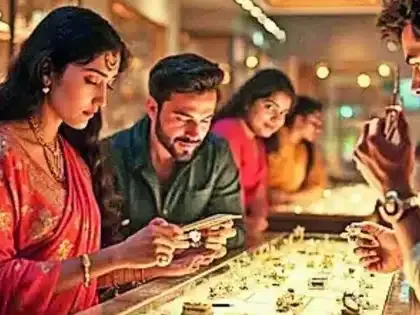
People are not buying less because they can afford less. They are deliberately buying fewer things because they have recalibrated what a purchase should mean. This recalibration shows up well before they spend. A buyer entering a fine jewellery store today asks about certification, stone origin and design longevity. This reflects a desire to derisk the purchase.
In a volatile economy, trust is built on transparency, and certification is now essential proof of an object's lasting value. India's gems and jewellery sector is a prime example of this shift. According to 1Lattice 2025 'Glimmers of Growth' report, we are seeing a move toward minimalist, custom-tailored and certified pieces.
Lab-grown diamonds sit interestingly in this narrative. They democratise access to fine jewellery without the ethical burden of mining, while maintaining the same physical and chemical properties as their natural counterparts. Customer choosing a lab-grown diamond is often choosing to invest in a lasting piece rather than a transient fashion accessory. Logic behind the purchase has fundamentally changed. It's now an investment in a permanent aesthetic, rather than a fleeting trend.
This logic is part of a broader retail realignment. The same report identifies jewellery as one of the fastest-growing categories across fashion, with unit sales projected to grow 4.1% annually between 2025 and 2028 - 4x the rate of clothing - driven by consumers who view pieces as both emotional and investment purchases. That 4x differential is the clearest possible evidence of where consumer conviction is moving. Clothing, built around the cycle, is losing ground. Objects built to outlast the cycle are gaining it.
Also Read: Nykaa confirms acquisition talks with Deepika Padukone’s 82°E
Among HNIs, higher product quality and craftsmanship now rank as top factors that would encourage increased spending, and there's little reason to believe this preference is restricted to the top of the market.
Mid-market consumers are making the same calculation at different price points. Between 2023 and 2025, value-segment brands like Bershka and H&M reduced the share of their lowest-priced SKUs by 15-25% in Britain - a quiet but telling admission that disposability at the bottom of the market is no longer the growth driver it once was.
What becomes clear across categories is that permanence is not a rejection of modernity. It's a more precise expression of it. The modern consumer does not want less. They want better, and they want it to last.
For brands and designers, this is both a constraint and an opportunity. The constraint is that disposability can no longer be positioned as convenience. The opportunity is that durability, adaptability and intergenerational relevance are now legitimate competitive advantages. The case for permanence is not sentimental. It is, at this point, simply good sense.
McKinsey-BoF's 'State of Fashion 2026' report notes that consumers' desire for lasting investments, combined with a rise in self-gifting, is driving volume demand in categories built around permanence. Research identifies a real shift among consumers toward value, defined not just by price but by perceived value of what they're paying for. A consumer who once measured value by how often they could buy is now asking how long what they buy will remain meaningful. These are different questions, and they produce different purchasing decisions.
Also Read: Tata’s Trent catches a trend as spending shifts beyond Bengaluru & Mumbai
The signal is clearest in categories where considered purchasing has always had a cultural precedent. In jewellery, the shift is measurable. A 2025 Tenoris report, 'Positive Jewelry Trend Leads to 5% Growth in H1', found that despite decline in volume of pieces sold, consumers are opting for fewer, but higher-priced, items, with expenditure per unit rising by 10% in June 2025 alone.
People are not buying less because they can afford less. They are deliberately buying fewer things because they have recalibrated what a purchase should mean. This recalibration shows up well before they spend. A buyer entering a fine jewellery store today asks about certification, stone origin and design longevity. This reflects a desire to derisk the purchase.
In a volatile economy, trust is built on transparency, and certification is now essential proof of an object's lasting value. India's gems and jewellery sector is a prime example of this shift. According to 1Lattice 2025 'Glimmers of Growth' report, we are seeing a move toward minimalist, custom-tailored and certified pieces.
Lab-grown diamonds sit interestingly in this narrative. They democratise access to fine jewellery without the ethical burden of mining, while maintaining the same physical and chemical properties as their natural counterparts. Customer choosing a lab-grown diamond is often choosing to invest in a lasting piece rather than a transient fashion accessory. Logic behind the purchase has fundamentally changed. It's now an investment in a permanent aesthetic, rather than a fleeting trend.
This logic is part of a broader retail realignment. The same report identifies jewellery as one of the fastest-growing categories across fashion, with unit sales projected to grow 4.1% annually between 2025 and 2028 - 4x the rate of clothing - driven by consumers who view pieces as both emotional and investment purchases. That 4x differential is the clearest possible evidence of where consumer conviction is moving. Clothing, built around the cycle, is losing ground. Objects built to outlast the cycle are gaining it.
Also Read: Nykaa confirms acquisition talks with Deepika Padukone’s 82°E
Among HNIs, higher product quality and craftsmanship now rank as top factors that would encourage increased spending, and there's little reason to believe this preference is restricted to the top of the market.
Mid-market consumers are making the same calculation at different price points. Between 2023 and 2025, value-segment brands like Bershka and H&M reduced the share of their lowest-priced SKUs by 15-25% in Britain - a quiet but telling admission that disposability at the bottom of the market is no longer the growth driver it once was.
What becomes clear across categories is that permanence is not a rejection of modernity. It's a more precise expression of it. The modern consumer does not want less. They want better, and they want it to last.
For brands and designers, this is both a constraint and an opportunity. The constraint is that disposability can no longer be positioned as convenience. The opportunity is that durability, adaptability and intergenerational relevance are now legitimate competitive advantages. The case for permanence is not sentimental. It is, at this point, simply good sense.
(Disclaimer: The opinions expressed in this column are that of the writer. The facts and opinions expressed here do not reflect the views of www.economictimes.com.)



Disha Shah
The authour is founder, DiAi