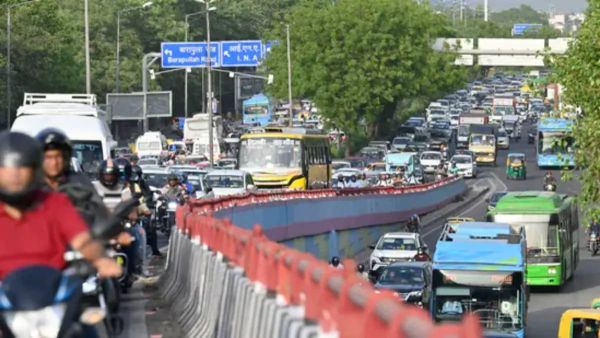
New Delhi: The Delhi government has greenlit an ambitious 55-kilometre elevated ring road project.
Designed to sit directly above the existing Mahatma Gandhi Ring Road, this "double-decker" transit corridor aims to eliminate chronic bottlenecks and slash travel times by up to 40% for millions of daily commuters.
The Public Works Department (PWD) has confirmed that the project will be executed in six strategic phases, with on-ground construction expected to commence within the next six months.
Phased Rollout and Key Stretches
The first phase focuses on the most critical arterial links, targeting areas where land acquisition is minimal and roadblocks are fewer.
The government has prioritised two potential starting points for Phase 1:
Kashmere Gate ISBT to Ashram/DND Flyway: An 11.5-km stretch that provides a vital link between North and South Delhi.
Azadpur to Kashmere Gate ISBT: A 9.5-km alternative that could also see early development due to fewer utility-shifting hurdles.
The remaining phases will eventually cover the entire loop, including segments from DND to Moti Bagh (10.5 km), Moti Bagh to Rajouri Garden (10 km), and the final 13.5-km stretch connecting Rajouri Garden back to Azadpur through Pitampura.
A Modern, Eco-Friendly Corridor
This isn't just about more asphalt. According to PWD Minister Parvesh Verma, the project is part of a broader vision for a "World-Class Delhi."
The elevated corridor will be integrated with the Delhi Metro and existing public transport hubs to create a seamless multimodal network.
Beyond vehicle lanes, the design includes:
Sustainable Infrastructure: Dedicated cycling tracks and pedestrian pathways to promote green mobility.
Smart Traffic Management: Redesigned intersections and advanced signal systems to ensure a signal-free experience on the upper deck.
Environmental Considerations: Topographical and environmental impact studies are currently being finalised by the global consultant, AECOM, to minimise the project’s carbon footprint.
Overcoming Vertical Challenges
Engineers face a unique challenge: building a third road layer that will reach nearly 15 to 20 meters high in certain sections to clear existing flyovers and Metro lines.
Experts from the Central Road Research Institute (CRRI) have emphasised that while the project is technically demanding, it is the only long-term solution for a city where horizontal expansion is no longer possible.
With a projected cost of roughly Rs 7,000 crore, this elevated lifeline promises to transform the Ring Road from a site of daily frustration into a high-speed artery, finally giving Delhiites a congestion-free commute.
-
Keralam: Police register FIR after coast guard helicopter flies low over Sabarimala temple

-
Bengal SIR: 65 election duty officers among those deleted, SC tells them to move appellate tribunal

-
Four Live Mortar Rounds Discovered in Hisar, Haryana

-
Salman Khan's Surprising Diet Choices at 59

-
Chennai Super Kings Triumph Over Mumbai Indians with a 103-Run Victory in IPL 2026