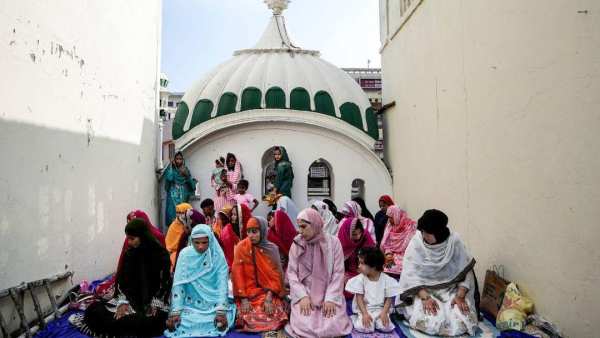
The Supreme Court on Friday heard arguments on the delicate balance between women’s fundamental rights and religious freedom, a debate that could have implications for issues ranging from Sabarimala to women offering prayers in mosques.
During the hearing, senior advocate M R Shamshad, appearing for a Muslim organisation, submitted that in Islam, it is not mandatory for women to offer prayers in a mosque. He argued that women receive equal religious merit for praying at home.
Bench Questions Rationale Behind Practices
Responding to the submission, Justice Ahsanuddin Amanullah asked for clarity on the reasoning behind such guidance in Islamic texts. He observed that one explanation often cited relates to practical considerations, such as the need for someone to care for children at home.
The exchange highlighted the court’s effort to understand not just the rule, but the context and reasoning underpinning religious practices.
Debate Over Mosque Necessity and Precedents
Shamshad further referred to the Supreme Court’s earlier ruling in the Ismail Faruqui case, which held that offering namaz does not necessarily require a mosque. He noted that the same reasoning is now being cited in ongoing arguments.
However, Justice B V Nagarathna drew a parallel, pointing out that such a view could be likened to saying temples are not essential in Hinduism, raising broader questions about how courts interpret religious necessity.
Shamshad acknowledged that this has been a longstanding argument, even as the Ismail Faruqui judgment continues to influence multiple rulings.
No Bar on Women’s Entry, Court Told
According to submissions cited during the hearing, there is consensus across Islamic sects that women are not prohibited from entering mosques. At the same time, it was argued that their presence is not mandatory for congregational prayers.
Justice Amanullah urged that this position be clearly communicated, noting that the principle traces back to the time of Prophet Muhammad.
Chief Justice Suryakant also sought clarity on whether women are allowed entry into mosques. In response, Shamshad affirmed that they are, citing teachings attributed to the Prophet that explicitly instruct followers not to prevent women from attending mosques.
-
Data Scientist: What Education is Required to Become a Data Scientist, and How Do You Start a Career in the Field?

-
Train News: Rules Changed for Disabled Train Passengers; Railways Issues Update Regarding UDID Cards

-
Good News for Government Employees: Now Receive a Massive Payout with 60% DA

-
Stuck Payment? Get an Instant Refund—RBI Changes the Entire Game for Wallet Users and Prepaid Cards
-
CBSE Board's Second Exam Starts May 15: View Full Datesheet Here