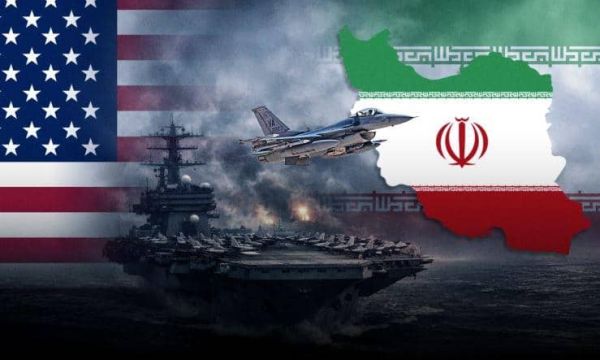
When American forces launched ‘Operation Epic Fury’ against Iran at the end of February, the financial implications were not immediately clear. Now, with a ceasefire holding for over two weeks, the scale of expenditure and its implications are becoming evident.
Heavy Use Of High-End Missiles
The United States deployed approximately 1,100 Joint Air-to-Surface Standoff Missile-Extended Range (JASSM-ER) systems during the conflict, each costing around $1.1 million, according to internal Defence Department estimates and congressional officials cited by The New York Times.
These long-range stealth cruise missiles, capable of striking targets over 600 miles (960 km) away, are designed to penetrate hardened defences. Pentagon estimates suggest that only about 1,500 remain.
More than 1,000 Tomahawk cruise missiles were also used, around ten times the number typically procured annually by the United States. Each Tomahawk costs roughly $3.6 million.
A study by the Center for Strategic and International Studies (CSIS) places the remaining stockpile at around 3,000, a level considered insufficient for a major conflict in the Western Pacific.
“While sufficient munitions exist to wage this war,” the CSIS study concluded, “the high expenditure of Tomahawks and other missiles in Operation Epic Fury creates risks for the United States in other theatres, particularly the Western Pacific.”
Air Defence Systems Under Strain
The strain on air defence capabilities is particularly significant. The Pentagon deployed more than 1,200 Patriot interceptor missiles, each costing over $4 million, to counter Iranian drone and rocket attacks.
For comparison, the US produced roughly 600 Patriot interceptors across all of 2025.
In addition, more than 1,000 Precision Strike and ATACMS ground-based missiles were used, leaving inventories described internally as “worrisomely low”, according to sources cited by The New York Times.
Mark Cancian, a retired Marine Corps colonel and senior adviser at CSIS, said: “The United States has many munitions with adequate inventories, but some critical ground-attack and missile-defence munitions were short before the war and are even shorter now.”
Financial Toll: Billions Spent Daily
The 38-day conflict is estimated by two independent groups to have cost between $28 billion and $35 billion, close to $1 billion per day.
In just the first 48 hours, defence officials told members of Congress that $5.6 billion worth of munitions had been expended.
However, writing for Harvard Kennedy School, economist Linda Bilmes suggested the real short-term cost could be closer to $2 billion per day, describing these expenses as “the tip of the iceberg”.
“I am certain we will spend one trillion dollars for the Iran war,” she said, noting that veteran disability and medical care costs, historically about 40% of total war expenditure, have yet to be fully accounted for. She also pointed out that the US already owes $7.3 trillion in disability benefits to veterans of previous conflicts.
Ripple Effects Beyond The Middle East
To sustain operations, the Pentagon diverted resources from both Europe and Asia.
In Europe, reduced availability of surveillance and attack drones has been flagged internally as a concern, with implications for Ukraine and NATO’s eastern flank.
In Asia, interceptor missiles from the Terminal High Altitude Area Defence (THAAD) system in South Korea were redirected to the Middle East. Two Marine Expeditionary Units, totalling around 4,400 personnel, were also moved from the Pacific.
Production Bottlenecks And Delays
Senator Jack Reed warned that replenishing depleted stockpiles could take considerable time.
“At current production rates, reconstituting what we have expended could take years,” he said.
Although the administration announced seven-year agreements with major defence contractors, including Lockheed Martin, to expand production of precision-guided munitions and THAAD interceptors, officials told The New York Times that no increased production has begun due to lack of funding approval from Congress.
White House Pushback
The White House has rejected reports of munitions shortages.
Press secretary Karoline Leavitt said “the entire premise” of such reporting was “false”, asserting that the US military remains “fully loaded with more than enough weapons and munitions”.
The Pentagon has not disclosed specific usage figures, citing operational security concerns.
Domestic Cost Comparisons
Analysts have also drawn comparisons with domestic spending.
At an estimated $1 billion per day, the conflict exceeds the daily cost of the Supplemental Nutrition Assistance Program (SNAP), the US food stamps scheme, which costs about $110 billion annually, or roughly $300 million per day, and supports around 42 million people.
The burden is also being tracked by researchers at Brown University’s ‘Costs of War’ project, including the impact on fuel prices.
Petrol prices in the United States rose by nearly 27 cents in a single week as tensions around the Strait of Hormuz escalated, the fastest weekly increase since Russia’s invasion of Ukraine in 2022.
Funding Pressures Mount
The Pentagon has requested a $200 billion supplemental appropriations package from Congress. Meanwhile, US President Donald Trump has suggested that Arab allies should share the financial burden, a proposal that has so far received a muted response from the region.
-
Gemini Tarot Horoscope Today, April 26, 2026: Comforts on the rise, but take care of your health

-
Taurus Daily Horoscope Today (Apr 20 - May 20), April 26, 2026: Happiness to Continue, Relationships to Strengthen

-
Pisces Daily Horoscope Today (Feb 19 - Mar 20), April 26, 2026: Stay Balanced and Humble in Relationships

-
Libra Daily Horoscope Today (Sept 23 - Oct 22), April 26, 2026: Earn Trust and Seize New Opportunities

-
Taurus Tarot Horoscope Today, April 26, 2026: Avoid Showing Off, Focus on Savings