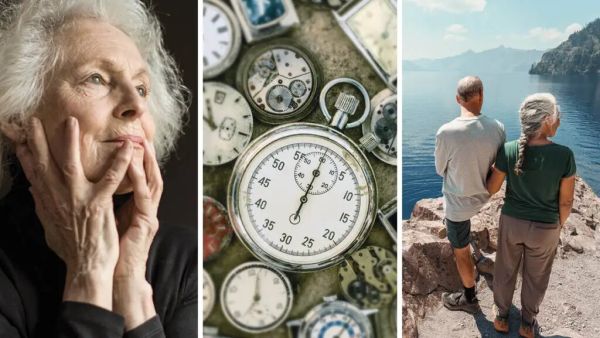
It is generally accepted that memory loss is a necessary part of aging; However, there are some people for whom age is just a number. Scientists have now challenged the thinking that as a person grows older, his memory and cognitive abilities are bound to decline. After 25 years of research, scientists have identified some people who are being called “super-agers”. These are people above 80 years of age whose memory is as sharp as that of people of 40 or 50 years. Research shows that its secret lies not only in their eating habits, but also in the unique structure of their brain and the nature of their social relationships. Can we also make our brain like a super-ager? Let’s find out…
For more than 25 years, Northwestern Medicine scientists have been conducting research on people over the age of 80 who have the same memory as people in their 40s and 50s; These people have been named “super-agers”. This research challenges the old thinking that decline in brain function is a necessary consequence of aging. Scientists say that some people manage to maintain their strong memory and thinking abilities even with increasing age.
What is the secret of super-agers?
According to Dr. Sandra Weintraub of Northwestern University’s Feinberg School of Medicine, the brains of these people are quite different from the brains of ordinary elderly people. Two main things have emerged in the research:
Resistance
In the brains of super-agers, the damaging proteins associated with Alzheimer’s—such as amyloid and tau—do not form as much.
Resilience
Even if these proteins *are* produced, they do not have any adverse effect on the brain.
What is unique about the structure of their brain?
When scientists examined the brains of these super-agers, they were completely amazed. Normally, the outer layer of the brain becomes thinner with age; However, in “super-agers” this layer remains the same.
The brains of super-agers have greater numbers of a special type of neurons—called ‘von Economo neurons’—that are involved in social behavior. The cells in their entorhinal cortex—the main area responsible for memory—were found to be much larger and healthier.
Not loneliness, but fellowship preserves memory!
Research has shown that even though these people have different physical routines, they have one thing in common: They are all highly active socially. Their deep social connections and frequent interactions with others play an important role in keeping their minds young.
According to Dr. Tamar Geffen, the brains donated by these ‘super-agers’ will now help in developing medicines and treatment methods that will prove to be a milestone in the prevention of diseases like Alzheimer’s and dementia in the future.
-
Iran conflict exposes limits of energy transition, pushes world back to oil, gas and nuclear

-
GST fault line: Supreme Court to rule if taxman can bundle years into one sweeping show-cause notice

-
Let science, not age caps, guide IVF

-
Global campuses take root in India

-
Quote of the Day by Taylor Swift: "I'm going to make mistakes, I'm going to fall down, I'm going to learn from it" – lessons on overcoming fear, achieving success, and learning from mistakes by Spotify’s most-streamed artist of all time