Mumbai: Credit flows through formal loan systems surged in FY26, rising 38% after contracting 8% a year earlier, signalling a revival in borrowing demand in India as interest rates eased.
Total credit expansion increased to ₹44.6 lakh crore in FY26 from ₹32.3 lakh crore in FY25, data from the Reserve Bank of India (RBI) showed.
Also Read: Pay Point India becomes first fintech to join RBI's Centralised Payment System
The outstanding flow of financial resources to the commercial sector crossed ₹300 lakh crore for the first time, rising 15.8% to ₹311.8 lakh crore in FY26, compared with growth of 11.7% a year earlier.
Credit demand was supported by an easing rate cycle that began in February 2025, when the RBI cut policy rates by a cumulative 125 basis points, lowered the cash reserve ratio by 100 basis points, and infused ₹8.8 lakh crore of liquidity through government bond purchases.
The reduction in policy rates led to a transmission of 87 basis points in lending rates, which fell to 9% in February 2026 from 9.87% a year earlier.
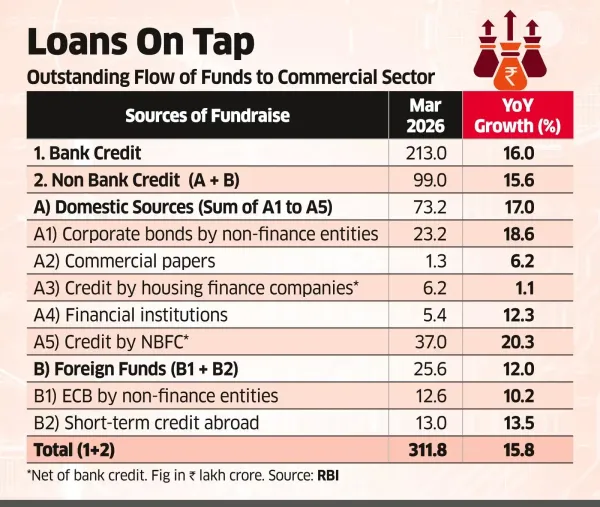
Outstanding non-food credit to the commercial sector stood at ₹213 lakh crore as of March 31, 2026, up 16% from a year earlier, while resources raised from non-bank sources rose 15.6% to ₹99 lakh crore. Of these, funds raised domestically increased 17% to ₹73.2 lakh crore, while borrowings from foreign sources rose 12% to ₹25.6 lakh crore.
Also Read: Central banks look through inflation until entrenched, no evidence of second-round effects: Dy Gov Poonam Gupta
Among non-bank sources, flows to the commercial sector were highest from non-banking finance companies at ₹3.62 lakh crore, net of bank credit, followed by equity issuance by non-financial entities at ₹3.45 lakh crore and corporate bond issuance by non-financial institutions at ₹3 lakh crore.
Funds raised from foreign sources during the year jumped 50% to ₹4.91 lakh crore, with foreign direct investment rising to ₹3.24 lakh crore from ₹2.17 lakh crore a year earlier.
Total credit expansion increased to ₹44.6 lakh crore in FY26 from ₹32.3 lakh crore in FY25, data from the Reserve Bank of India (RBI) showed.
Also Read: Pay Point India becomes first fintech to join RBI's Centralised Payment System
The outstanding flow of financial resources to the commercial sector crossed ₹300 lakh crore for the first time, rising 15.8% to ₹311.8 lakh crore in FY26, compared with growth of 11.7% a year earlier.
Credit demand was supported by an easing rate cycle that began in February 2025, when the RBI cut policy rates by a cumulative 125 basis points, lowered the cash reserve ratio by 100 basis points, and infused ₹8.8 lakh crore of liquidity through government bond purchases.
The reduction in policy rates led to a transmission of 87 basis points in lending rates, which fell to 9% in February 2026 from 9.87% a year earlier.
Outstanding loans to commercial sector cross ₹300-lakh-crore mark for the first time
Outstanding non-food credit to the commercial sector stood at ₹213 lakh crore as of March 31, 2026, up 16% from a year earlier, while resources raised from non-bank sources rose 15.6% to ₹99 lakh crore. Of these, funds raised domestically increased 17% to ₹73.2 lakh crore, while borrowings from foreign sources rose 12% to ₹25.6 lakh crore.
Also Read: Central banks look through inflation until entrenched, no evidence of second-round effects: Dy Gov Poonam Gupta
Among non-bank sources, flows to the commercial sector were highest from non-banking finance companies at ₹3.62 lakh crore, net of bank credit, followed by equity issuance by non-financial entities at ₹3.45 lakh crore and corporate bond issuance by non-financial institutions at ₹3 lakh crore.
Funds raised from foreign sources during the year jumped 50% to ₹4.91 lakh crore, with foreign direct investment rising to ₹3.24 lakh crore from ₹2.17 lakh crore a year earlier.