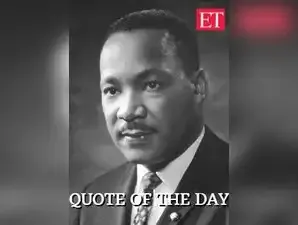
Quote of the Day: Powerful words often outlive the moment in which they were spoken, shaping how generations think about justice, humanity, and moral courage. Few voices have done this as enduringly as Martin Luther King Jr., whose speeches and writings continue to guide conversations around equality and nonviolence. A Quote of the Day is not just a line to reflect on—it is a doorway into history, emotion, and lived experience. King’s words, rooted in struggle and hope, remain deeply relevant in a world still grappling with division and injustice.
The Quote of the Day today by Martin Luther King Jr. is: “Darkness cannot drive out darkness; only light can do that. Hate cannot drive out hate; only love can do that.” These words capture the essence of King’s philosophy and life’s work. Born on January 15, 1929, in Atlanta, Georgia, King was a Baptist minister and social activist who became the face of the American civil rights movement from the mid-1950s until his assassination in 1968. He led efforts to end legal segregation and racial discrimination through nonviolent resistance, eventually earning the Nobel Peace Prize in 1964. His leadership not only reshaped laws but also challenged the conscience of a nation.
Martin Luther King Jr. grew up in a middle-class African American family deeply rooted in religious tradition. Both his father and maternal grandfather were Baptist preachers, and his upbringing in Atlanta’s Auburn Avenue—often referred to as “Black Wall Street”—provided him with a strong sense of community and purpose. Despite this supportive environment, he experienced racial prejudice early in life, including the painful moment when a childhood friend was no longer allowed to play with him because of segregation.
King entered Morehouse College at just 15 years old under a special program. Initially considering careers in medicine or law, he ultimately chose to follow in his father’s footsteps and enter the ministry. Influenced by mentors like Benjamin Mays, King developed a commitment to social justice and the belief that religion should actively address inequality in the present world, not just promise rewards in the afterlife, as per information sourced from Britannica.
Rise as a Civil Rights Leader
King’s national prominence began with the Montgomery bus boycott in 1955, sparked by Rosa Parks’ arrest. As the leader of the Montgomery Improvement Association, King advocated peaceful protest, inspiring thousands to stand against segregation. His calm yet powerful speeches introduced the country to a new kind of leadership—one rooted in moral authority rather than aggression.
He later founded the Southern Christian Leadership Conference (SCLC), which became a driving force behind the civil rights movement. Through marches, sit-ins, and speeches, King brought attention to systemic injustice. One of the most defining moments of his career came during the March on Washington in 1963, where he delivered his iconic “I Have a Dream” speech to more than 200,000 people, calling for equality and unity.
Philosophy of Nonviolence
Central to King’s leadership was his belief in nonviolent resistance, inspired in part by the teachings of Mahatma Gandhi. He argued that violence only deepens hatred, while peaceful protest exposes injustice and awakens moral awareness. This philosophy guided campaigns in cities like Birmingham and Selma, where protestors faced brutal opposition but ultimately helped push forward landmark legislation such as the Civil Rights Act of 1964 and the Voting Rights Act of 1965.
King’s approach was not without criticism. Some activists believed his methods were too slow or passive. Yet he remained committed to his belief that lasting change could not come from hatred or revenge but from understanding and reconciliation, as per information sourced from Britannica.
The meaning behind today’s quote—“Darkness cannot drive out darkness; only light can do that. Hate cannot drive out hate; only love can do that”—is both simple and profound. It reflects King’s conviction that negative forces cannot be defeated by mirroring them. Responding to hatred with hatred only perpetuates a cycle of conflict, while responding with love has the power to transform individuals and societies.
In the context of the civil rights movement, this idea was revolutionary. At a time when African Americans faced systemic violence and discrimination, King urged restraint and compassion instead of retaliation. He believed that moral strength, not physical force, would ultimately lead to justice.
Beyond its historical roots, the quote continues to resonate in modern life. Whether applied to political disagreements, social conflicts, or personal relationships, it serves as a reminder that empathy and understanding are more powerful than anger. It challenges individuals to rise above immediate reactions and consider the long-term impact of their actions.
In his later years, King expanded his focus beyond racial equality to include issues like poverty and opposition to the Vietnam War. While these positions brought criticism and increased pressure, they also demonstrated his broader vision of justice. Despite facing constant threats and growing fatigue, he continued his work until April 4, 1968, when he was assassinated in Memphis, Tennessee.
King’s death sparked grief and unrest across the United States, but his legacy endured. Today, he is remembered as one of the most influential figures in modern history. His contributions are honored through a national holiday in the United States, numerous memorials, and continued global recognition of his work for peace and equality, as per information sourced from Britannica.
Iconic Quotes by Martin Luther King Jr.
Beyond the Quote of the Day, Martin Luther King Jr. left behind a powerful collection of words that continue to inspire:
“I have a dream that one day right there in Alabama little black boys and little black girls will be able to join hands with little white boys and white girls as sisters and brothers.”
“I have a dream that my four little children will one day live in a nation where they will not be judged by the color of their skin but by the content of their character.”
“I have a dream that one day on the red hills of Georgia the sons of former slaves and the sons of former slave-owners will be able to sit down together at a table of brotherhood.”
“I have a dream that one day this nation will rise up and live out the true meaning of its creed — we hold these truths to be self-evident: that all men are created equal.”
“I say to you today, my friends, that in spite of the difficulties and frustrations of the moment, I still have a dream.”
“Now is the time to rise from the dark and desolate valley of segregation to the sunlit path of racial justice.”
“We will not be satisfied until justice rolls down like waters and righteousness like a mighty stream.”
“Let us not seek to satisfy our thirst for freedom by drinking from the cup of bitterness and hatred.”
“Now is the time to make justice a reality for all of God’s children.”
“We cannot walk alone. And as we walk, we must make the pledge that we shall march ahead. We cannot turn back.”
“We refuse to believe that the bank of justice is bankrupt.”
“In the process of gaining our rightful place we must not be guilty of wrongful deeds.”
Each of these lines reflects King’s unwavering belief in justice, unity, and the transformative power of hope.
As a Quote of the Day, King’s words about light and love continue to challenge and inspire. They remind us that even in moments of darkness, there is a choice—to respond with anger or with compassion. More than half a century after his passing, Martin Luther King Jr. remains a guiding voice, urging humanity toward a future built not on division, but on understanding and shared dignity.
Quote of the Day Today April 24
The Quote of the Day today by Martin Luther King Jr. is: “Darkness cannot drive out darkness; only light can do that. Hate cannot drive out hate; only love can do that.” These words capture the essence of King’s philosophy and life’s work. Born on January 15, 1929, in Atlanta, Georgia, King was a Baptist minister and social activist who became the face of the American civil rights movement from the mid-1950s until his assassination in 1968. He led efforts to end legal segregation and racial discrimination through nonviolent resistance, eventually earning the Nobel Peace Prize in 1964. His leadership not only reshaped laws but also challenged the conscience of a nation.
Early Life and Influences
Martin Luther King Jr. grew up in a middle-class African American family deeply rooted in religious tradition. Both his father and maternal grandfather were Baptist preachers, and his upbringing in Atlanta’s Auburn Avenue—often referred to as “Black Wall Street”—provided him with a strong sense of community and purpose. Despite this supportive environment, he experienced racial prejudice early in life, including the painful moment when a childhood friend was no longer allowed to play with him because of segregation.
King entered Morehouse College at just 15 years old under a special program. Initially considering careers in medicine or law, he ultimately chose to follow in his father’s footsteps and enter the ministry. Influenced by mentors like Benjamin Mays, King developed a commitment to social justice and the belief that religion should actively address inequality in the present world, not just promise rewards in the afterlife, as per information sourced from Britannica.
Rise as a Civil Rights Leader
King’s national prominence began with the Montgomery bus boycott in 1955, sparked by Rosa Parks’ arrest. As the leader of the Montgomery Improvement Association, King advocated peaceful protest, inspiring thousands to stand against segregation. His calm yet powerful speeches introduced the country to a new kind of leadership—one rooted in moral authority rather than aggression.
He later founded the Southern Christian Leadership Conference (SCLC), which became a driving force behind the civil rights movement. Through marches, sit-ins, and speeches, King brought attention to systemic injustice. One of the most defining moments of his career came during the March on Washington in 1963, where he delivered his iconic “I Have a Dream” speech to more than 200,000 people, calling for equality and unity.
Philosophy of Nonviolence
Central to King’s leadership was his belief in nonviolent resistance, inspired in part by the teachings of Mahatma Gandhi. He argued that violence only deepens hatred, while peaceful protest exposes injustice and awakens moral awareness. This philosophy guided campaigns in cities like Birmingham and Selma, where protestors faced brutal opposition but ultimately helped push forward landmark legislation such as the Civil Rights Act of 1964 and the Voting Rights Act of 1965.
King’s approach was not without criticism. Some activists believed his methods were too slow or passive. Yet he remained committed to his belief that lasting change could not come from hatred or revenge but from understanding and reconciliation, as per information sourced from Britannica.
Meaning of the Quote of the Day
The meaning behind today’s quote—“Darkness cannot drive out darkness; only light can do that. Hate cannot drive out hate; only love can do that”—is both simple and profound. It reflects King’s conviction that negative forces cannot be defeated by mirroring them. Responding to hatred with hatred only perpetuates a cycle of conflict, while responding with love has the power to transform individuals and societies.
In the context of the civil rights movement, this idea was revolutionary. At a time when African Americans faced systemic violence and discrimination, King urged restraint and compassion instead of retaliation. He believed that moral strength, not physical force, would ultimately lead to justice.
Beyond its historical roots, the quote continues to resonate in modern life. Whether applied to political disagreements, social conflicts, or personal relationships, it serves as a reminder that empathy and understanding are more powerful than anger. It challenges individuals to rise above immediate reactions and consider the long-term impact of their actions.
Final Years and Legacy
In his later years, King expanded his focus beyond racial equality to include issues like poverty and opposition to the Vietnam War. While these positions brought criticism and increased pressure, they also demonstrated his broader vision of justice. Despite facing constant threats and growing fatigue, he continued his work until April 4, 1968, when he was assassinated in Memphis, Tennessee.
King’s death sparked grief and unrest across the United States, but his legacy endured. Today, he is remembered as one of the most influential figures in modern history. His contributions are honored through a national holiday in the United States, numerous memorials, and continued global recognition of his work for peace and equality, as per information sourced from Britannica.
Iconic Quotes by Martin Luther King Jr.
Beyond the Quote of the Day, Martin Luther King Jr. left behind a powerful collection of words that continue to inspire:
“I have a dream that one day right there in Alabama little black boys and little black girls will be able to join hands with little white boys and white girls as sisters and brothers.”
“I have a dream that my four little children will one day live in a nation where they will not be judged by the color of their skin but by the content of their character.”
“I have a dream that one day on the red hills of Georgia the sons of former slaves and the sons of former slave-owners will be able to sit down together at a table of brotherhood.”
“I have a dream that one day this nation will rise up and live out the true meaning of its creed — we hold these truths to be self-evident: that all men are created equal.”
“I say to you today, my friends, that in spite of the difficulties and frustrations of the moment, I still have a dream.”
“Now is the time to rise from the dark and desolate valley of segregation to the sunlit path of racial justice.”
“We will not be satisfied until justice rolls down like waters and righteousness like a mighty stream.”
“Let us not seek to satisfy our thirst for freedom by drinking from the cup of bitterness and hatred.”
“Now is the time to make justice a reality for all of God’s children.”
“We cannot walk alone. And as we walk, we must make the pledge that we shall march ahead. We cannot turn back.”
“We refuse to believe that the bank of justice is bankrupt.”
“In the process of gaining our rightful place we must not be guilty of wrongful deeds.”
Each of these lines reflects King’s unwavering belief in justice, unity, and the transformative power of hope.
As a Quote of the Day, King’s words about light and love continue to challenge and inspire. They remind us that even in moments of darkness, there is a choice—to respond with anger or with compassion. More than half a century after his passing, Martin Luther King Jr. remains a guiding voice, urging humanity toward a future built not on division, but on understanding and shared dignity.