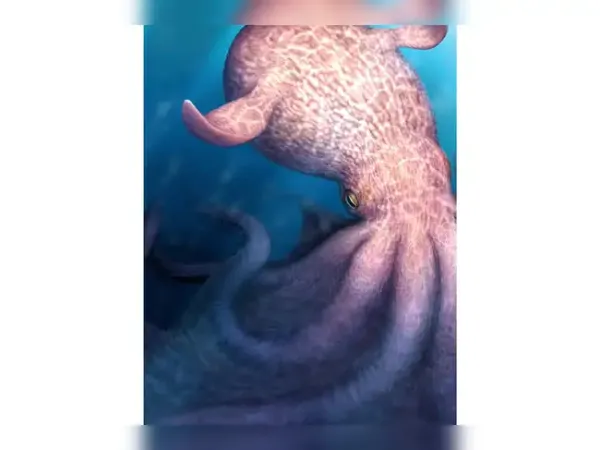
Long before sharks and giant marine reptiles ruled the seas alone, another terrifying predator may have been hunting in the deep, an enormous octopus with arms stretching up to 19 meters (62 feet) and a beak strong enough to crush shells and bones.
A new study published in the journal Science has revealed that these giant finned octopuses, known as Nanaimoteuthis haggarti and Nanaimoteuthis jeletzkyi, were likely apex predators in the Late Cretaceous oceans, challenging the long-held belief that only vertebrates sat at the top of the marine food chain.
Because octopuses have soft bodies that rarely fossilize, researchers relied on preserved beaks from Japan and Canada’s Vancouver Island to estimate their size and feeding behavior.
Unlike modern sharks or mosasaurs that relied on massive jaws and teeth, these ancient octopuses used a deadly combination of long, flexible arms and a powerful, hardened beak.
Researchers found exceptionally preserved fossil jaws, also called beaks, with heavy chips, scratches, cracks, and polished edges. These marks suggest the animals repeatedly crushed hard prey such as shells, bones, and skeletons with enormous force.
Scientists believe the octopus would first grab prey using its long arms, pulling fish, shelled mollusks, crustaceans, and possibly even larger marine animals closer before using its sharp, muscular beak to crack them apart.
The jaw damage was so extreme that nearly 10% of the jaw tip had been worn away over time, which suggests it repeatedly crashed hard, shell-crushing rather than soft-prey feeding.
The larger species, Nanaimoteuthis haggarti, may have reached between 6.6 and 18.6 meters in total length, making it potentially one of the largest invertebrates ever discovered.
Its fossil jaw was even larger than that of the modern giant squid, which currently holds the record for the largest known cephalopod jaw. Researchers say it rivaled giant predators of the time, including mosasaurs, plesiosaurs, giant sharks, and massive fish.
One of the most surprising discoveries was the uneven wear on the jaws. The right side of the beak was more worn than the left, suggesting “handedness” or lateralized behavior, something seen in modern octopuses and often linked to advanced intelligence. This means these early octopuses may not only have been huge and powerful but also highly intelligent hunters.
The discovery suggests these giant invertebrates competed directly with marine reptiles and sharks, rewriting what scientists thought they knew about prehistoric oceans.
A new study published in the journal Science has revealed that these giant finned octopuses, known as Nanaimoteuthis haggarti and Nanaimoteuthis jeletzkyi, were likely apex predators in the Late Cretaceous oceans, challenging the long-held belief that only vertebrates sat at the top of the marine food chain.
Because octopuses have soft bodies that rarely fossilize, researchers relied on preserved beaks from Japan and Canada’s Vancouver Island to estimate their size and feeding behavior.
How did the giant octopus kill its prey?
Unlike modern sharks or mosasaurs that relied on massive jaws and teeth, these ancient octopuses used a deadly combination of long, flexible arms and a powerful, hardened beak.
Researchers found exceptionally preserved fossil jaws, also called beaks, with heavy chips, scratches, cracks, and polished edges. These marks suggest the animals repeatedly crushed hard prey such as shells, bones, and skeletons with enormous force.
Scientists believe the octopus would first grab prey using its long arms, pulling fish, shelled mollusks, crustaceans, and possibly even larger marine animals closer before using its sharp, muscular beak to crack them apart.
The jaw damage was so extreme that nearly 10% of the jaw tip had been worn away over time, which suggests it repeatedly crashed hard, shell-crushing rather than soft-prey feeding.
Cretaceous Kraken was bigger than today’s giant squid
The larger species, Nanaimoteuthis haggarti, may have reached between 6.6 and 18.6 meters in total length, making it potentially one of the largest invertebrates ever discovered.
Its fossil jaw was even larger than that of the modern giant squid, which currently holds the record for the largest known cephalopod jaw. Researchers say it rivaled giant predators of the time, including mosasaurs, plesiosaurs, giant sharks, and massive fish.
Signs of intelligence found in fossil jaws
One of the most surprising discoveries was the uneven wear on the jaws. The right side of the beak was more worn than the left, suggesting “handedness” or lateralized behavior, something seen in modern octopuses and often linked to advanced intelligence. This means these early octopuses may not only have been huge and powerful but also highly intelligent hunters.
The discovery suggests these giant invertebrates competed directly with marine reptiles and sharks, rewriting what scientists thought they knew about prehistoric oceans.