
Every year, while filing their Income Tax Returns (ITR), salaried individuals face a major dilemma: Should they opt for the Old Tax Regime or the New Tax Regime? In reality, many people select an option without doing the necessary calculations, only to discover later that they have ended up paying more tax than necessary. This means that while choosing the right regime is crucial, it is even more important to avoid financial loss by steering clear of the wrong choice.
Consequently, a common question arises: If your annual salary is ₹7 lakh, ₹12 lakh, or ₹20 lakh, which option would be the most suitable for you?
Let's first understand the complete picture in 5 key points:
The New Regime is now the default tax system.
Under the Old Regime, you can claim various deductions.
The New Regime offers lower tax slabs.
An incorrect choice could cost you thousands of extra rupees.
For those with an annual salary of ₹12 lakh, a thorough comparison is essential.
What is the difference between the New and Old Regimes?
Under this regime, you can claim various deductions, such as:
Section 80C = Up to ₹1.5 Lakhs
NPS 80CCD(1B) = ₹50,000
HRA (House Rent Allowance)
Home Loan Interest (Subject to rules for self-occupied property)
Medical Insurance (Section 80D)
LTA (Leave Travel Allowance) (Terms and conditions apply)
**New Tax Regime**
Tax rates are lower in this regime, but fewer deductions are available.
**New Tax Slabs (For FY 2025-26 / AY 2026-27, for example)**
**Your Tax Slab** | **Tax Rate**
₹0 - ₹4 Lakhs | Nil
₹4 - ₹8 Lakhs | 5%
₹8 - ₹12 Lakhs | 10%
₹12 - ₹16 Lakhs | 15%
₹16 - ₹20 Lakhs | 20%
₹20 - ₹24 Lakhs | 25%
₹24 Lakhs+ | 30%
**Understanding the Impact on a ₹7 Lakh Salary**
**New Regime**
Due to rebate provisions, the effective tax liability can be zero or very low (subject to eligibility conditions).
**Old Regime**
If you do not have any deductions to claim, the tax liability may turn out to be higher.
**Verdict**
For individuals earning a salary of ₹7 Lakhs, the New Regime often proves to be the better option, especially if they have few deductions to claim.
**₹12 Lakh Salary (The Most Critical Case)**
Let's assume:
Gross Salary = ₹12 Lakhs
Standard Deduction applies
No additional deductions claimed
**New Regime (Approx.)**
The tax liability will be quite competitive due to the lower slab structure.
If you do not have any deductions, the tax liability may be higher.
However, if you have the following:
80C Deductions = ₹1.5 Lakhs
NPS Contributions = ₹50,000
HRA Benefit
Insurance Premiums
Home Loan Interest
...then the Old Regime might be the better choice.
**Conclusion**
Individuals earning a salary of ₹12 Lakhs should not choose an option without first comparing both regimes.
This is where the most common mistakes occur. Also Note:
Under the old regime, income up to ₹5 lakh is completely tax-free after accounting for investments and deductions.
Under the new regime, thanks to a special rebate, no tax will be levied on income up to ₹12 lakh.
To claim exemptions under the old scheme, it is mandatory to submit proof of investments—such as rent receipts and LIC premiums.
Under the new scheme, there is no need to declare any investments; the calculation process here is quite simple.
Those opting for the new regime will now receive an enhanced standard deduction of ₹75,000, up from the previous ₹50,000.
This new exemption of ₹75,000 will be directly deducted from the income of salaried employees, without any conditions attached.
Let's understand this in the context of a ₹20 lakh salary:
For high-income earners, the role of deductions becomes a game-changer.
If your investment portfolio is substantial, the old system may prove to be more beneficial.
Conversely, if your deductions are minimal, the new system might turn out to be the better option.
It is evident that for individuals earning ₹20 lakh annually, effective tax planning is essential.
Disclaimer: This content has been sourced and edited from Zee Business. While we have made modifications for clarity and presentation, the original content belongs to its respective authors and website. We do not claim ownership of the content.
-
What is happening on 3rd May in Hyderabad’s Kokapet?

-
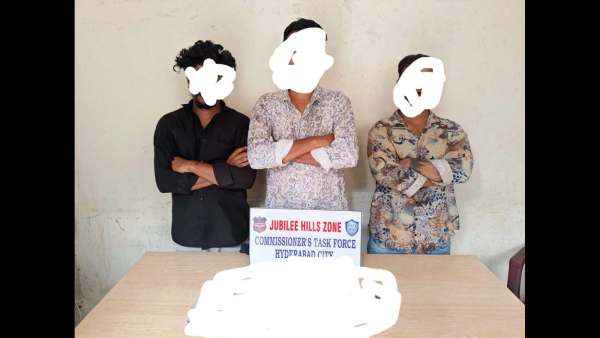
Three held for possessing drugs in Hyderabad, hash oil worth Rs 1 lakh seized
-
Man arrested with 3.83 kg ganja in Hyderabad’s Kondapur

-
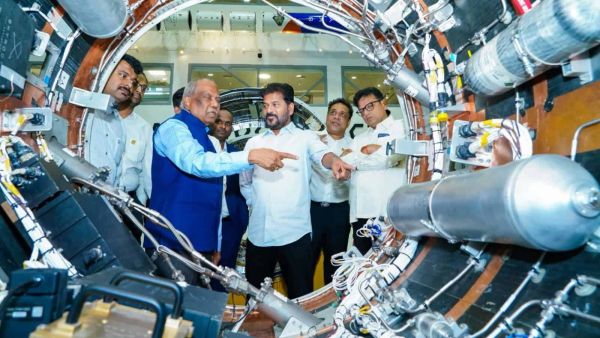
Built in Hyderabad, Skyroot’s Vikram-1 readies for orbit
-
UP: Minors stripped, beaten, thrown into canal to die over ‘restaurant debt’