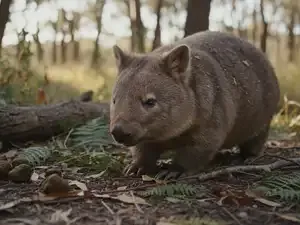
The wombat is known to be the only animal that produces feces in the form of cubes. This unique property is not random, but occurs as a consequence of biomechanical processes within the body. According to a study published in Science News, it is caused by stiffness and elasticity differences of muscles within various parts of a wombat’s digestive tract. With the passing of food through the intestine, there is uneven pressure that creates distinctive edges of waste. Another study, discussed on ScienceDaily and published by the American Physical Society, reveals that this happens due to the alternation of contractions that create a natural mold for a cubed shape. In contrast to other mammals, which feature a homogeneous elastic tissue in the intestine that results in rounded feces, the structure of the wombat intestine is what causes the cube shape.
Movement and Digestion
However, the formation of cube-shaped feces is also influenced by the way it passes through the intestines. According to research published on TheScienceBreaker, muscle contractions help form a specific shape for feces rather than moving it along the intestines. It is due to the abnormally prolonged digestion of the food. As per an article published by Live Science, wombats need two weeks to digest their food completely, providing enough time for complete dehydration of the feces. Dry and compacted waste will be able to keep its cubic shape after the process. Slow-moving feces, pressure, and dehydration of the waste are the main factors contributing to maintaining the solid shape of cubes when they are released from the body.Fecal cubes stick around long enough for the scent to mark territorial boundariesImage Credit: Gemini