
Listen to this article in summarized format
Loading...
××
Subscribe to

Unlock AI Briefing and Premium Content
New Year Offer 24 Hours Left
Subscribe NowAlready a member? Sign In
What's Included
- Exclusive Stories
- Daily ePaper Access
- Smart Market Tools
- Curated Investment Ideas
- Ad-lite Experience
Subscription

What happens when travel stops being about speed and starts becoming about meaning? In a world of quick flights, instant bookings and fast pilgrimages, an old photograph of Kedarnath from the 1800s has now sparked reflection on how journeys used to demand patience, effort and endurance in a way modern convenience rarely does. The contrast is striking enough to make even familiar destinations feel new again.
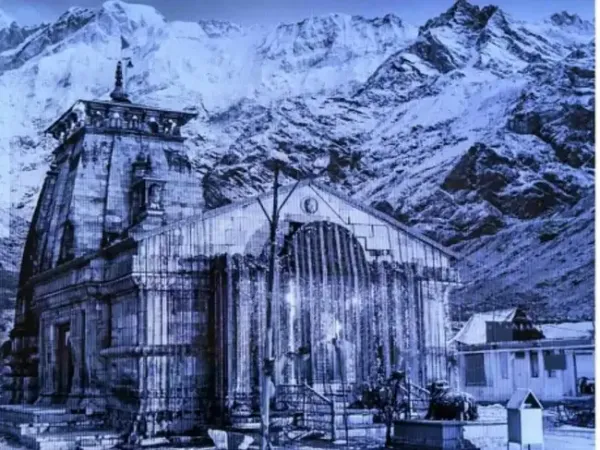
Anand Mahindra recently reshared a historic photograph on X, (shared by X user Lost Temples), believed to be one of the earliest known images of Kedarnath Dham, taken in 1882. Looking at the image, he noted how different the experience of pilgrimage once was. There were no roads leading up to the shrine, no railway access, and no helicopters ferrying pilgrims. Instead, the journey unfolded entirely on foot, through mountains and harsh terrain, with only endurance and faith guiding the way.
He described how the shrine, dedicated to Lord Shiva, sits nestled in the Himalayas, almost untouched by the conveniences of modern travel. In that era, reaching Kedarnath was not just a part of the pilgrimage; it was the pilgrimage itself. The journey demanded time, physical strength and mental commitment. Each step carried meaning because there was no shortcut to the destination. The effort itself became part of the spiritual experience.
Today, access has transformed significantly. Roads and improved connectivity have made the yatra far more accessible to a larger number of devotees. That ease has allowed many more people to experience the sacred site, which would have been nearly impossible in earlier times. Yet, the reflection shared along with the image was not about nostalgia for difficulty. It was about what might be quietly lost when journeys become too fast and too effortless.
The idea raised was simple but thought-provoking. While convenience has opened doors, it may also have reduced the space for slowing down, observing and absorbing the experience of travel itself. Instead of rushing from point A to point B, earlier journeys forced people into a rhythm where the path mattered as much as the destination. There was time to think, to adapt and to experience change gradually.
The reflection suggested that this slower pace often shaped people in subtle ways. Journeys were not just physical movement, but also internal transitions. The challenges along the way became part of what pilgrims carried back with them. In contrast, modern travel often compresses time. The destination is reached quickly, but the emotional and reflective space that once came with the journey can feel reduced.
The message was not a call to return to difficult travel, but rather an invitation to preserve something more intangible. The ability to slow down, even when everything around is designed for speed. Because, as the reflection highlighted, journeys are not only about where we arrive, but also about how they quietly shape who we become along the way.
His post comes as the 2026 Char Dham Yatra has officially begun in Uttarakhand, with the doors of Kedarnath Dham opening to devotees on April 22. Situated in the Garhwal Himalayas, the shrine saw a large turnout on day one despite the challenging 22-kilometre trek and limited helicopter access.
A different user called the reflection timeless, noting that pilgrimages are not just about reaching a destination but about transformation along the way. Another simply agreed, saying the journey itself is the pilgrimage.
Anand Mahindra recently reshared a historic photograph on X, (shared by X user Lost Temples), believed to be one of the earliest known images of Kedarnath Dham, taken in 1882. Looking at the image, he noted how different the experience of pilgrimage once was. There were no roads leading up to the shrine, no railway access, and no helicopters ferrying pilgrims. Instead, the journey unfolded entirely on foot, through mountains and harsh terrain, with only endurance and faith guiding the way.
He described how the shrine, dedicated to Lord Shiva, sits nestled in the Himalayas, almost untouched by the conveniences of modern travel. In that era, reaching Kedarnath was not just a part of the pilgrimage; it was the pilgrimage itself. The journey demanded time, physical strength and mental commitment. Each step carried meaning because there was no shortcut to the destination. The effort itself became part of the spiritual experience.
Today, access has transformed significantly. Roads and improved connectivity have made the yatra far more accessible to a larger number of devotees. That ease has allowed many more people to experience the sacred site, which would have been nearly impossible in earlier times. Yet, the reflection shared along with the image was not about nostalgia for difficulty. It was about what might be quietly lost when journeys become too fast and too effortless.
The idea raised was simple but thought-provoking. While convenience has opened doors, it may also have reduced the space for slowing down, observing and absorbing the experience of travel itself. Instead of rushing from point A to point B, earlier journeys forced people into a rhythm where the path mattered as much as the destination. There was time to think, to adapt and to experience change gradually.
The reflection suggested that this slower pace often shaped people in subtle ways. Journeys were not just physical movement, but also internal transitions. The challenges along the way became part of what pilgrims carried back with them. In contrast, modern travel often compresses time. The destination is reached quickly, but the emotional and reflective space that once came with the journey can feel reduced.
The message was not a call to return to difficult travel, but rather an invitation to preserve something more intangible. The ability to slow down, even when everything around is designed for speed. Because, as the reflection highlighted, journeys are not only about where we arrive, but also about how they quietly shape who we become along the way.
His post comes as the 2026 Char Dham Yatra has officially begun in Uttarakhand, with the doors of Kedarnath Dham opening to devotees on April 22. Situated in the Garhwal Himalayas, the shrine saw a large turnout on day one despite the challenging 22-kilometre trek and limited helicopter access.
Internet reacts
The post sparked thoughtful reactions online, with many users reflecting on how modern convenience has changed the meaning of journeys. One user felt that making travel easier has also made experiences feel less earned, adding that when everything is accessible, it often loses its emotional weight. Another commented from a more philosophical angle, saying the journey is really about self-realisation rather than achievement, where the focus is on understanding oneself.A different user called the reflection timeless, noting that pilgrimages are not just about reaching a destination but about transformation along the way. Another simply agreed, saying the journey itself is the pilgrimage.