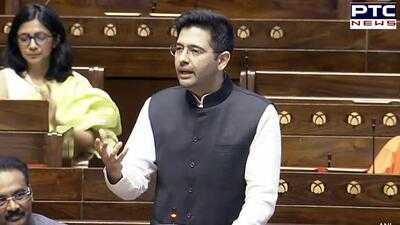
PTC News Desk: Raghav Chadha tried to stop his own recent move—leading six Aam Aadmi Party (AAP) Rajya Sabha MPs to the Bharatiya Janata Party (BJP)—which has been seen as a major setback for Arvind Kejriwal.
This switch has created a serious numbers problem for AAP, as it lost 7 out of its 10 MPs, and could lead to a long legal fight under the anti-defection law (Tenth Schedule), which requires at least two-thirds of a party’s lawmakers to defect together to avoid disqualification.
The law was created to stop politicians from switching parties for power or personal gain. If two-thirds of a party’s MPs move together, they are protected from disqualification and can either join another party or form a separate group.
Interestingly, things might have been different if a proposal Chadha himself made in August 2022 had become law. As a first-time Rajya Sabha MP, he had suggested raising the defection threshold to three-fourths and also banning defecting MPs from contesting elections for six years. If that rule had applied now, at least eight MPs would have needed to switch together instead of seven.
His proposed bill aimed to stop what he had then called unethical political defections and to strengthen the anti-defection law. It also included rules to curb “resort politics,” requiring lawmakers to formally report withdrawal of support within seven days or face disqualification.
However, the bill was never passed and still remains on record under his name—now drawing attention because it is being discussed in the context of his own exit from AAP.
-
Bank Shield T20 Cricket Tournament 2026: RBI To Face Bank Of Baroda In Final After Dominant Semi-Final Wins

-
India’s No 1 Nurjahan Noorali Eyes Asian Para Games Qualification With Key International Campaign

-
DC Vs CSK: Axar Patel Wins Toss, Opts To Bat First In Delhi; Lungi Ngidi Returns, No MS Dhoni Yet

-
UAE to build new desalination station producing 60 million gallons daily

-
Explore Offbeat Destinations in Himachal Pradesh This May