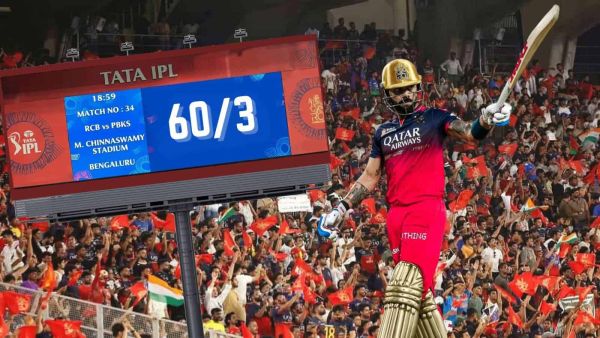
What we are witnessing in the IPL nowadays seems unreal. IPL battles were always intense affairs, but this time, almost every team is scoring 200 or more in their allotted 20 overs. More than 10 runs per over has become the norm. As an example, let us take the two matches that were played on April 25.
In one match, Rajasthan Royals (228 for 6) lost to Sunrisers Hyderabad (229 for 5) and in the other match, Delhi Capitals (264 for 2) lost to Punjab Kings (265 for 4). That means 986 runs were scored in a little less than 80 overs. Even in the heydays of Viv Richards and Clive Lloyd, such batting had not been on view.
We are seeing a tsunami of runs. The game is all about big-hitting skills nowadays. T20 cricket has changed the dynamics of batting. There was a time when a sound defence was the primary requirement for a batsman to succeed. Coaches would make schoolboys practice the front foot defensive shot for hours on end. Foot in line with the ball, no gap between bat and pad, head and eyes over the ball – these were the habits that were drilled into the minds of all trainee batsmen.

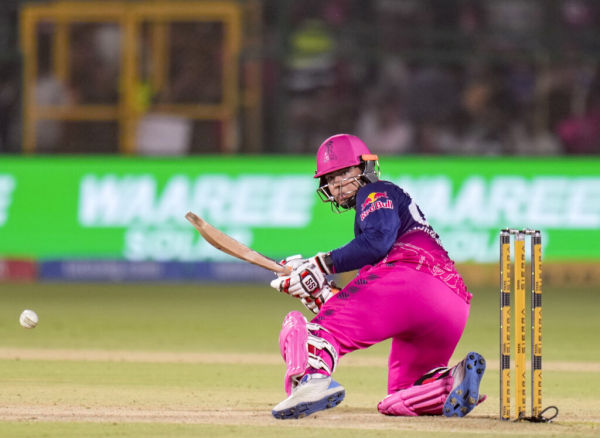
But now, coaches teach different things – how to increase hand speed and how to mentally look at every ball as a potential sixer. The days of defensive cricket have disappeared. The hand speed of the batters has increased; they have excellent hand-eye coordination and their attitude is to hit every ball over the boundary.
Scientific technology behind bats
Added to that is the scientific technology that has changed the nature of cricket bats. Modern cricket bats are drastically different from those that were used in the past. Bats have evolved into thick-edged and powerful weapons designed to destroy bowlers. Nowadays, bats are weapons of mass destruction on the cricket fields. Their design is to get maximum distance with every contact that is made.
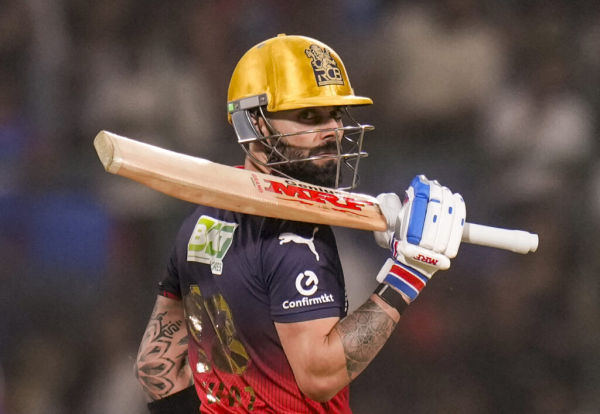
While the maximum legal width (4.25 inch) has remained the same, the depth, spine and edge thickness have increased significantly, allowing for a much larger contact area – or “sweet spot,” as it is called. Plus there is a lot of “extra meat” to the willows. Even youngsters use heavy bats nowadays.
Most batsmen use bats that are between 1.1 kg to 1.3 kg in weight. Virat Kohli preferred comparatively light weight bats that were about 1.2 kg. But Sachin’s bats were 1.46 kg. Strongly built West Indian players used heavier bats. Clive Lloyd had a nickname for his bat – The Big Bertha. Only he had the strength to swing it about like a little toy. Chris Gayle used bats that were 1.36 kg.
Experiments with shape and design
Many years ago, the well-known bat manufacturer Gray-Nicolls invented the first “scooped” bat. The GN100 Scoop was the first bat which had its mass removed from the reverse side. By removing this wood, the bat became lighter and its sweet spot increased. It allowed physically weaker batters to play strokes they would otherwise omit from their repertoire.
This style of bat became popular and various scooped bats such as the GN500, Dynadrive and Viper were released by Gray-Nicolls after that. So every year, the science of bat manufacturing is going a step ahead and helping the modern day batters to pile up big scores.
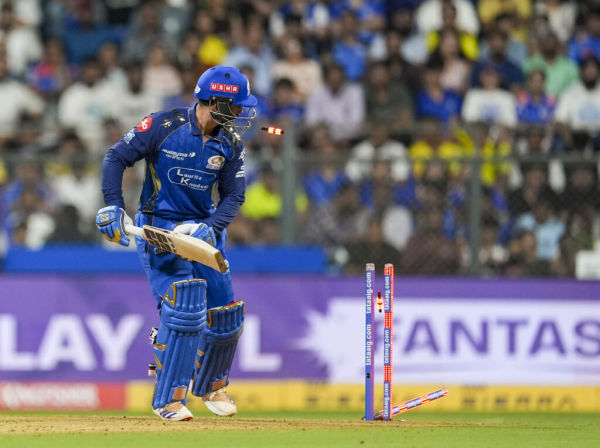
The use of Computer Numerical Control (CNC) machines allows for precise shaping of cricket bats, ensuring a consistent quality. Modern kiln-drying techniques also allow the willow to be dried faster and more consistently, maintaining optimal moisture levels for performance, whereas older bats often relied more heavily on hand-shaping and slower air-drying.
A new mental approach
Added to all these scientific inputs, there is a new mental trend that is being seen. The new thinking is that “nothing is impossible.” All mental barriers have been demolished. As one knows, if the mind thinks that a target can be achieved then it usually can be done.
In May 1954, British athlete Roger Bannister became the first runner to run a mile in less than four minutes. That was long considered an unbreakable barrier for all runners. Many had tried and failed. But after Bannister broke through, the others became confident that it could be done.
Soon, Australian runner John Landy broke the four-minute barrier too. And after that, it became commonplace. The block was in the minds of the athletes. But quite often, eradicating a mental block is more difficult than accomplishing a physical task.
Fearless youngsters in the IPL
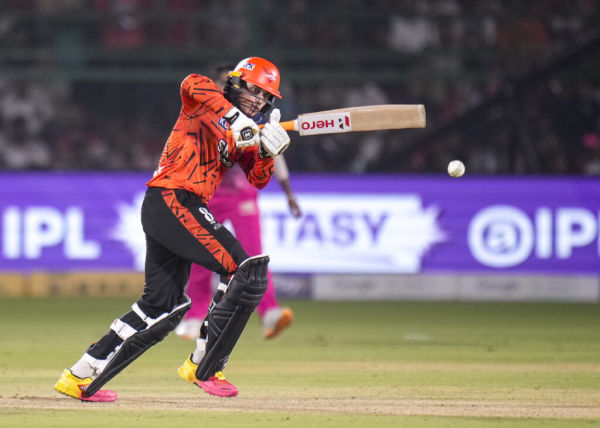
Nowadays, there are many new players in the IPL who have removed barriers and have a fearless and aggressive attitude to their batting. Such examples include 15-year-old Vaibhav Sooryavanshi, 18-year-old Ayush Mhatre, 21-year-old Sameer Rizvi, 25-year-old Abhishek Sharma and others. They have been mentally groomed to approach batting with a new outlook.
They are not overawed by senior bowlers with fearsome reputations. They would not hesitate to attack the bowling of Jasprit Bumrah, Jofra Archer or Kagiso Rabada.
Recently, we saw another devastating show of power hitting by Vaibhav when he scored 103 off only 37 balls. But amazingly, even then, his team Rajasthan Royals, lost to Sunrisers Hyderabad. It just shows that there is no safe total these days.
But hats off to India’s teenage wonder Vaibhav. The youngster seems to have mastered the art and science of power hitting. In the future, he may become the first batsman to score a 200 in T20 cricket. Against Sunrisers Hyderabad (SRH), he scored 103 off 37 balls. So it is theoretically possible that if he continues batting for 74 balls, he may score 206 runs. He’s only 15 now. He may do it by the time he’s 18 if he continues to make progress.
Legends of tomorrow in the making
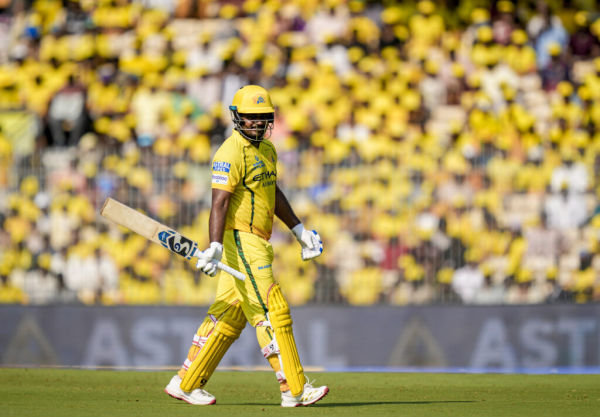
The youths we are seeing now in the IPL are the legends of tomorrow in the making. They are being fashioned in the fire of intense competition and already they are showing signs of greatness.
The IPL has a strong track record of nurturing raw talent, with past examples being Jasprit Bumrah and Rishabh Pant. Experts like Ravi Shastri have praised the confidence of these youngsters, asserting they have the temperament to excel on the biggest stage.
So, the future looks bright for India in the rapid-fire world of T20 cricket.
-
Get coolness even in 45°C without AC, this smart trick will cool the room in minutes

-
This is the zodiac sign of Nita Ambani, the girls of this person can get in-laws as rich as Ambani.

-
Are you troubled by frequent constipation? Try these 5 home remedies; Gut will remain clear

-
How to keep the room cool in summer, know easy ways

-
900 kg Adulterated Paneer Worth Rs 2.25 Lakh Destroyed By Food Safety Team In Ghaziabad