
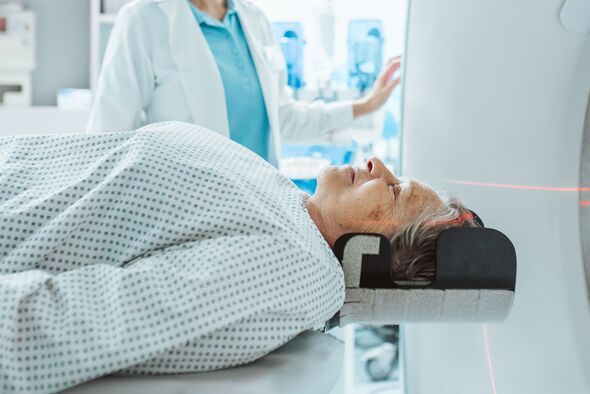
Dementia patients are being wrongly labelled as aggressive and violent because hospitals are failing to meet their needs, medics have warned. A motion passed at the Society of Radiographers' annual conference on Tuesday called on the NHS to do more to reduce stress for people with dementia. It said: "People living with dementia often face barriers in X-ray departments due to sensory overload, unfamiliar environments and communication challenges.
"Adjustments such as quiet spaces, adaptable lighting, clear communication and staff awareness can significantly improve patient experience and outcomes." The motion, which was backed unanimously, was put forward by Lee-Ann Swift, an assistant practitioner in diagnostic radiography from Wales.
She proposed it after encountering a patient with dementia needing a chest X-ray who was terrified by her surroundings.
Ms Swift said: "I never take things home with me, but this one patient really played on my mind.
"We're taking these patients out of their safe space that they know, to somewhere where there are bright lights, unfamiliar noises from scanning machines, long and uncertain waiting times, people walking back and forth.
"We're bombarding them with questions and then expecting to get an image from them.
"We should be these patients' voices when they come into the department." Ms Swift said radiographers should help advocate for patients and ensure they feel safe and relaxed.
She added: "The way we present ourselves as professionals can make an absolute difference to their quality of care when they come in. Isn't that what we all signed up for when we joined the NHS? I believe so."
Lisa Booth, a senior lecturer at the University of Cumbria who researches patient care in radiography, said people with dementia often struggle to process information.
She added: "When you take them into an unfamiliar environment - with unfamiliar voices, faces and noises - that requires a lot of processing. And then the patient becomes really overloaded.
"Alzheimer's affects the logical part of the brain first. So people can't say: 'I can't cope with this, I need some space.' Instead, fight-or-flight instinct kicks in.
"When somebody can't tell you that they're in pain, they act out non-verbally, behaviourally. Those behaviours are a sign of an unmet need."
Changes in communication, such as giving people with dementia one simple instruction at a time, can prevent them feeling overwhelmed, Dr Booth said.
She also urged healthcare workers to refer to a patient's dementia in their NHS notes and include any approaches that have helped them to relax.
Dr Emma Hyde, the Society of Radiographers' head of education and research, said all patients can benefit from bespoke care, whether or not they have dementia.
She added: "It's about tailoring it to the individual. A lot of these things are about fundamental human connection: providing care that's dignified and respectful for people. "It doesn't take much time: to say, 'Hello, my name is -' or to provide someone with time to ask questions.
"Taking those extra few seconds can make a huge difference to the outcome of their examination or treatment, so it's absolutely crucial for us to be doing it."
Michelle Dyson, chief executive of Alzheimer's Society, said "simple, practical steps" can make a big difference to someone's experience during scans and examinations.
She added: "There are around one million people living with dementia in the UK and, with that number set to rise, it is vital that all frontline health and social care staff have the right knowledge and skills to support people living with dementia.
"This helps to make sure people receive dignified, compassionate care rather than being misunderstood."
An NHS Spokesperson said: "We are determined to improve dementia care, and all people living with dementia should always be treated with dignity in every care setting.
"The NHS has recently refreshed its dementia training standards for staff. All staff providing direct care and services to people living with dementia should know how to adapt the physical environment and make reasonable adjustments so that people living with dementia can access the care that they need."
-
LIRR RECAP: New York trains cancelled as smash near Penn Station sparks Long Island delays

-
Banarasi is slowly moving beyond weddings - Shanti Banaras founder Khushi Shah on rewriting the future of Banarasi

-
Want Power & Success? Chanakya Niti's 3 Timeless Secrets

-
Summer Fashion Trends: Stylish Dresses to Elevate Your Wardrobe

-
Not haunted by ghosts! Real reason why things go bump in the night