Thai Hoang, 39, last month vacated a 40-square-meter shop, where he had been selling men’s clothes, in an alley off Thai Ha Street, a popular fashion street.
He had a frontage of five meters, considered spacious in the city, and the alley was big enough for cars, but he decided to move out even after the landlord offered a 6% discount on his monthly rent of VND35 million (US$1,330).
He blamed the move on declining sales. “There were months when sales were not enough to cover rents,” he said, adding that he has moved his stocks home to sell online.
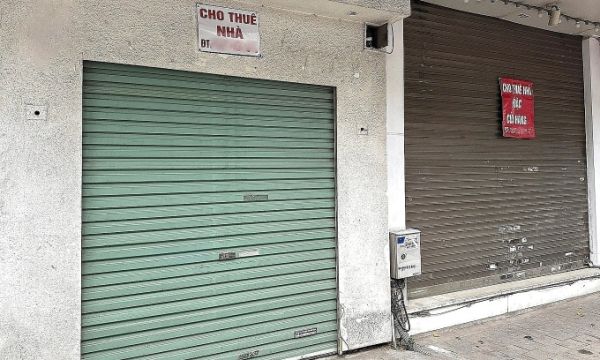
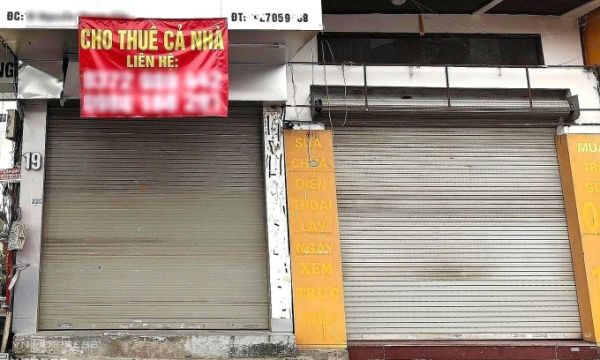
Many businesses on popular retail streets such as Thai Ha, Kim Ma and Hue have vacated their premises in recent months, and landlords are struggling to replace them despite offering double-digit discounts.
|
Properties for lease on Kim Ma Street, Hanoi, April 2026. Photo by Read/Ngoc Diem |
On Kim Ma and Nguyen Thai Hoc Streets, known for their fashion stores and food and beverage outlets, at least 30 premises have “for lease” or “for sale” signs.
Mai Loan, a property broker with five years of experience in the city, said the townhouse segment is going through a prolonged slump.
“Small, narrow premises with limited parking space struggle to compete, even if they are in prime locations,” she said.
Data from online listing platform Batdongsan shows interest in private housing in Hanoi has fallen 22% since the end of last year.
In several areas, the average asking rents for townhouses have fallen by 13-37% from their 2025 peaks.
Mai Vo, director of retail services at property consultancy CBRE Vietnam, said the lack of tenants at prime locations is not a temporary phenomenon but marks a significant structural shift in the market.
In the past, people were willing to pay high costs to secure a presence on central streets for branding purposes, but consumer habits have now changed markedly with the rise of e-commerce and integrated shopping malls, she said.
 |
|
Properties for lease at the Xuan Thuy – Cau Giay Intersection in Hanoi, April 2026. Photo by Read/Ngoc Diem |
This has reduced the attraction of standalone retail, forcing landlords to lower rents to keep tenants, she added. “Adjusting rents is a sign that the market is rebalancing.”
Hoang Nguyet Minh, general director of another property consultancy, Cushman & Wakefield Vietnam, said rapidly rising rents in recent years have eroded the competitiveness of townhouses.
Many properties have deteriorated and are difficult to upgrade to meet branding requirements, making them less attractive.
This shift is most evident in the F&B and fashion sectors. Rather than remain on high streets unlike in the past, many F&B brands are moving into shopping malls, while fashion retailers are scaling back physical stores to focus on online sales, she said.
Pressure from tightening urban management and sidewalk regulations has also made it difficult for many food businesses to sustain operations in small, narrow spaces, she said.
But this is an opportune time to secure prime business locations as the market has plenty of affordable supply, she added.
-
Hindu body urges inclusion of Indian history in South African textbooks

-
Delhi: Two booked for securing govt tenders using fake documents

-
I miss him a lot: Hema Malini remembers Dharmendra

-
Karnataka Cabinet ratified decisions on internal reservation for SCs

-
Govt notifies changes to Citizenship Rules; focus on OCI registration