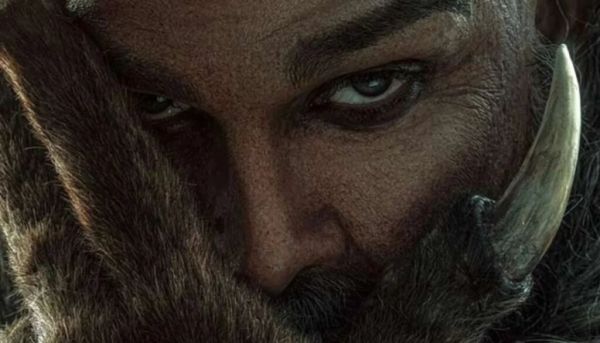
Actor Allu Arjun’s upcoming film Raaka had created strong buzz in the Indian film market even before its release.
The film, which stars Allu Arjun and Deepika Padukone, had already started attracting major attention from distributors across North India, especially in Bihar and Uttar Pradesh.
According to a source close to the project, several distributors had approached the makers to secure exclusive territorial rights for Bihar at a very high price. The demand was described as “unprecedented” due to the growing popularity of the actor in the region.
The film was earlier known as AA22 X A6 before its official title Raw was announced along with the first look.
Industry reports stated that Allu Arjun had built a strong fanbase in the Hindi belt over the past few years. His previous film Pushpa 2: The Rule had performed strongly in North India and had also contributed to increased theatre activity in several regions.

A source further added that the craze for his films in Bihar, Uttar Pradesh, and Jharkhand had encouraged distributors to invest heavily in Raw indeed before its release.
Pushpa: The Rise had also gained unexpected success in Hindi markets after its dubbed release, which later crossed ₹100 crore in Hindi alone. The sequel had gone on to perform even bigger numbers in North India.
Rawdirected by Atlee Kumar and produced by Sun Pictures, is expected to release in 2027 in multiple languages including Telugu, Hindi, Tamil, Kannada, and Malayalam.
The film production which receives support from Sun Pictures creates an extensive budget system to deliver its storytelling and filmmaking elements to global movie viewers.
Earlier, Atlee had opened up emotionally about his long-awaited film Raaka and its journey.
Atlee said, “Raaka isn’t just a film… it’s a part of me I’ve carried for years. For 18 years, I held on to one idea never letting it fade. It tested me, shaped me and stayed with me through everything. And honestly… this is just the beginning.”
The film has continued to remain in the spotlight as trade circles anticipate another strong response from audiences in the North Indian belt.