Most productivity advice sounds convincing until you try it. Wake up at 5 a.m., batch your emails, color-code your calendar, and by Thursday, you’re back to the same overwhelmed routine, wondering what went wrong. The problem isn’t discipline. It’s that most tips treat productivity as a personality trait rather than a set of decisions you make every day about what gets your attention and when. Real productivity isn’t about squeezing more tasks into a day. It’s about completing the right tasks with enough mental clarity to do them well. That distinction matters because someone who finishes three high-impact projects by noon is more productive than someone who just color-codes their calendar and still ends up overwhelmed by Thursday. The methods below are specific, tested, and built around how people actually think and work.
1. Start with Clear Priorities
A critical first step is deciding what truly deserves your attention each day. Multitasking might feel efficient, but research shows it actually fragments focus and slows you down. When you switch tasks repeatedly, you lose the momentum and “autopilot” efficiency of focused work. Instead, concentrate on just two or three high-priority projects at a time. For example, tackle your single most important task first. When that’s done, move to the next. This way, you minimize the “task-switching costs” that reduce productivity. Limiting your daily workload to a handful of key objectives ensures deeper work on what matters.
Simple Ways to Set Priorities:
- The 1–3–5 Method. One concrete system is the “1-3-5 rule,” which helps you plan each day with exactly nine tasks: one major, three medium, and five minor. The idea is to identify your single biggest task (the “1”), and then three moderately demanding tasks, followed by five quick or routine items. This forces you to focus on a realistic workload and puts the hardest work upfront. According to experts, the 1-3-5 rule “boosts daily productivity by structuring work into 9 tasks: 1 major, 3 medium, and 5 minor, helping teams prioritize effectively and reduce decision fatigue.” In practice, you’ll start each day knowing exactly what to tackle, which cuts down time spent deciding what to do next.
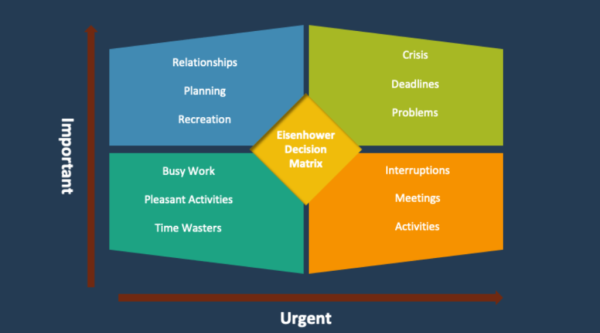
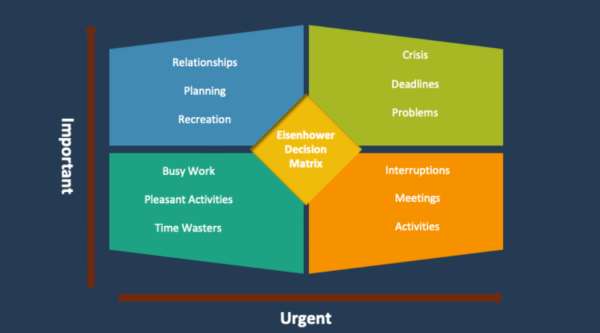
- The Eisenhower Matrix. Another powerful tool is this method (urgent-important matrix). This approach sorts tasks into four quadrants: urgent and important, important but not urgent, urgent but not important, and neither. High-priority work (urgent + important) goes in the top-left and gets done immediately. Important but not urgent work is scheduled for later, while low-value “urgent” requests get delegated and busywork (not urgent/important) is eliminated. As one guide explains, the matrix guides you to “act immediately on high-priority work, schedule important tasks for later, delegate lower-impact requests, and eliminate busywork.” In short, the Eisenhower Matrix helps you cut through distractions and hone in on what truly advances your goals.
- The Daily Planning. Simply setting aside a few minutes to plan each day can make a big difference. When you list out top priorities and schedule time blocks, you reduce uncertainty and procrastination. According to productivity experts, daily planning helps you “focus on what’s important by identifying your top priorities each day” and creates a clear roadmap for your time. For example, jotting down your 1-3-5 tasks or scheduling specific work sessions in the morning can help you stay on track throughout the day. Regular planning also sharpens your awareness of deadlines and prevents new tasks from derailing you so that you stay aligned with your bigger outcomes.
2. Build a Distraction-Free Work Environment
Your physical and digital environment shapes your output more than most people acknowledge. An open browser tab, a phone placed face-up on the desk, or a workspace that doubles as a storage area all compete for cognitive bandwidth even when you’re not consciously engaging with them. Studies on attention suggest that the mere presence of a smartphone on a desk reduces available working memory, even if the screen is off. Environment design isn’t about creating a perfect studio – it’s about removing the friction that pulls your attention sideways.
- Start with the physical space. A clean, dedicated work surface with only the tools you need for the current task reduces decision fatigue and signals to your brain that it’s time to focus. Noise is worth addressing directly: if silence isn’t possible, consistent background sound (white noise, ambient audio, or instrumental music) tends to outperform unpredictable interruptions. Headphones with a simple “do not disturb” signal to others around you can eliminate a surprising number of casual interruptions throughout the day.
- Digital distractions deserve equal attention. The most common culprits are social media platforms checked reflexively between tasks, notification systems that interrupt every 8–12 minutes on average, vague tasks with no clear endpoint that lead to procrastination, and work without deadlines that drifts indefinitely. Blocking apps like Freedom or Cold Turkey remove the need for willpower entirely – when access is technically unavailable, you stop burning mental energy resisting it. Turning off all non-essential notifications and batching email to two or three fixed windows per day can recover over an hour of focused time per day for the average knowledge worker.
3. Use Breaks to Stay Productive
Continuous work doesn’t build output – it depletes it. Cognitive performance drops measurably after 90 minutes of sustained focus, and pushing through the decline produces slower, lower-quality work that often needs to be redone. Breaks aren’t an interruption to productivity. They’re the mechanism that makes sustained productivity possible. The concept of energy recovery treats your focus like a renewable resource rather than a fixed daily quantity. You don’t have the same mental capacity at 3 p.m. that you had at 9 a.m., but strategic rest can partially restore it. This is why the timing and format of breaks matter as much as taking them at all.
Effective Break Techniques:
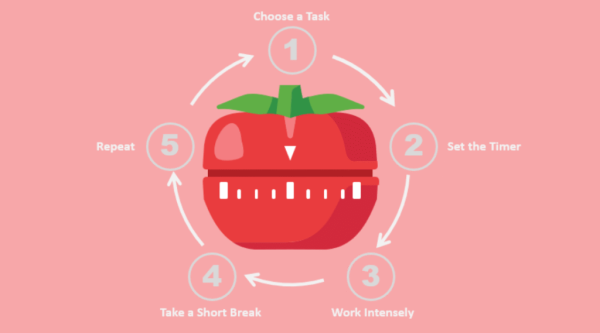
- The Pomodoro Technique structures work into 25-minute focused intervals followed by 5-minute breaks, with a longer 20–30 minute break after four cycles. The short intervals create a sense of urgency that makes starting easier, and the scheduled breaks give your brain permission to disengage without guilt. For tasks requiring deeper concentration, a modified 50/10 split often works better: 50 minutes of focused work followed by a 10-minute break.
- Active breaks produce the strongest recovery effect. A 10-minute walk, a few minutes of light stretching, or stepping outside for fresh air measurably improves mood, working memory, and creative problem-solving compared to sitting still during a break. The format of the break also shifts how people use short pauses between tasks. Some users also turn to light digital options during short pauses. For example, Davinci’s Gold Casino offers bonus money for quick-play games like slots, designed for short, easy sessions that help switch off from work and refocus.
- Micro-breaks of 60 to 90 seconds taken every 20–30 minutes reduce eye strain, lower cortisol levels slightly, and prevent the slow cognitive numbing that builds during unbroken screen time. Looking at something 20 feet away for 20 seconds, the “20-20-20 rule” is one of the simplest and most consistently recommended recovery habits for desk workers.
4. Automate and Simplify Repetitive Tasks
Every recurring task you do manually is a candidate for automation, templating, or elimination. Email responses, invoice formatting, social media scheduling, and file organization – these tasks consume real time and real attention, and most of them can be handled in a fraction of the time with the right tools. Zapier and Make (formerly Integromat) connect apps and automate workflows without requiring any coding knowledge. Text expander tools like TextExpander or the built-in snippet features in most operating systems can reduce repetitive typing to a few keystrokes. Delegation gets underused because it requires upfront investment: writing a brief, creating a system, and explaining expectations. But that 20-minute investment often recovers hours weekly. A well-documented process handed to someone else or to AI assistants for drafting, summarizing, and research returns your time to the work that genuinely requires your judgment. Templates serve the same purpose for solo workers. A meeting agenda template, a weekly review format, or a standard project brief means you’re never starting from a blank page on tasks you’ve done dozens of times before.
5. Focus on Energy, Not Just Time
Time management assumes all hours are equal. They aren’t. Most people have a 2–4 hour window of peak cognitive performance each day, shaped by their individual circadian rhythm. For early chronotypes, that window typically falls between 8 and 11 a.m. For evening types, it may not arrive until late morning or early afternoon. Scheduling your most demanding work during your personal peak hours and protecting that window from meetings, administrative tasks, and interruptions can double effective output without adding a single minute to your workday.
Daily Energy Boost Tips:
- Sleep is the single most important productivity variable and the most commonly sacrificed one. Seven to nine hours for most adults isn’t a luxury, but it’s the baseline for normal cognitive function. Even one night of six hours of sleep impairs working memory and decision-making to a measurable degree.
- Nutrition affects focus more directly than most office workers account for. Large, carbohydrate-heavy meals produce the familiar post-lunch cognitive dip. Smaller, protein-rich meals spaced throughout the day tend to maintain steadier energy and attention. Adequate hydration, even mild dehydration of 1–2% body weight, reduces concentration and increases the perception of effort.
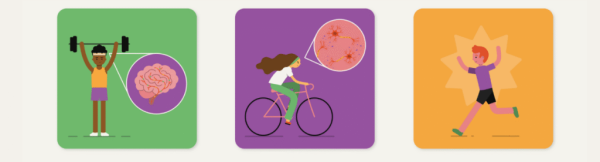
- Physical activity improves executive function, attention span, and mood through mechanisms including increased cerebral blood flow and neurochemical regulation. Even 20 minutes of moderate exercise, a brisk walk, a short workout, or a bike ride produces measurable cognitive benefits that last several hours afterward.
6. Track Your Progress and Adjust
Finally, keep score of how well your new habits work. If you don’t track something, it’s hard to know if it’s making a difference. Even a basic self-review adds accountability and insight. For example, noting your completed tasks and checking them off a list can trigger a small dopamine reward in the brain, making you feel more confident and motivated. Over time, this positive feedback loop reinforces productive behavior. Each day or week, ask yourself: What did I accomplish, and what could I improve? Record key metrics like the number of tasks finished or hours spent in deep focus. You might also track your energy level (e.g., rate of alertness) and jot down any frequent interruptions that occurred. Tools like Todoist or Microsoft To Do can help track completed tasks, while apps such as RescueTime or Clockify automatically measure focused work time. For quick notes and self-reviews, many people use Notion or Google Keep because they make it easy to capture patterns without extra effort. These simple data points shine a light on trouble spots. Did you actually finish those top 3 tasks you set? Did that afternoon nap help regain focus? By reviewing regularly, you can spot patterns and fine-tune your approach. For instance, if social media pop-ups keep stealing time, you might tighten your blocks or use a stronger site blocker. As one productivity guide puts it: use measurement to “identify what actually improves your results” and adjust accordingly.
- Tasks Completed: Keep a tally of your finished tasks or goals. Checking them off tracks output and boosts morale.
- Time Focused: Note how many focused sessions or hours you managed each day. Over time, this process reveals if you’re slipping back into distraction.
- Energy/Effort: Rate your midday energy or alertness. This helps you correlate breaks, diet, or sleep patterns to performance.
- Distractions Encountered: Make a brief note of what pulled you off task (email pings, chat, etc.). If a particular distraction recurs, plan to eliminate or batch it.
Use a simple notebook, app, or calendar notes such as Google Calendar or Apple Notes, whatever you’ll maintain consistently. The key is not perfection but awareness: by tracking progress, you build a real feedback loop that guides smarter tweaks.
Productivity is a holistic system, not a single magic trick. Instead of chasing dozens of surface-level hacks, focus on building habits and routines that work together. When you set clear priorities, manage your environment and breaks, automate repetitive work, honor your energy rhythms, and regularly review your results, even small changes stack up. Over time these steady improvements compound – one extra focused hour a day, a handful of unnecessary tasks removed, or a consistent sleep schedule can yield dramatic gains in what you accomplish. Choose one of the above methods, adjust it to your style, track its effectiveness, and then add or modify another. With patience and persistence, you’ll create a personalized productivity system that delivers real results.

-
Virat Kohli Gets Angry, Argues With Umpire Over Controversial Rajat Patidar Dismissal in IPL 2026 Match vs GT; RCB Break Silence

-
WATCH | Virat Kohli Gets Taste of His Own Medicine as Kagiso Rabada Gives ex-RCB Captain Fiery Send-Off During IPL 2026 Match

-
WATCH | ANGRY Virat Kohli Pacified by Childhood Friend Ishant Sharma During GT-RCB IPL 2026 Match

-
Crude Oil Prices Surge On US-Iran War Stalemate; Brent Over $110 Per Barrel

-
'It Was Very Windy, Boat Was Shaking': Eyewitnesses Recall Jabalpur Cruise Tragedy