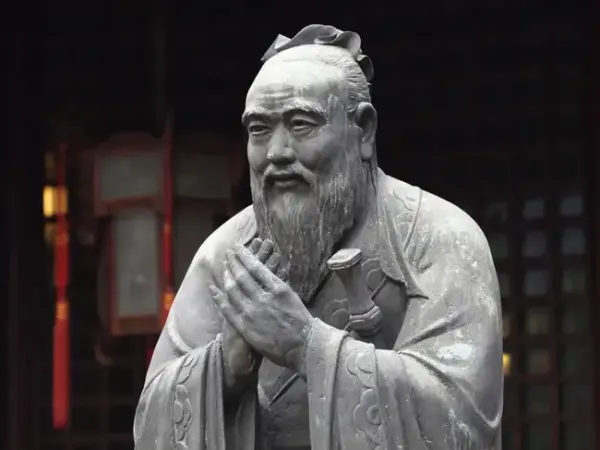
Confucius remains one of China’s most influential philosophers, educators, and political thinkers, whose teachings have shaped Chinese civilisation and global thought for more than two millennia. He believed lasting social harmony could only be achieved when individuals practised kindness, respect, and personal responsibility. Rather than relying solely on strict laws or punishment, Confucius stressed the power of strong moral character. Central to his philosophy was the concept of ‘Ren,’ representing compassion, humanity, and ethical behaviour. He encouraged people to lead with empathy, uphold virtue, and choose what is morally right, regardless of recognition or external consequences.
One of the famous teachings by Confucius was, ‘I hear and I forget. I see and I remember. I do and I understand’ which stands as a testament to his belief in experiential learning, personal growth, and deeper wisdom gained through direct action rather than passive observation.
Quote of the day by Confucius: Limits of passive learning
Confucius highlights the idea that simply receiving information is often not enough for deep knowledge to take root. Listening alone can expose people to ideas, but without engagement, much of that knowledge can fade quickly. Observation adds another layer by making concepts more memorable, as seeing something in action creates stronger mental connections. In the real world, this can be seen in classrooms, workplaces, and daily life. A student may listen to a lecture and understand the basics, but watching a demonstration often makes the lesson clearer. Similarly, in professional settings, observing experienced colleagues can provide valuable insights that theory alone cannot offer.
This concept underscores the importance of moving beyond passive consumption. Modern education and skill development increasingly recognise that people retain more when they actively engage with information. Whether learning a language, mastering technology, or improving communication, combining knowledge with observation strengthens understanding. It reminds individuals that while information is valuable, deeper comprehension requires greater involvement than simply hearing about something.
Confucius quote of the day: Experience is the true teacher
Confucius’ thought focuses on action as the most powerful path to genuine understanding. Confucius suggests that true mastery develops when people directly apply what they have learned. Practical experience transforms abstract concepts into lived knowledge, allowing individuals to understand not just the theory but the real challenges and nuances involved. In everyday life, this is evident in skills such as driving, cooking, leadership, or problem-solving.
Reading instructions or watching others can provide guidance, but personal experience builds confidence and competence. Mistakes, adjustments, and repeated practice all contribute to a deeper level of expertise. This principle is especially relevant in today’s fast-changing world, where adaptability and hands-on learning are essential. Employers often value practical experience because it demonstrates capability beyond theoretical understanding. On a broader level, this idea encourages people to step outside their comfort zones and engage directly with growth opportunities. Real progress often comes not from observation alone, but from active participation and continuous practice.
More about Confucius
Confucius, originally named Kong Qiu, was born in 551 BCE and faced significant hardships during his formative years. After losing his father early in life, he was brought up by his mother under humble circumstances. Financial struggles meant he took on several minor occupations, such as administrative and caretaking roles, to sustain himself. Despite these challenges, Confucius developed a profound passion for knowledge. He devoted himself to studying classical literature, historical records, and cultural traditions. These early difficulties deeply influenced his conviction that education, strong ethics, and personal discipline could elevate individuals beyond adversity. His dedication eventually led him to serve in official roles within the state of Lu, where he earned admiration for his integrity and thoughtful leadership.
Over time, Confucius grew increasingly disillusioned by widespread political corruption and leaders who ignored moral responsibility. Frustrated by the lack of ethical governance, he left Lu and journeyed through various kingdoms, sharing his wisdom with rulers in hopes of inspiring reform. Although many of his political ambitions were not fully realised, his teachings endured through *The Analects*, a compilation of his ideas documented by his disciples. His philosophy centred on virtue, respect, education, and societal balance. He strongly believed that self-cultivation and continuous learning could help any person, regardless of social standing, achieve moral excellence. Confucius died naturally in his early seventies and was buried near the Sishui River, close to Qufu, leaving behind a legacy that continues to shape philosophical thought worldwide.
One of the famous teachings by Confucius was, ‘I hear and I forget. I see and I remember. I do and I understand’ which stands as a testament to his belief in experiential learning, personal growth, and deeper wisdom gained through direct action rather than passive observation.
Quote of the day by Confucius: Limits of passive learning
Confucius highlights the idea that simply receiving information is often not enough for deep knowledge to take root. Listening alone can expose people to ideas, but without engagement, much of that knowledge can fade quickly. Observation adds another layer by making concepts more memorable, as seeing something in action creates stronger mental connections. In the real world, this can be seen in classrooms, workplaces, and daily life. A student may listen to a lecture and understand the basics, but watching a demonstration often makes the lesson clearer. Similarly, in professional settings, observing experienced colleagues can provide valuable insights that theory alone cannot offer.
This concept underscores the importance of moving beyond passive consumption. Modern education and skill development increasingly recognise that people retain more when they actively engage with information. Whether learning a language, mastering technology, or improving communication, combining knowledge with observation strengthens understanding. It reminds individuals that while information is valuable, deeper comprehension requires greater involvement than simply hearing about something.
Confucius quote of the day: Experience is the true teacher
Confucius’ thought focuses on action as the most powerful path to genuine understanding. Confucius suggests that true mastery develops when people directly apply what they have learned. Practical experience transforms abstract concepts into lived knowledge, allowing individuals to understand not just the theory but the real challenges and nuances involved. In everyday life, this is evident in skills such as driving, cooking, leadership, or problem-solving.
Reading instructions or watching others can provide guidance, but personal experience builds confidence and competence. Mistakes, adjustments, and repeated practice all contribute to a deeper level of expertise. This principle is especially relevant in today’s fast-changing world, where adaptability and hands-on learning are essential. Employers often value practical experience because it demonstrates capability beyond theoretical understanding. On a broader level, this idea encourages people to step outside their comfort zones and engage directly with growth opportunities. Real progress often comes not from observation alone, but from active participation and continuous practice.
More about Confucius
Confucius, originally named Kong Qiu, was born in 551 BCE and faced significant hardships during his formative years. After losing his father early in life, he was brought up by his mother under humble circumstances. Financial struggles meant he took on several minor occupations, such as administrative and caretaking roles, to sustain himself. Despite these challenges, Confucius developed a profound passion for knowledge. He devoted himself to studying classical literature, historical records, and cultural traditions. These early difficulties deeply influenced his conviction that education, strong ethics, and personal discipline could elevate individuals beyond adversity. His dedication eventually led him to serve in official roles within the state of Lu, where he earned admiration for his integrity and thoughtful leadership.
Over time, Confucius grew increasingly disillusioned by widespread political corruption and leaders who ignored moral responsibility. Frustrated by the lack of ethical governance, he left Lu and journeyed through various kingdoms, sharing his wisdom with rulers in hopes of inspiring reform. Although many of his political ambitions were not fully realised, his teachings endured through *The Analects*, a compilation of his ideas documented by his disciples. His philosophy centred on virtue, respect, education, and societal balance. He strongly believed that self-cultivation and continuous learning could help any person, regardless of social standing, achieve moral excellence. Confucius died naturally in his early seventies and was buried near the Sishui River, close to Qufu, leaving behind a legacy that continues to shape philosophical thought worldwide.