Virendra Pandit
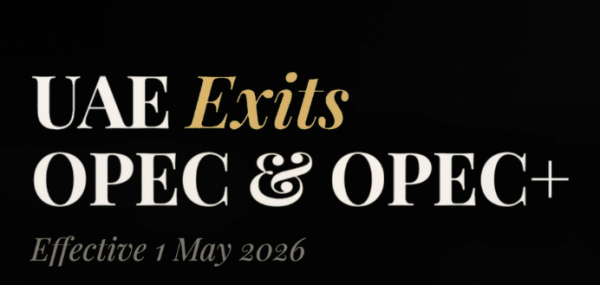
New Delhi: The sudden exit of the United Arab Emirates (UAE) from the Organization of the Petroleum Exporting Countries (OPEC) and OPEC+ from May 1 is expected to benefit India, the world’s third-largest energy consumer.
The UAE, among the worst sufferers of Iran’s attacks since February 28, on Tuesday announced its exit both from the 12-member OPEC and the broader 22-member OPEC+ alliance, which includes Russia.
It marked one of the most significant fractures in the oil producers’ bloc in recent years. Abu Dhabi’s decision comes amid an escalating global energy crisis triggered by the ongoing, two-month-long West Asia conflict, which has exposed growing strategic and geopolitical divisions among Gulf crude and gas producers.
The sudden move could have far-reaching implications for global energy markets and for major oil-importing economies such as India. Analysts say the UAE’s exit may eventually lead to higher crude production, potentially easing global prices and helping lower India’s oil import bill, the media reported on Wednesday.
The UAE, with a capacity to mine nearly 4.8 million barrels of crude per day, has long been among the most influential and compliant members of OPEC+, and is currently the fourth-largest producer in the alliance.
Its departure weakens the grouping that has historically sought to project unity despite recurring disagreements over production quotas, market share and regional geopolitics.
UAE Energy Minister Suhail Mohamed al-Mazrouei said the decision followed a strategic review of the country’s long-term energy priorities. “This is a policy decision. It has been done after a careful look at current and future policies to level of production.”
Asked whether the UAE had consulted Saudi Arabia, OPEC’s de facto leader, before taking the step, he said no discussions had been held with other member states.
Pressure on OPEC
The UAE’s exit comes at a time when Gulf oil exporters are facing mounting logistical and security challenges linked to the ongoing conflict involving the US, Israel, and Iran. OPEC producers have struggled to move exports through the Strait of Hormuz, the critical maritime chokepoint between Iran and Oman through which nearly one-fifth of global crude oil and liquefied natural gas (LNG) shipments pass, amid Iranian threats and attacks on commercial vessels.
The USA has also ‘counter-blocked’ Iranian oil tankers’ exit through the strait.
Mazrouei said the UAE’s withdrawal would not immediately have a major impact on markets because supply constraints in the strait remain severe.
Before the current war, OPEC and OPEC+ together controlled nearly half of global oil production. However, according to the International Energy Agency (IEA), the alliance’s share of global output fell to 44 per cent in March from around 48 per cent in February, and could decline further as production shutdowns intensify.
Energy analysts say the UAE’s departure signals a broader shift in producer priorities, with countries increasingly focusing on monetizing reserves and defending market share rather than adhering to coordinated output restraint.
Abu Dhabi’s decision also comes when global spare production capacity remains historically low, leaving oil markets vulnerable to price spikes and supply disruptions. Operating outside OPEC+ would allow the UAE to maximize output from some of the world’s lowest-cost and relatively lower-carbon oil reserves.
Impact on India
For India, the world’s third-largest crude oil importer, the UAE’s exit could offer both opportunities and risks. “The exit of the UAE is likely to increase global oil supply flexibility in the medium term as it would be free from OPEC mandates, which could soften crude prices,” an expert said, according to a media report.
India may benefit as its import bill and inflation could come down. However, in the short term, such events typically lead to market volatility and geopolitical uncertainty, requiring India to strengthen supply diversification and bilateral energy ties.”
Industry experts also pointed to the UAE’s strategic geographic proximity to India as a major advantage if exports rise. “The UAE was among the compliant members of the oil cartel. The move is expected to lead to an increase in crude oil production from the UAE. This is a positive move for all crude oil consumers, including India.
gulf divisions
The UAE’s departure also reflects widening political tensions within the Gulf region. On Monday, Anwar Gargash, diplomatic adviser to the UAE President, publicly criticized the Arab and Gulf response to recent Iranian attacks during remarks at the Gulf Influencers Forum.
Meanwhile, Gulf leaders met in Saudi Arabia on Tuesday for a high-level summit aimed at coordinating a response to the wave of Iranian missile and drone attacks that have hit the region since the US and Israel launched military operations against Iran in late February.
Mazrouei maintained that global energy demand would continue to rise and suggested the UAE’s move was aimed at positioning the country to respond more aggressively to future market needs. “The world will demand more energy,” he said, defending the decision to leave the producer alliance after decades of membership.
-
NTA UGC NET June 2026: Application Process, Exam Dates, and Eligibility Criteria

-
UPSESSB Announces New Exam Dates for Post Graduate Teacher Recruitment 2022

-
UGC NET June 2026: Registration for UGC NET June Begins; Apply by May 20, Exam Starts June 22..

-
Strengthening Ties: India and Ecuador Commit to Enhanced Bilateral Relations
-
World's longest tunnel will stretch 76 miles and cut eight-hour journey to 40 minutes