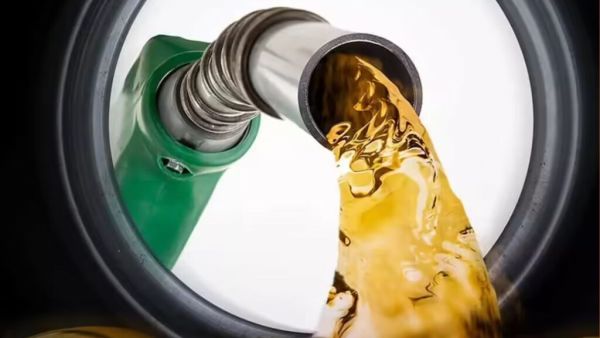
The central government has taken an important step towards bringing about a major change in the fuel sector. The government has issued a draft notification to amend the Central Motor Vehicles Rules, in which it has been proposed to mix more ethanol in petrol. The draft envisages official approval of E85 (85% ethanol blend) and E100 (100% ethanol) fuels.
Keeway India’s New Cruiser Bike Launched! Ex-showroom price Rs 4.22 lakh, features..
According to the Ministry of Road Transport and Highways, the draft is currently open for public feedback. Suggestions and objections are invited from all concerned stakeholders. After that the final decision will be taken. Earlier, E20 (20% ethanol blend) fuel was implemented across the country in April 2025.
The main objective of the government is to reduce the country’s dependence on crude oil imports. This issue has become more serious especially since the Iran-US tension is creating obstacles in the global oil supply. Hence, the government is emphasizing on shifting towards alternative and indigenous fuel sources.
A new classification of fuels is proposed in this draft notification. The classification of E10 or E20 currently used for petrol will be changed to a clearer form. At the same time, E85 and E100 will be formally included. It is also proposed to use the updated term B100 (100% biodiesel) instead of B10 for biodiesel. Apart from this, emission testing norms and technical terms will also be harmonized.
Some changes have been suggested in the vehicle sector as well. It is proposed to increase the gross vehicle weight limit from 3,000 kg to 3,500 kg in certain vehicle categories. Also, the classification of hydrogen fuel has been suggested to be changed to “Hydrogen + CNG” instead of “Hydrogen + CN”.
Oh wow! Updated Bajaj Chetak in the market; Increased range and top speed, tough competition with TVS iQube
These changes will have a direct impact on consumers. Currently most vehicles manufactured after April 2023 are capable of E20 fuel and can tolerate up to 30% ethanol blends. But higher ethanol blends like E85 or E100 require automakers to make major engine modifications. Ethanol increases moisture, which increases the chance of corrosion in engine parts. This will require more durable materials and designs.
Also, since the energy density of ethanol is less than that of petrol, the mileage and engine power of the vehicle is likely to decrease. This can have a direct impact on the costs of motorists. Apart from this, the cost of flex-fuel vehicles is also likely to be higher than conventional vehicles.
Major changes will also be required in the fuel distribution system. If E85 fuel is implemented, separate tanks and dispensing systems for different types of fuel will have to be set up at petrol pumps. This will require huge investment.
Overall, this decision to increase ethanol blending can be environmentally friendly and economically beneficial, but its implementation will present several technical, financial and infrastructural challenges. So the government, vehicle manufacturers and consumers have to be prepared for this change together.
-
Prince William is all smiles as he joins Sir David Attenborough for special birthday event

-
Add one thing to pasta sauce to make it taste richer

-
Vernon Kay's 'huge blow' to Tess Daly which 'let her down' months before split

-
Rising Tensions: US-Iran Conflict Escalates Amid Ceasefire

-
Latest Odisha Breaking News Updates | Saturday, 09 May 2026