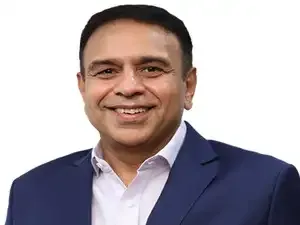
JAGRUT KOTECHA, CEO (INDIA & S ASIA), PEPSICO
New Delhi: PepsiCo is looking to transition almost its entire beverage portfolio in India to zero-sugar or mid-calorie products, up from 55-60% currently, as it bets on shifting consumer preferences to drive growth, its India and South Asia chief executive Jagrut Kotecha told ET.
"We've done a soft transition. Our intent is how we can accelerate this to 90-100%, go step-by-step and take the consumer along this journey," Kotecha said in his first interview after stepping into the role two years ago.
According to him, the maker of Pepsi and 7Up drinks and Lay's, Doritos and Kurkure snacks has "completely realised" the role digital and tech are playing. "There are a lot of places you can get demand signals from. We have a consumer app on WhatsApp called Pep Genie where we get a lot of information as a first party. We do a lot of social listening," he said. "Plus, we have great partners in quick commerce and ecommerce, where they have so much data through search words. That's where the game is."
Also Read: Edible oil pack chaos sparks consumer deception concerns
PepsiCo India's existing zero-sugar and low-sugar beverage brands include Pepsi Black, 7 Up Zero Sugar, Gatorade and AdRush energy drink.
Anchor Market
Offerings also include Aquafina water, besides Nimbooz variants, which are being introduced at ₹10.
The company is also preparing for a phase of accelerated growth, backed by rapid capacity expansion. "If we have to double our business, we are looking at what we need to do differently," Kotecha said. "Over the last two years, we started building where we want to take the business, and set ourselves up for 2030...on what will take us there."
PepsiCo's New York headquarters has identified India as one of its 13 anchor markets, which it expects will contribute over 85% to its future growth. It has allocated an investment of ₹5,700 crore in India between 2025 and 2030, across greenfield and existing facilities.
Also Read: Varun Beverages doubles down on scale, Africa expansion drive
"There is a lot of talk about urban versus rural and premium versus value...(but) India is a lot more complex," Kotecha said. "Also, people talk a lot about Gen Z and Gen Alpha, so we've spent time understanding this new consumer and their nuances better."
At the same time, there are millennials and baby boomers too. "You can't let them go because they're also a sizeable population. So, we are addressing all that, whether it's portfolio, our go-to-market or advertising strategies," said Kotecha, who has been associated with PepsiCo for over three decades across diverse functions and markets in leadership roles.
Digital Wave
He said aspirations of consumers have been consistent, but now they have access because of channels such as quick commerce. "In the first digital wave, they could get information by scrolling. Now they have access. But the challenge is to unlock availability and affordability," he said. "Whoever can make that aspiration meet affordability and availability wins."
PepsiCo's India head also noted a change in its advertising strategy.
Big-bang celebrity-based advertising on television, typical of cola companies, doesn't work any more in isolation, as digital content has caught up, with budgets now equally split between the two, he said. "The digital native is looking for content; that content comes from influencers, celebrities or big events. They want to play with that content and create their own version of that content. When you're able to engage, consumers stay loyal."
On strong competition from resurgent local, digital-first and private labels, Kotecha said, "India is a country of entrepreneurs, with access to capital and access to accessibility. Competition is a reality; it's good for companies...(and) makes us work harder. I can't shy away from that. I can't stop that. It's a perfect thing for a consumer, and we also have to be a lot more agile and change some of the things we do."
He expressed confidence that the geopolitical tensions won't impact the India growth story. "Yes, there's a new normal which is variability because of world events. But the strength of India's growth story doesn't stop or change. It's a largely self-consumption-driven economy."
India units of most large global consumer businesses-from FMCG to electronics to cars-have been betting on the country's younger and emerging consumers to drive growth despite blips such as inflation, seasonality fluctuations and supply disruptions.
Varun Beverages, PepsiCo India's exclusive bottling partner, reported a 20.1% year-on-year increase in its net profit for the March quarter to ₹878.7 crore, aided by robust volume growth. The company's revenue grew 18.1% on year to ₹6,574.2 crore.
For its foods business, the US company reported India "as a key growth contributor" in the March quarter. While it doesn't give standalone India numbers, the company said its convenient foods segment grew 6% driven by India and other markets.
PepsiCo is also doubling down on its global capability centre (GCC) in Hyderabad, which employs close to 5,000 people, to build capability for global markets from India, Kotecha said.
"We've done a soft transition. Our intent is how we can accelerate this to 90-100%, go step-by-step and take the consumer along this journey," Kotecha said in his first interview after stepping into the role two years ago.
According to him, the maker of Pepsi and 7Up drinks and Lay's, Doritos and Kurkure snacks has "completely realised" the role digital and tech are playing. "There are a lot of places you can get demand signals from. We have a consumer app on WhatsApp called Pep Genie where we get a lot of information as a first party. We do a lot of social listening," he said. "Plus, we have great partners in quick commerce and ecommerce, where they have so much data through search words. That's where the game is."
Also Read: Edible oil pack chaos sparks consumer deception concerns
PepsiCo India's existing zero-sugar and low-sugar beverage brands include Pepsi Black, 7 Up Zero Sugar, Gatorade and AdRush energy drink.
Anchor Market
Offerings also include Aquafina water, besides Nimbooz variants, which are being introduced at ₹10.
The company is also preparing for a phase of accelerated growth, backed by rapid capacity expansion. "If we have to double our business, we are looking at what we need to do differently," Kotecha said. "Over the last two years, we started building where we want to take the business, and set ourselves up for 2030...on what will take us there."
PepsiCo's New York headquarters has identified India as one of its 13 anchor markets, which it expects will contribute over 85% to its future growth. It has allocated an investment of ₹5,700 crore in India between 2025 and 2030, across greenfield and existing facilities.
Also Read: Varun Beverages doubles down on scale, Africa expansion drive
"There is a lot of talk about urban versus rural and premium versus value...(but) India is a lot more complex," Kotecha said. "Also, people talk a lot about Gen Z and Gen Alpha, so we've spent time understanding this new consumer and their nuances better."
At the same time, there are millennials and baby boomers too. "You can't let them go because they're also a sizeable population. So, we are addressing all that, whether it's portfolio, our go-to-market or advertising strategies," said Kotecha, who has been associated with PepsiCo for over three decades across diverse functions and markets in leadership roles.
Digital Wave
He said aspirations of consumers have been consistent, but now they have access because of channels such as quick commerce. "In the first digital wave, they could get information by scrolling. Now they have access. But the challenge is to unlock availability and affordability," he said. "Whoever can make that aspiration meet affordability and availability wins."
PepsiCo's India head also noted a change in its advertising strategy.
Big-bang celebrity-based advertising on television, typical of cola companies, doesn't work any more in isolation, as digital content has caught up, with budgets now equally split between the two, he said. "The digital native is looking for content; that content comes from influencers, celebrities or big events. They want to play with that content and create their own version of that content. When you're able to engage, consumers stay loyal."
On strong competition from resurgent local, digital-first and private labels, Kotecha said, "India is a country of entrepreneurs, with access to capital and access to accessibility. Competition is a reality; it's good for companies...(and) makes us work harder. I can't shy away from that. I can't stop that. It's a perfect thing for a consumer, and we also have to be a lot more agile and change some of the things we do."
He expressed confidence that the geopolitical tensions won't impact the India growth story. "Yes, there's a new normal which is variability because of world events. But the strength of India's growth story doesn't stop or change. It's a largely self-consumption-driven economy."
India units of most large global consumer businesses-from FMCG to electronics to cars-have been betting on the country's younger and emerging consumers to drive growth despite blips such as inflation, seasonality fluctuations and supply disruptions.
Varun Beverages, PepsiCo India's exclusive bottling partner, reported a 20.1% year-on-year increase in its net profit for the March quarter to ₹878.7 crore, aided by robust volume growth. The company's revenue grew 18.1% on year to ₹6,574.2 crore.
For its foods business, the US company reported India "as a key growth contributor" in the March quarter. While it doesn't give standalone India numbers, the company said its convenient foods segment grew 6% driven by India and other markets.
PepsiCo is also doubling down on its global capability centre (GCC) in Hyderabad, which employs close to 5,000 people, to build capability for global markets from India, Kotecha said.