In most markets, sustainability still operates as a compliance layer. It is something organisations respond to, often driven by regulation or reporting pressure rather than economic logic. The result is predictable. Adoption remains uneven, execution slows, and impact is diluted.
Ras Al Khaimah is taking a different approach. Instead of treating sustainability as a regulatory obligation, the emirate is positioning it as an economic system. Under the Ras Al Khaimah Integrated Sustainability Strategy 2050, policy is being translated into demand, investment, and measurable financial value across sectors.
At the centre of this transformation is Reem, which is responsible for driving implementation and ensuring that sustainability outcomes are not only tracked but realised in the market.
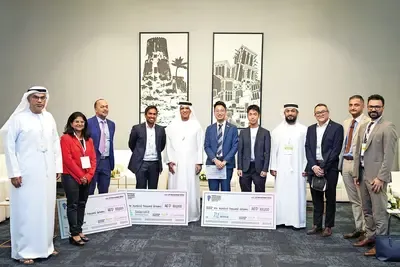
Previous winners of the RAK Energy Innovation Competition — SME Edition, an initiative designed to attract high-potential startups and SMEs from around the world. The second edition is currently underway, attracting over 150 applications from 23 countries, and as in the previous cycle, winners will have access to real-life projects.
From policy design to execution discipline
Many sustainability strategies fail because they remain conceptual. They define targets but lack mechanisms to deliver them. Ras Al Khaimah has structured its approach differently by embedding execution into the design of the strategy itself.
As Andrea Di Gregorio, Executive Director, Reem, Ras Al Khaimah Municipality, explains: “A key differentiator is that the strategy itself is designed as a comprehensive framework addressing all sectors of the economy. It integrates environmental, social, and technological dimensions across each sector, embedding sustainability across the entire value chain and supporting long-term resilience.”
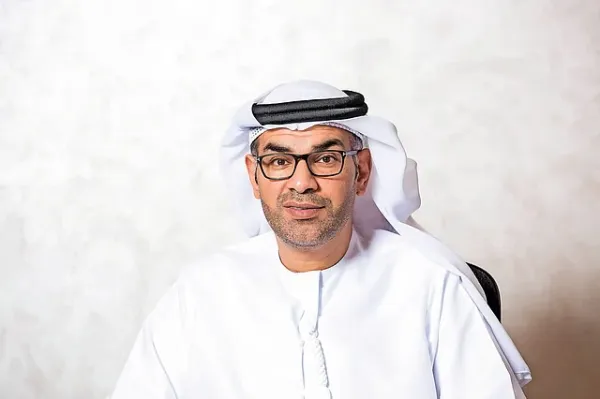
Munther Mohammed bin Shekar Al Zaabi, Director-General, REEM
This cross-sector integration is critical. It avoids the fragmentation that typically limits impact and ensures that sustainability is embedded into how industries, government entities, and communities operate.
Di Gregorio notes: “The strategy reports to the RAK Sustainability Committee, which was established through legislation and brings together the main entities responsible for implementation of the strategy’s programmes and initiatives.”
Execution is reinforced through structured reporting and transparency. “Annual sustainability reports have been published since 2018, tracking progress of the initiatives under the strategy,” he adds. This creates a system where performance is continuously monitored rather than periodically reviewed.
A practical example of this approach is the Green Public Procurement programme. Introduced in 2020, it embeds sustainability into government spending decisions by setting standardised criteria for products and services while reducing reliance on less sustainable alternatives. This shifts sustainability from policy into purchasing behaviour, which is where real demand begins.
Creating demand through structured platforms
Regulation alone does not create markets. It defines boundaries. Real market activity emerges when regulation is supported by incentives, infrastructure, and viable business cases.
Ras Al Khaimah has addressed this by structuring its sustainability initiatives into platforms that connect policy, suppliers, and end users.
“The RIS Strategy is a 30-year journey, which will see changing economic scenarios, technology, and priorities,” says Di Gregorio. “For this reason, we have decided to structure the strategy as a system of platforms, organised by type of asset and organisation, able to incorporate new projects, solutions, and enablers as they become relevant.”
This flexibility allows the strategy to evolve without losing direction.
In the built environment, a retrofit programme has enabled nearly 500 buildings to improve energy performance, supported by regulatory frameworks and an ESCO accreditation system that now includes 16 companies.
For new developments, the Barjeel green building regulations have brought more than 6,400 buildings in line with higher efficiency standards, with another 7,500 in development.
In the industrial sector, participation from entities representing around 70% of electricity consumption has led to the identification of over Dh100 million in potential savings.
“These platforms, supported by clear regulatory and financial mechanisms, have been instrumental in stimulating market demand and enabling sustained adoption over time,” Di Gregorio says.
Within government operations, the impact is equally significant. An energy management programme has resulted in Ras Al Khaimah becoming the first government globally to achieve ISO 50001 certification across all entities. This has introduced structured processes that make organisations more responsive to efficiency measures. The outcome is clear. Sustainability is no longer limited to compliance. It is actively shaping demand across sectors.
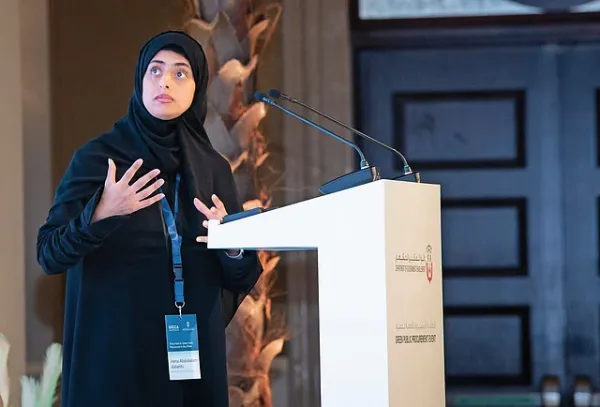
Reem Office of Ras Al Khaimah Municipality participated in the GPP Policy Hack hosted by Frontier25 (UICCA) and Abu Dhabi’s Department of Government Enablement, sharing Ras Al Khaimah’s experience in implementing Green Public Procurement.
From obligation to opportunity
The shift from sustainability as a requirement to sustainability as an opportunity depends on one factor above all else. It has to make financial sense.
In Ras Al Khaimah, that transition is already visible. “What drives demand for these solutions today is favourable business cases, for example concrete energy saving or renewable energy opportunities whose value creation is recognised by asset owners and energy users,” Di Gregorio explains.
This shift is influencing both demand and supply.
On the demand side, asset owners are increasingly adopting efficiency measures because they reduce operating costs and improve long-term performance.
On the supply side, the scale of projects is creating new opportunities for businesses.
“The 6,400 buildings built with higher standards, and the additional 7,500 under development, mean demand for efficient solutions and appliances such as air conditioning, lighting controls and insulation,” he notes.
Industrial savings potential is also translating into project pipelines. “The Dh100 plus million of saving opportunities identified so far in the industrial sector has translated into a pipeline of projects,” Di Gregorio adds.
This is generating demand across a wide range of services and technologies, including waste heat recovery, process automation, and energy-efficient equipment.
To support this ecosystem, Ras Al Khaimah is actively engaging with the private sector. Collaboration with entities such as RAKEZ and RAK Chamber is helping to expand participation and attract new players.
Innovation is another key lever. The RAK Energy Innovation Competition has drawn global interest, with more than 150 applications from 23 countries in its latest edition, providing startups and SMEs with access to real-world projects.
This is where sustainability begins to function as a market. It creates demand, attracts suppliers, and generates economic activity.
Bridging the gap for SMEs and households
Despite this progress, adoption is not uniform across all segments. SMEs and households remain more difficult to engage due to financial and technical constraints.
“There are societal segments that are more difficult to reach, particularly SMEs and the residential sector, as they require a more capillary approach,” says Di Gregorio.
The barriers are consistent. “Key barriers for them typically include upfront costs, limited technical capabilities, and awareness gaps,” he explains.
Addressing these challenges requires targeted interventions rather than broad policy measures.
One example is the Manzily Energy Advice Service, which provides free energy assessments to residents. More than 250 homes have been audited, giving households practical insights into how they can reduce consumption. “When recommended measures are implemented and result in measurable savings, these are further rewarded through incentives,” Di Gregorio notes.
At the SME level, sector-specific engagement is being prioritised. Workshops are being organised to address the needs of different industries, while awareness sessions are helping consultants and asset owners navigate processes such as solar project approvals.
“Our approach focuses on bridging both financial and technical gaps by offering guidance, building awareness, and connecting programme participants with capable solution providers,” he says.
The goal is to make energy efficiency accessible and economically viable, not just technically feasible.
Energy efficiency as a strategic imperative
The transformation taking place in Ras Al Khaimah is part of a broader shift in how energy is viewed globally.
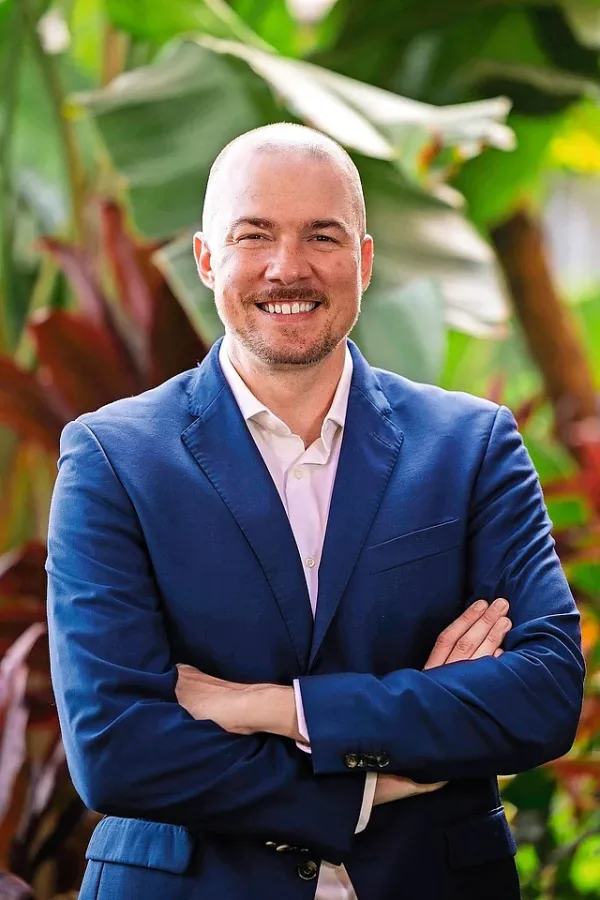
Morten Schmelzer, Technical Marketing Director and Global Head of Public Affairs, Systemair Group
According to Morten Schmelzer, Technical Marketing Director and Global Head of Public Affairs, Systemair Group, external pressures are accelerating this change.
“Global energy systems are facing sustained disruption, driven by geopolitical tensions, supply chain instability, and increasingly volatile fuel markets,” he says.
These conditions are reshaping how organisations operate. “Availability and access to energy, coupled with rising price volatility, are structurally changing how governments and businesses operate,” Schmelzer explains.
This is particularly relevant in the Gulf, where demand continues to grow alongside economic expansion.
“At the same time, governments across the Gulf have placed energy efficiency at the centre of national transformation agendas,” he notes.
As a result, sustainability is no longer a long-term aspiration. It is becoming a core component of economic strategy. “Energy efficiency is evolving from a sustainability narrative into an economic imperative,” Schmelzer says. “Investments in efficiency are delivering tangible financial returns alongside long-term environmental benefits.”
The built environment represents one of the most immediate opportunities for impact. Cooling systems account for a significant share of energy demand in the region, making efficiency improvements both necessary and scalable.
“Strengthening performance requirements for these systems represents one of the most immediate pathways to reduce consumption while maintaining indoor comfort and reliability,” he adds.
However, achieving meaningful gains requires more than regulation. It depends on reliable systems and verified performance.
“In a market where performance claims can vary, objective and transparent benchmarks are essential,” Schmelzer explains. Certification frameworks provide assurance, but true efficiency depends on measurable performance indicators.
This reinforces the importance of aligning policy with technical standards and market realities.
Institutional continuity and long-term value
One of the defining strengths of Ras Al Khaimah’s approach is institutional alignment.
The establishment of Reem in 2017 created a dedicated entity to oversee implementation, ensuring continuity and accountability. This has since evolved into a broader framework under the RIS Strategy 2050.
According to Munther Mohammed bin Shekar Al Zaabi, Director-General, REEM, this evolution reflects a more integrated vision. “Building on the success of the Energy Efficiency and Renewables Strategy 2040, Ras Al Khaimah Integrated Sustainability Strategy 2050 takes a more holistic approach to maximise impact across sectors and deliver long-term value to residents and businesses in the emirate,” he says.
This long-term perspective is critical. Sustainability initiatives often struggle because they lack continuity. By embedding the strategy within institutional structures, Ras Al Khaimah has created a system that can sustain momentum over time.
Al Zaabi also emphasises the importance of collaboration. “A committee was established to guide and support Reem, comprising entities with leading roles in implementing the strategy,” he notes.
His message to stakeholders is direct. “Make a difference and be practical.”
That focus on practicality is what anchors the strategy. It ensures that sustainability is not treated as an abstract goal but as a set of actions that deliver measurable outcomes.
A system that creates its own momentum
What is emerging in Ras Al Khaimah is not just another sustainability framework. It is a functioning economic system built around energy efficiency, structured demand, and long-term value creation.
The mechanics are deliberate. Regulation sets direction. Incentives reduce friction. Platforms connect stakeholders. Data ensures accountability. Institutions sustain continuity. Together, they create a system where sustainability is no longer an obligation, but a commercially viable pathway. This is the real shift. When efficiency lowers costs, when renewables create measurable returns, and when procurement begins to favour performance, sustainability stops being a policy conversation and becomes a market force.
For businesses, the implication is straightforward. Participation is no longer about alignment with regulation alone. It is about recognising where value is being created and positioning accordingly.
And as Di Gregorio says, the shift is already underway: “What drives demand for these solutions today is favourable business cases, for example concrete energy saving or renewable energy opportunities whose value creation is recognised by asset owners and energy users.”
RAK’s transformation: How the UAE emirate is building a multi-engine, investor-backed growth model Coastal Capital: How waterfront living is repricing Ras Al Khaimah-
Special initiative of Gujarat government for pensioners, life certificate will be made for free at home, facility will start from May 1
-
Chinese pork seller’s story of supporting six siblings exposed as fake
-
Azaan Sami Khan’s ‘Tera Ho Gaya’ set for release on May 1
-
Family Lives At Disney World For Half The Year

-
Daily Tarot Horoscopes For Each Zodiac Sign On May 1, 2026