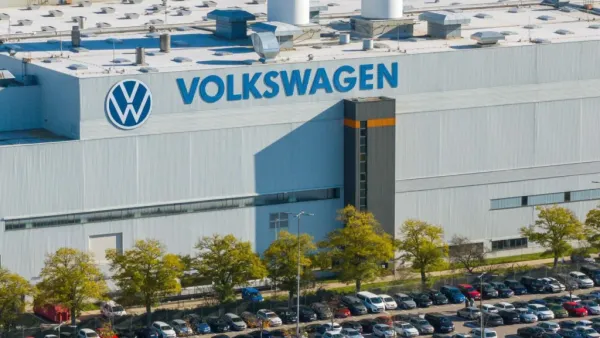
Europe’s auto giant Volkswagen has issued one of its starkest warnings in recent years: without sharper cost cuts and a structural overhaul, its future could be at risk.
The message comes as the company grapples with shrinking profits, intensifying global competition, and mounting geopolitical pressures. What used to be a steady engine of growth now looks increasingly fragile.
From January to March, Volkswagen’s net profit fell 28% to €1.56 billion, while revenues slipped 2% to €75.7 billion, both missing market expectations.
“Not Enough” A Clear Warning from the Top
Chief Financial Officer Arno Antlitz didn’t sugarcoat the situation.
According to him, the cost-saving measures already in place simply don’t go far enough. The company now needs a deeper rethink of how it operates—from production lines to decision-making processes.
The plan on the table includes lowering vehicle production costs without compromising quality, trimming overheads, improving plant efficiency, and accelerating technology development.
What this really means is Volkswagen isn’t looking at tweaks, it’s staring at a full-scale reset.
China and Competition Are Changing the Game
A major part of the pressure is coming from China, once Volkswagen’s strongest profit engine.
Sales in the region dropped 20% in the first quarter, highlighting how quickly the landscape has shifted. Local players like BYD are not only dominating at home but are now pushing aggressively into Europe.
That shift matters. For decades, Volkswagen relied heavily on China for volume and margins. Now, it’s fighting to stay relevant—especially in the electric vehicle space, where Chinese brands are moving faster and pricing more aggressively.
Tariffs, Tensions, and a Tough Global Climate
The challenges aren’t limited to competition.
Trade tensions are adding real financial strain. Tariffs introduced under Donald Trump are costing Volkswagen an estimated €4 billion annually.
Layer on top of that ongoing geopolitical instability and regulatory pressures, and the environment becomes even more unpredictable.
CEO Oliver Blume summed it up clearly: the global auto industry is undergoing a fundamental shift driven by wars, trade barriers, and evolving market dynamics.
Jobs, Costs, and Hard Decisions Ahead
Volkswagen has already outlined plans to cut 50,000 jobs in Germany by 2030. More efficiency measures across its 10-brand portfolio—including Audi, SEAT, and Škoda are expected.
The company is also reviewing plant capacities and operational structures, signaling that no part of the business is off-limits.
Despite the current turbulence, Volkswagen is projecting modest sales growth of up to 3% in 2026, with profit margins expected between 4% and 5.5%. But those forecasts come with caveats, especially given uncertainties like potential escalations in the Middle East.
A Broader Signal for Europe’s Auto Industry
Volkswagen’s struggles aren’t happening in isolation. They reflect a wider challenge facing traditional European manufacturers balancing legacy systems with the speed of a changing world.
For Volkswagen, the road ahead is clear but not easy: adapt quickly, or risk falling behind in an industry it once dominated.
-
Inside Tess Daly and Vernon Kay's 'tearful' split after 22 years

-
Building society launches 'market-leading' 4.56% interest Cash ISA

-
Royal author makes bizarre Queen Camilla claim

-
Ex-Premier League chief explains Man City's 115 PL charges delay - 'I question that'

-
UK engineering company plunges into administration - in business since 1964