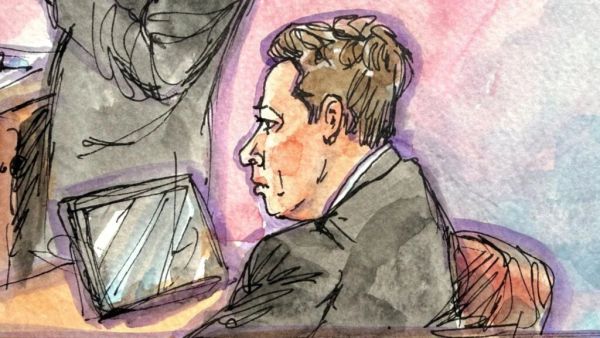
The second day of the highly anticipated trial in the lawsuit against OpenAI concluded with Elon Musk, the world’s richest man and plaintiff in the case, telling the court that he was not opposed to the creation of a small for-profit subsidiary, “as long as the tail didn’t wag the dog.”
“I could have started it as a for profit and I chose not to,” Musk said on his second day on the witness stand. He also spoke about his upbringing, his portfolio of companies, his role in founding OpenAI, and his understanding of how the ChatGPT-maker is structured in several testy exchanges with lawyers for OpenAI and Microsoft as part of the cross-examination.
Musk sued OpenAI in 2024, accusing the company of abandoning its founding nonprofit mission to develop artificial general intelligence (AGI) for the benefit of humanity. The case is being tried in a US federal court in Oakland, California, by US District Judge Yvonne Gonzalez Rogers with guidance from a nine-person jury.
The proceedings began on Tuesday, April 28, with attorneys for Musk and OpenAI presenting their opening arguments to the jury. The Tesla and SpaceX CEO was the first witness called to testify in the trial. Here’s a brief roundup of what has happened so far.
‘Felt they were not honest with me’
Under-questioning by his lead trial lawyer, Steven Molo, Musk said that OpenAI’s leadership had not been honest with him. “What they really wanted to do was create a for-profit where they had as much shareholder ownership as possible,” he was quoted as saying by CNBC.
According to Musk, OpenAI’s leadership had plans to go for-profit well before they announced the intention publicly, and that he and other stakeholders were deliberately misled.
Musk said in his testimony that he played a pivotal role in the founding of OpenAI, and that he would not have contributed his resources if the intent of the company’s founders was to make a profit.
He further said he was motivated to start OpenAI to serve as a counterweight to Google. He claimed that he got the idea after an argument he had with Google co-founder Larry Page, who called Musk a “speciesist for being pro-human,” as per Musk’s courtroom testimony.
Story continues below this ad
“I came up with the idea, the name, recruited the key people, taught them everything I know, provided all the initial funding,” Musk said. “It was specifically meant to be for a charity that did not benefit any individual person. I could have started it as a for-profit and I chose not to. I chose to make it something for the benefit of all humanity,” he added.
Musk’s lawyer on Tuesday entered into evidence the founding charter of OpenAI from 2015, which declared that OpenAI would seek to create “open source technology for the public benefit,” and that it was “not organised for the private gain of any person.”
OpenAI’s cross-examination
OpenAI, on the other hand, has argued that Musk himself tried to recast the nonprofit lab as a commercial enterprise before he left in 2018. Dismissing the lawsuit as a baseless “harassment campaign,” the company has accused Musk of being driven by a compulsion to control OpenAI and is now bitter about the company’s success after he left.
They have also alleged that Musk did not prioritise safety issues when he was with OpenAI, and that he is trying to bolster his own AI company, SpaceX unit xAI.
Story continues below this ad
In tense exchanges on both days, William Savitt, a lawyer for OpenAI as well as CEO Sam Altman and Greg Brockman, the company’s president, pressed Musk about text messages and emails showing that he at times expressed an openness to creating a for-profit entity and that Altman kept him apprised about Microsoft’s investments in OpenAI.
On Wednesday, jurors were shown an email Musk sent to Altman and Brockman in 2017, referring to himself as a “fool” for providing them funding for what he believed was a nonprofit venture. In response, Musk was at times combative under questioning by Savitt, whom he accused of asking overly complicated questions.
“Your questions are not simple. They’re designed to trick me essentially,” Musk reportedly told Savitt on Wednesday.
‘AI could make us prosperous, but also kill us’
In testimony discussing his predictions for the future of AI, its place in humanity and the risks it poses, Musk said on the stand, “It [AI] could make us more prosperous, but it could also kill us all. We want to be in a Gene Roddenberry movie, like Star Trek, not so much a James Cameron movie, like Terminator.”
Story continues below this ad
“It’s like if you had a very smart child…at the end of the day when the child grows up, you can’t really control that child, but you can try to instill the right values. Honesty, integrity, caring about humanity – being good, essentially,” he testified.
“My guess is that AI will probably be as smart as any human as soon as next year,” he added.
What next?
The trial is expected to last several weeks, with Musk set to return to the witness stand on Thursday, April 30, for yet another round of cross-examination by Sam Altman’s lawyer. A lawyer for Microsoft is also expected to question Musk. The next witnesses after Musk are expected to be his top aide, Jared Birchall, Brockman, and AI safety expert Stuart Russell, according to a report by Reuters.
-
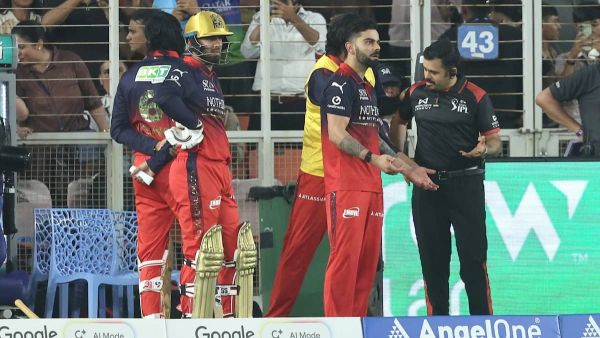
Virat Kohli Gets Angry, Argues With Umpire Over Controversial Rajat Patidar Dismissal in IPL 2026 Match vs GT; RCB Break Silence
-
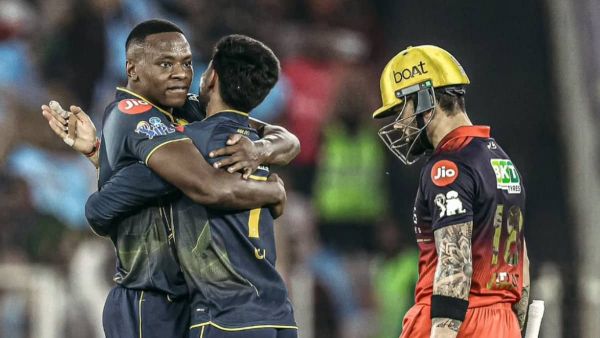
WATCH | Virat Kohli Gets Taste of His Own Medicine as Kagiso Rabada Gives ex-RCB Captain Fiery Send-Off During IPL 2026 Match
-
WATCH | ANGRY Virat Kohli Pacified by Childhood Friend Ishant Sharma During GT-RCB IPL 2026 Match

-
Crude Oil Prices Surge On US-Iran War Stalemate; Brent Over $110 Per Barrel
-
'It Was Very Windy, Boat Was Shaking': Eyewitnesses Recall Jabalpur Cruise Tragedy