Too many of us feel comfortable organizing the world into neat categories to simplify understanding, but in doing so, they may overlook complexity and nuance. The wise choose instead to embrace openness, seeing things as fluid, interconnected, and not easily defined. This perspective values individuality, creativity, and deeper perception over convenience. It reflects a willingness to accept ambiguity and resist stereotypes, encouraging a more expansive and authentic way of understanding people, ideas, and experiences without forcing them into fixed boundaries.
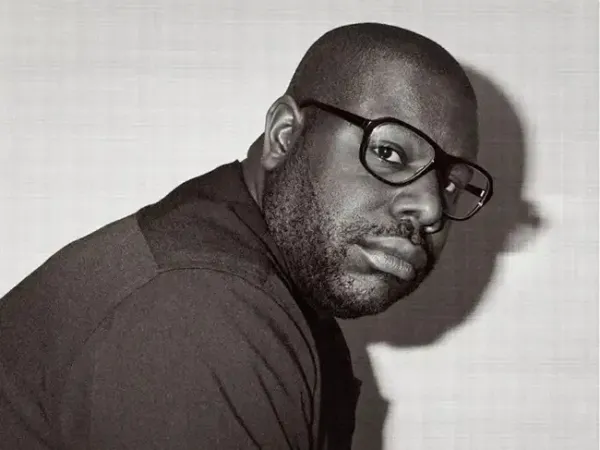
In an old interview, Oscar-winning director Steve McQueen revealed how he eschewed categories and boundaries when it came to filmmaking.
Steve McQueen Believes Boundaries Are Useless
In a 1996 interview with Patricia Bickers for Art Monthly, he stated: “People try to contain things by putting them into categories. I don't.”
Deeper Meaning Of The Quote
This quote reflects a deeper rejection of rigid thinking and labels that often limit understanding. Categorizing people, ideas, or experiences can make the world feel orderly, but it also reduces complexity into oversimplified boxes. The speaker’s refusal to do so suggests a mindset that values fluidity, openness, and individuality. It embraces the idea that life cannot always be neatly defined, and that true understanding requires seeing beyond labels.
At a deeper level, the quote challenges social conditioning, where people are often judged based on categories like identity, profession, or beliefs. By resisting this habit, the speaker chooses to experience the world more authentically, without bias or restriction. It encourages curiosity over assumption and depth over convenience. Ultimately, it is a call to appreciate the richness and uniqueness of everything, allowing things to exist as they are rather than forcing them into limited definitions.
Relevance Of McQueen’s Words
This quote is highly relevant in today’s world, where people are often quick to label everything—from identities and careers to opinions and lifestyles. While categories can simplify understanding, they frequently lead to stereotypes, bias, and limited thinking. The refusal to confine things within fixed labels encourages a more open-minded and inclusive approach to life.
In modern society, where diversity and individuality are increasingly valued, this perspective reminds us to look beyond surface-level classifications and appreciate deeper complexity. It is especially important in social interactions, where judging someone based on a single category can lead to misunderstanding or prejudice.
The quote also applies to creativity and innovation, as rigid categorization can restrict new ideas. By rejecting boundaries, one becomes more adaptable and perceptive. Ultimately, its relevance lies in promoting empathy, curiosity, and a broader, more flexible way of understanding the world.
Continuing to diversify his storytelling, McQueen directed Widows, a modern crime thriller that blended social commentary with suspense. He later explored wartime narratives through Blitz, further showcasing his ability to shift across genres while maintaining emotional intensity and visual precision.
He continued this exploration of historical and cultural narratives through the BBC documentary series Uprising and the feature-length documentary Occupied City. These works reinforced his commitment to storytelling that examines identity, memory, and societal change.
In an old interview, Oscar-winning director Steve McQueen revealed how he eschewed categories and boundaries when it came to filmmaking.
Steve McQueen Believes Boundaries Are Useless
In a 1996 interview with Patricia Bickers for Art Monthly, he stated: “People try to contain things by putting them into categories. I don't.”Deeper Meaning Of The Quote
This quote reflects a deeper rejection of rigid thinking and labels that often limit understanding. Categorizing people, ideas, or experiences can make the world feel orderly, but it also reduces complexity into oversimplified boxes. The speaker’s refusal to do so suggests a mindset that values fluidity, openness, and individuality. It embraces the idea that life cannot always be neatly defined, and that true understanding requires seeing beyond labels.At a deeper level, the quote challenges social conditioning, where people are often judged based on categories like identity, profession, or beliefs. By resisting this habit, the speaker chooses to experience the world more authentically, without bias or restriction. It encourages curiosity over assumption and depth over convenience. Ultimately, it is a call to appreciate the richness and uniqueness of everything, allowing things to exist as they are rather than forcing them into limited definitions.
Relevance Of McQueen’s Words
This quote is highly relevant in today’s world, where people are often quick to label everything—from identities and careers to opinions and lifestyles. While categories can simplify understanding, they frequently lead to stereotypes, bias, and limited thinking. The refusal to confine things within fixed labels encourages a more open-minded and inclusive approach to life.In modern society, where diversity and individuality are increasingly valued, this perspective reminds us to look beyond surface-level classifications and appreciate deeper complexity. It is especially important in social interactions, where judging someone based on a single category can lead to misunderstanding or prejudice.
The quote also applies to creativity and innovation, as rigid categorization can restrict new ideas. By rejecting boundaries, one becomes more adaptable and perceptive. Ultimately, its relevance lies in promoting empathy, curiosity, and a broader, more flexible way of understanding the world.
Early Life and Artistic Foundations
Steve McQueen, formally known as Sir Steve Rodney McQueen, emerged as one of Britain’s most distinctive creative voices across cinema and visual art. Born on 9 October 1969, he built a reputation for exploring emotionally charged and often challenging themes through his work. Over the years, his contributions have been recognised with prestigious honours, including an Academy Award, multiple BAFTA Awards, and a Golden Globe Awards. His artistic excellence earned him the BFI Fellowship in 2016, and in 2020, he received a knighthood from Queen Elizabeth II in recognition of his services to film and art. Earlier, in 2014, he was named among the world’s most influential figures in the annual Time 100 compilation.Education and Creative Influences
McQueen’s artistic journey began with formal education in visual arts, where he studied painting at Chelsea College of Art and Design in London. His interests gradually expanded into filmmaking, leading him to continue his studies at Goldsmiths College and briefly at New York University. During this formative phase, he drew inspiration from influential filmmakers and artists such as Jean Vigo, Jean-Luc Godard, François Truffaut, Ingmar Bergman, and Andy Warhol. These influences shaped his experimental approach, prompting him to create short films that combined visual artistry with narrative depth. His early work gained widespread recognition, culminating in his receipt of the Turner Prize in 1999, awarded for the breadth and emotional power of his artistic expression.Breakthrough in Feature Filmmaking
Transitioning from short-form work to full-length cinema, McQueen made a powerful debut with Hunger in 2008. This historical drama examined the 1981 Irish hunger strike, marking him as a filmmaker unafraid to confront difficult subjects. He followed this with Shame, a deeply psychological drama that delved into themes of addiction and human vulnerability. His global breakthrough came with 12 Years a Slave, a harrowing historical narrative that earned him the Academy Award for Best Picture, solidifying his status as a major cinematic force.Continuing to diversify his storytelling, McQueen directed Widows, a modern crime thriller that blended social commentary with suspense. He later explored wartime narratives through Blitz, further showcasing his ability to shift across genres while maintaining emotional intensity and visual precision.
Expanding into Television and Documentary
Beyond cinema, McQueen extended his creative vision into television and documentary filmmaking. In 2020, he introduced Small Axe, a collection of five films portraying the experiences of London’s West Indian community from the late 1960s to the early 1980s. This project highlighted overlooked histories and social struggles with authenticity and care.He continued this exploration of historical and cultural narratives through the BBC documentary series Uprising and the feature-length documentary Occupied City. These works reinforced his commitment to storytelling that examines identity, memory, and societal change.