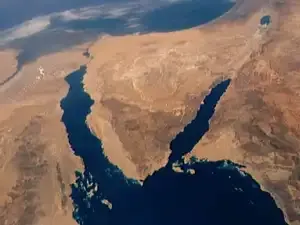
The notion that the continents are stable and in constant motion is among the most common misconceptions in human perception. Actually, the surface of Earth changes constantly, but in a manner that is that is so slow, it's hard to catch observers. Recent research suggests the movement under Africa is taking place more quickly than was previously thought. This African continent is slowly breaking into pieces, and although it will take a million of years to finish, scientists claim that it is already crossing an important threshold.
An investigation conducted by geoscientists of Columbia University in the United States shows that certain regions of East Africa are further along with this massive change in the geological landscape as previously thought by experts. These findings are focused specifically on particular regions of the East African Rift System, an enormous fracture zone in which the continent splits into two distinct tectonic plates.
The Science Behind a Splitting Continent
The African plate is presently divided in two sections, the Nubian plate to the west, and the Somali plate to the east. The separation occurs across a wide array of rifts stretching across nations like Kenya as well as Ethiopia. In time, this diversification is likely to create a new ocean basin and alter the earth's landscape.
In the middle of this investigation are The Turkana Rift Zone, a place that has been a source of fascination for researchers. After analyzing seismic data scientists found that the Earth's crust is much less thick than was thought. At the center of rifts, crust is just 13 km thick as compared to over 35 kilometers along its borders.
The thinning of the crust is more than the result of a small detail. It marks an important stage in the evolution of an crack. As the crust gets less than 15 km in thickness and then it begins a process called necking. This phase weakens the crust dramatically, which makes further breakup likely. According to research that once necking has begun the road to breaking up of the continental crust is already established.
From Rift to Ocean
The following phase of this process is known as the process of oceanization. While the crust continues to expand and shrink, the magma beneath the surface of the Earth begins to climb. The material that is molten cools and becomes solid, which forms a the new oceanic crust. Then, the water of adjacent seas will enter the region, bringing an ocean that is completely new.
The transformation of the world is not just conceptual. The process is underway already within the Afar Depression that lies in northeastern Africa and the region slowly sank and is falling apart. The near future may see the region may resemble an emerging ocean basin like that of the Red Sea.
The timeline is spanning millions of years, when it comes to geology this seems to be relatively quick. According to the researchers, this Turkana Rift entered its necking phase about four million years ago after a long time of active volcanoes. It suggests that the breakup of continents has not only begun however, it is already well-established.
A Window Into Human Origins
In addition to its geological significance The study provides an interesting perspective of the human story. This Turkana Rift Zone is one of the most valuable places in the world that contain fossils of early hominins. Since the beginning of time, scientists have looked at it as a vital site for studying the evolution of humans.
But, new research findings question this notion with a new twist. Researchers suggest that the importance of the area might not be due to the fact that it is a key element in human evolution but due to its unique capability to preserve fossils. The rift was entering the necking stage, sediment started to build up more quickly and created the ideal environment to preserve and capture the ancient fossils.
It is possible that the amount of fossils found that are found in this area may be more about luck in the geological world and not necessarily a signification for evolution. These tectonic shifts could create a natural archive which records the lives of people in stunning depth at a time where humankind was beginning to emerge.
Rethinking Earth's Dynamic Nature
The research reveals a deeper fact about the planet we live on that is its surface is constantly in a changing state. In the past 200 million years ago, the continents united to form the supercontinent. In time, they split apart and formed the world which we know in the present. In the near future, they're expected to reunite.
The East African Rift System offers the rare opportunity to observe the process of forming this cycle. It's among the handful of places on Earth in which scientists can study the beginning stages of ocean creation. Every volcanic eruption, earthquake or shift in Zmyn is another part of the puzzle of understanding how continents change over time.
Looking Ahead
Although the split of Africa is unlikely to alter map designs anytime soon, consequences of this study have a profound impact. It does not just alter the way scientists comprehend the mechanism behind the breakup of continents, but it also offers fresh insights into the circumstances that led to the development of early human history.
Research in the future could examine this relationship in more detail, including the impact of tectonics on ecosystems, and how it affects the survival of the life. The findings for now provide a reminder underneath our feet, Earth is in motion in the background, working quietly on changes that will shape the planet's future.
The grand chronology of Earth it is evident that the beginning of the new ocean is underway.
An investigation conducted by geoscientists of Columbia University in the United States shows that certain regions of East Africa are further along with this massive change in the geological landscape as previously thought by experts. These findings are focused specifically on particular regions of the East African Rift System, an enormous fracture zone in which the continent splits into two distinct tectonic plates.
The Science Behind a Splitting Continent
The African plate is presently divided in two sections, the Nubian plate to the west, and the Somali plate to the east. The separation occurs across a wide array of rifts stretching across nations like Kenya as well as Ethiopia. In time, this diversification is likely to create a new ocean basin and alter the earth's landscape.
In the middle of this investigation are The Turkana Rift Zone, a place that has been a source of fascination for researchers. After analyzing seismic data scientists found that the Earth's crust is much less thick than was thought. At the center of rifts, crust is just 13 km thick as compared to over 35 kilometers along its borders.
The thinning of the crust is more than the result of a small detail. It marks an important stage in the evolution of an crack. As the crust gets less than 15 km in thickness and then it begins a process called necking. This phase weakens the crust dramatically, which makes further breakup likely. According to research that once necking has begun the road to breaking up of the continental crust is already established.
Image Credit: Wikimedia Commons/Nasa | East Africa rift widens as continent slowly splits apart
From Rift to Ocean
The following phase of this process is known as the process of oceanization. While the crust continues to expand and shrink, the magma beneath the surface of the Earth begins to climb. The material that is molten cools and becomes solid, which forms a the new oceanic crust. Then, the water of adjacent seas will enter the region, bringing an ocean that is completely new.
The transformation of the world is not just conceptual. The process is underway already within the Afar Depression that lies in northeastern Africa and the region slowly sank and is falling apart. The near future may see the region may resemble an emerging ocean basin like that of the Red Sea.
The timeline is spanning millions of years, when it comes to geology this seems to be relatively quick. According to the researchers, this Turkana Rift entered its necking phase about four million years ago after a long time of active volcanoes. It suggests that the breakup of continents has not only begun however, it is already well-established.
A Window Into Human Origins
In addition to its geological significance The study provides an interesting perspective of the human story. This Turkana Rift Zone is one of the most valuable places in the world that contain fossils of early hominins. Since the beginning of time, scientists have looked at it as a vital site for studying the evolution of humans.
But, new research findings question this notion with a new twist. Researchers suggest that the importance of the area might not be due to the fact that it is a key element in human evolution but due to its unique capability to preserve fossils. The rift was entering the necking stage, sediment started to build up more quickly and created the ideal environment to preserve and capture the ancient fossils.
It is possible that the amount of fossils found that are found in this area may be more about luck in the geological world and not necessarily a signification for evolution. These tectonic shifts could create a natural archive which records the lives of people in stunning depth at a time where humankind was beginning to emerge.
Rethinking Earth's Dynamic Nature
The research reveals a deeper fact about the planet we live on that is its surface is constantly in a changing state. In the past 200 million years ago, the continents united to form the supercontinent. In time, they split apart and formed the world which we know in the present. In the near future, they're expected to reunite.
The East African Rift System offers the rare opportunity to observe the process of forming this cycle. It's among the handful of places on Earth in which scientists can study the beginning stages of ocean creation. Every volcanic eruption, earthquake or shift in Zmyn is another part of the puzzle of understanding how continents change over time.
Looking Ahead
Although the split of Africa is unlikely to alter map designs anytime soon, consequences of this study have a profound impact. It does not just alter the way scientists comprehend the mechanism behind the breakup of continents, but it also offers fresh insights into the circumstances that led to the development of early human history.
Research in the future could examine this relationship in more detail, including the impact of tectonics on ecosystems, and how it affects the survival of the life. The findings for now provide a reminder underneath our feet, Earth is in motion in the background, working quietly on changes that will shape the planet's future.
The grand chronology of Earth it is evident that the beginning of the new ocean is underway.