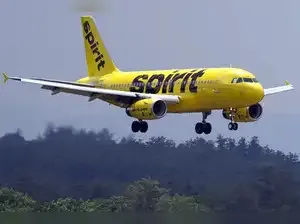
Spirit Airlines Shutdown 2026: Refunds, Rising Fares, and What Every Traveler Must Do Right Now
Spirit Airlines Shutdown: Spirit Airlines — the airline that made flying affordable for working-class Americans, college students, and families squeezing every dollar — ceased all operations at 3:00 a.m. Eastern Time on May 2, 2026. No warning at the gate. No farewell announcement. Just silence, canceled flights, and a website updated overnight. The Spirit Airlines shutdown is not just a corporate bankruptcy story. It is a seismic shift in how Americans will pay to fly this summer and beyond.
Spirit had been bleeding for years. Two bankruptcy filings in less than 18 months — November 2024 and August 2025 — had already stripped the airline down to a skeleton. Its market share collapsed from 5.1% of U.S. passengers in early 2025 to a projected 1.8% by May 2026.
A last-ditch $500 million federal bailout, personally discussed by President Trump, fell apart when creditors rejected the terms. Trump himself said Friday: "If we can't make a good deal, no institution's been able to do it." And with that, 34 years of ultra-low-cost flying ended overnight. The Spirit Airlines shutdown put 17,000 people out of work instantly — 14,000 direct employees and thousands of contractors whose livelihoods depended on those yellow-and-black jets moving through the sky.
What makes this moment genuinely different from a typical airline bankruptcy is the scale of its market impact. Spirit wasn't just a carrier. It was a pricing anchor. Every route Spirit flew, every competitor felt the pressure to keep fares down. Now that anchor is gone.
A CBS News analysis of Cirium aviation data found that when Spirit previously exited a single route, average round-trip fares jumped 23% — roughly $60 per ticket — and passenger volume dropped 20%. Now multiply that across every Spirit route, simultaneously, heading into peak summer travel season. The ripple effects of the Spirit Airlines shutdown will be felt by people who never once booked a Spirit flight.
Spirit Airlines shutting down: why it failed, what happens now, and how to get your refund fast
The Spirit Airlines shutdown did not happen in a single bad quarter. It was the slow accumulation of structural wounds that no restructuring plan could fully close. The most immediate killer was jet fuel. Spirit's 2026 restructuring projections assumed fuel at approximately $2.24 per gallon.
When the Iran conflict disrupted oil supply through the Strait of Hormuz, prices spiked to roughly $4.51 per gallon — more than double the assumption. That single miscalculation added an estimated $360 million in unexpected costs to an airline already operating under court oversight with no financial cushion left.
But fuel was the final blow, not the original wound. The deeper problem was strategic. Spirit pioneered the ultra-low-cost, fees-for-everything model that made flying accessible to millions of Americans who previously couldn't afford it. Then the legacy carriers copied it.
Delta, United, and American introduced basic economy fares — stripped-down, non-refundable, bag-fee-heavy tickets — that competed directly with Spirit's pricing while offering more routes, more loyalty perks, and far more reliability.
Spirit's competitive moat dried up. "When you're a low-cost carrier, by definition, you're relying on having a cost advantage," said Shye Gilad, a former airline pilot and professor at Georgetown University's McDonough School of Business. "They just don't have that anymore."
The failed JetBlue merger compounded everything. A 2022 acquisition deal worth approximately $3.8 billion was Spirit's clearest exit from an increasingly impossible market position. Federal regulators blocked it in January 2024 on antitrust grounds.
That ruling, intended to protect competition, ironically accelerated the very outcome it feared — a Spirit Airlines shutdown that removed one of the few remaining price anchors from the U.S. budget travel market entirely.
How to Get Your Spirit Airlines Refund Before It Disappears Into Bankruptcy Court
This is where most travelers will make their most costly mistake — and where speed matters enormously. If you paid for a Spirit ticket using a credit or debit card, you have a clear, federally protected path to a full refund. Call your card issuer today and initiate a chargeback.
The legal basis is straightforward: non-delivery of service. Spirit canceled your flight. You are owed what you paid. Spirit has confirmed it will issue automatic refunds to card-paying customers, but filing a chargeback independently is faster and gives you a documented paper trail.
There is one critical mistake to avoid. Do not cancel your Spirit booking yourself before initiating the chargeback. Voluntary cancellation can be used by the airline — or the card dispute process — to classify your refund as a cancellation rather than a service failure. That distinction matters legally.
Hold your booking, save your itinerary screenshot, and call your bank first. Travel analyst Eric Rosen of The Points Guy put it plainly: "Call the credit card you used to buy the ticket and dispute the charge. The result is a non-delivery of service, which is grounds for disputing a charge."
If you paid with Free Spirit loyalty points, vouchers, or Spirit travel credits, the situation is far more painful. These payment methods are not protected under federal credit card dispute laws. Spirit has confirmed that refunds for non-card purchases will be determined through the bankruptcy court process — which could take months, sometimes years, and often delivers cents on the dollar at best.
Free Spirit points cannot be transferred to any other airline's loyalty program. They are, for practical purposes, frozen. File a claim in the bankruptcy proceedings and manage your expectations accordingly. The Spirit Airlines shutdown has effectively vaporized the loyalty currency of millions of frequent budget travelers overnight.
Which Airlines Are Offering Rescue Fares and Where Fares Are Heading This Summer
Transportation Secretary Sean Duffy moved quickly to prevent an outright price spike, brokering agreements with United, Delta, American, JetBlue, Southwest, and Frontier to cap fares on routes Spirit previously served.
Frontier went furthest, offering Spirit passengers up to 50% off base fares. American Airlines capped Main Cabin prices on all nonstop routes where it competes directly with Spirit's former network. United confirmed fare caps and said it is actively preparing to absorb displaced Spirit customers and employees.
The honest caveat is this: rescue fares will still cost more than Spirit did. Industry analyst Henry Harteveldt of Atmosphere Research Group was candid about it — these fares may be cheaper than normal walk-up prices, but they will not replicate the $49 Fort Lauderdale-to-New York fares that Spirit was famous for. The highest-impact markets right now are Fort Lauderdale, Orlando, Las Vegas, Detroit, Newark, and Houston. If you need to fly in or out of any of those cities before September, book immediately while the fare caps hold.
Looking further ahead, analysts expect Frontier, Avelo, Breeze, and Allegiant to gradually enter Spirit's vacated routes — but that expansion will realistically take three to six months. Summer 2026 will absorb the full price shock of the Spirit Airlines shutdown with no budget carrier replacing that capacity in time.
What the Spirit Airlines Shutdown Means for the Future of Budget Flying in America
The Spirit Airlines shutdown closes a 34-year chapter in American aviation. It is the first major U.S. airline failure since Midway Airlines folded in the immediate aftermath of September 11, 2001. What it signals about the future of budget flying is sobering. The ultra-low-cost model — already under pressure from legacy carriers mimicking its structure — now loses its most visible American champion.
William McGee, a senior fellow at the American Economic Liberties Project, made the point that most travelers miss: "You do not have to fly a small carrier in order to benefit from its presence, because they will bring down the big guys' fares."
Spirit's absence will not only affect people who flew Spirit. It will affect everyone who unknowingly benefited from Spirit existing on the same route as their preferred airline. The Spirit Airlines shutdown is, in a very real sense, a tax on air travel — paid by the whole market, not just the passengers holding yellow boarding passes.
The deeper lesson here is structural. No airline built on the thinnest margins in the industry can absorb a $360 million fuel cost surprise. The carriers that survive long-term are the ones with network scale, loyalty program revenue, and enough financial diversification to weather the next geopolitical shock — whatever shape it takes. Budget flying in America is not dead. But it is being restructured around fewer, stronger players. And for now, the traveler pays the difference.
Spirit had been bleeding for years. Two bankruptcy filings in less than 18 months — November 2024 and August 2025 — had already stripped the airline down to a skeleton. Its market share collapsed from 5.1% of U.S. passengers in early 2025 to a projected 1.8% by May 2026.
A last-ditch $500 million federal bailout, personally discussed by President Trump, fell apart when creditors rejected the terms. Trump himself said Friday: "If we can't make a good deal, no institution's been able to do it." And with that, 34 years of ultra-low-cost flying ended overnight. The Spirit Airlines shutdown put 17,000 people out of work instantly — 14,000 direct employees and thousands of contractors whose livelihoods depended on those yellow-and-black jets moving through the sky.
What makes this moment genuinely different from a typical airline bankruptcy is the scale of its market impact. Spirit wasn't just a carrier. It was a pricing anchor. Every route Spirit flew, every competitor felt the pressure to keep fares down. Now that anchor is gone.
A CBS News analysis of Cirium aviation data found that when Spirit previously exited a single route, average round-trip fares jumped 23% — roughly $60 per ticket — and passenger volume dropped 20%. Now multiply that across every Spirit route, simultaneously, heading into peak summer travel season. The ripple effects of the Spirit Airlines shutdown will be felt by people who never once booked a Spirit flight.
Spirit Airlines shutting down: why it failed, what happens now, and how to get your refund fast
The Spirit Airlines shutdown did not happen in a single bad quarter. It was the slow accumulation of structural wounds that no restructuring plan could fully close. The most immediate killer was jet fuel. Spirit's 2026 restructuring projections assumed fuel at approximately $2.24 per gallon. When the Iran conflict disrupted oil supply through the Strait of Hormuz, prices spiked to roughly $4.51 per gallon — more than double the assumption. That single miscalculation added an estimated $360 million in unexpected costs to an airline already operating under court oversight with no financial cushion left.
But fuel was the final blow, not the original wound. The deeper problem was strategic. Spirit pioneered the ultra-low-cost, fees-for-everything model that made flying accessible to millions of Americans who previously couldn't afford it. Then the legacy carriers copied it.
Delta, United, and American introduced basic economy fares — stripped-down, non-refundable, bag-fee-heavy tickets — that competed directly with Spirit's pricing while offering more routes, more loyalty perks, and far more reliability.
Spirit's competitive moat dried up. "When you're a low-cost carrier, by definition, you're relying on having a cost advantage," said Shye Gilad, a former airline pilot and professor at Georgetown University's McDonough School of Business. "They just don't have that anymore."
The failed JetBlue merger compounded everything. A 2022 acquisition deal worth approximately $3.8 billion was Spirit's clearest exit from an increasingly impossible market position. Federal regulators blocked it in January 2024 on antitrust grounds.
That ruling, intended to protect competition, ironically accelerated the very outcome it feared — a Spirit Airlines shutdown that removed one of the few remaining price anchors from the U.S. budget travel market entirely.
How to Get Your Spirit Airlines Refund Before It Disappears Into Bankruptcy Court
This is where most travelers will make their most costly mistake — and where speed matters enormously. If you paid for a Spirit ticket using a credit or debit card, you have a clear, federally protected path to a full refund. Call your card issuer today and initiate a chargeback. The legal basis is straightforward: non-delivery of service. Spirit canceled your flight. You are owed what you paid. Spirit has confirmed it will issue automatic refunds to card-paying customers, but filing a chargeback independently is faster and gives you a documented paper trail.
There is one critical mistake to avoid. Do not cancel your Spirit booking yourself before initiating the chargeback. Voluntary cancellation can be used by the airline — or the card dispute process — to classify your refund as a cancellation rather than a service failure. That distinction matters legally.
Hold your booking, save your itinerary screenshot, and call your bank first. Travel analyst Eric Rosen of The Points Guy put it plainly: "Call the credit card you used to buy the ticket and dispute the charge. The result is a non-delivery of service, which is grounds for disputing a charge."
If you paid with Free Spirit loyalty points, vouchers, or Spirit travel credits, the situation is far more painful. These payment methods are not protected under federal credit card dispute laws. Spirit has confirmed that refunds for non-card purchases will be determined through the bankruptcy court process — which could take months, sometimes years, and often delivers cents on the dollar at best.
Free Spirit points cannot be transferred to any other airline's loyalty program. They are, for practical purposes, frozen. File a claim in the bankruptcy proceedings and manage your expectations accordingly. The Spirit Airlines shutdown has effectively vaporized the loyalty currency of millions of frequent budget travelers overnight.
Which Airlines Are Offering Rescue Fares and Where Fares Are Heading This Summer
Transportation Secretary Sean Duffy moved quickly to prevent an outright price spike, brokering agreements with United, Delta, American, JetBlue, Southwest, and Frontier to cap fares on routes Spirit previously served. Frontier went furthest, offering Spirit passengers up to 50% off base fares. American Airlines capped Main Cabin prices on all nonstop routes where it competes directly with Spirit's former network. United confirmed fare caps and said it is actively preparing to absorb displaced Spirit customers and employees.
The honest caveat is this: rescue fares will still cost more than Spirit did. Industry analyst Henry Harteveldt of Atmosphere Research Group was candid about it — these fares may be cheaper than normal walk-up prices, but they will not replicate the $49 Fort Lauderdale-to-New York fares that Spirit was famous for. The highest-impact markets right now are Fort Lauderdale, Orlando, Las Vegas, Detroit, Newark, and Houston. If you need to fly in or out of any of those cities before September, book immediately while the fare caps hold.
Looking further ahead, analysts expect Frontier, Avelo, Breeze, and Allegiant to gradually enter Spirit's vacated routes — but that expansion will realistically take three to six months. Summer 2026 will absorb the full price shock of the Spirit Airlines shutdown with no budget carrier replacing that capacity in time.
What the Spirit Airlines Shutdown Means for the Future of Budget Flying in America
The Spirit Airlines shutdown closes a 34-year chapter in American aviation. It is the first major U.S. airline failure since Midway Airlines folded in the immediate aftermath of September 11, 2001. What it signals about the future of budget flying is sobering. The ultra-low-cost model — already under pressure from legacy carriers mimicking its structure — now loses its most visible American champion.William McGee, a senior fellow at the American Economic Liberties Project, made the point that most travelers miss: "You do not have to fly a small carrier in order to benefit from its presence, because they will bring down the big guys' fares."
Spirit's absence will not only affect people who flew Spirit. It will affect everyone who unknowingly benefited from Spirit existing on the same route as their preferred airline. The Spirit Airlines shutdown is, in a very real sense, a tax on air travel — paid by the whole market, not just the passengers holding yellow boarding passes.
The deeper lesson here is structural. No airline built on the thinnest margins in the industry can absorb a $360 million fuel cost surprise. The carriers that survive long-term are the ones with network scale, loyalty program revenue, and enough financial diversification to weather the next geopolitical shock — whatever shape it takes. Budget flying in America is not dead. But it is being restructured around fewer, stronger players. And for now, the traveler pays the difference.