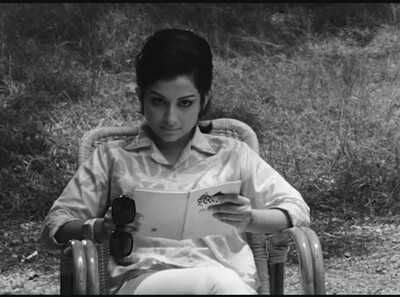
New Delhi [India], May 2 (ANI): Every now and then, cinema gives us stories that begin almost by accident. A young girl, barely in her teens, finds herself on a film set, unsure of what lies ahead, guided by a filmmaker who believed in simplicity over spectacle.
On Satyajit Ray's birth anniversary, it feels like the perfect time to revisit how he shaped the early journey of veteran actress Sharmila Tagore, long before stardom found her. In the history of Indian cinema, few debuts are as poetic as that of a 14-year-old Sharmila Tagore in Satyajit Ray's Apur Sansar (1959).
On the birth anniversary of the legendary filmmaker, affectionately known as "Manik da," Tagore revisited the accidental beginning of her storied career, revealing how Ray's unique directorial temperament turned a daunting film set into a space of "lovely" discovery.
Before she was the luminous star of Aradhana or Amar Prem, Tagore was a teenager with zero exposure to the mechanics of film. Casting her as Aparna in the final installment of the Apu Trilogy, Ray focused on preserving her natural innocence rather than burdening her with "acting."
Earlier, while speaking to ANI at an event, the veteran actress recalled her very first shot on set, a moment she says she still remembers clearly.
"My first shot was entering the house and looking around. I still remember it... It was very stress-free," Tagore recalled. "That is the beauty of Manik da; he never made his actors feel that the scene was difficult. He just made it all very easy for me."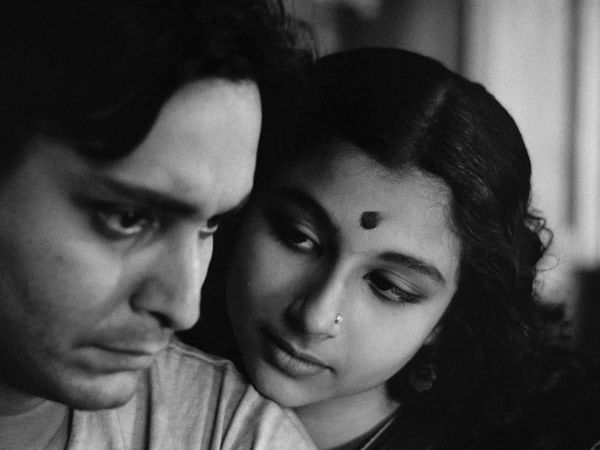
"Oh my God, that's going to take a long time. But it was wonderful. And I still remember it. So my first shot was entering the house and looking around. And of course, one doesn't forget one's first shot..."
According to her, he never made actors feel that a scene was "difficult." For a young girl stepping onto a film set for the first time, that reassurance made all the difference.
"It was all kind of new for me to discover. So it was lovely, it was very stress-free. And that is the beauty of Manik da, because he never made his actors feel that the scene was difficult. It was my first day, I was very new, and I had no exposure to films. He just made it all very easy for me," she told ANI.
The partnership that began in 1959 evolved into one of the most intellectually rich collaborations in cinematic history. Over the years, they worked together on five landmark films, each showcasing a different facet of Tagore's restrained and modern acting style: Apur Sansar (1959): The innocent, ill-fated bride.; Devi (1960): A complex exploration of religious orthodoxy and personified divinity; Nayak (1966): The pragmatic journalist challenging a matinee idol; Aranyer Din Ratri (1970): The sophisticated, urban voice of reason and Seemabaddha (1971): A sharp critique of corporate morality.
Tagore shared vivid memories of filming Aranyer Din Ratri (Days and Nights in the Forest) in the sweltering heat of Jharkhand. Ray's commitment to visual authenticity meant filming during a season when the trees were sparse and leafless--a setting that mirrored the "stripped-back" social tensions of the plot.
The cast shot in remote areas without electricity. While Tagore had the luxury of a small generator-powered cooler, she fondly remembers the male cast members enduring the discomfort with humour. "The boys were all very uncomfortable, but we just laughed about it," she shared.
View this post on InstagramA post shared by Film Heritage Foundation (@filmheritagefoundation)
"Yes, in Jharkhand. We had to get off at Ranchi and then drive. It was beautiful, I mean, he wanted that particular location and that time of the year. So it was very hot, and the trees were all sparse. There were no leaves, and he wanted that kind of look. We didn't have electricity, but I was given a generator with a cooler. The boys were all very uncomfortable, but we just laughed about it. In the evenings, it was very pleasant," she said.
While Tagore eventually became a household name in the high-glamour world of Hindi cinema, her work with Ray remains her most "introspective" body of work. By stripping away the "difficulty" of performance, Satyajit Ray didn't just teach a 14-year-old girl how to act; he taught her how to be present, a lesson that defined her journey for the next six decades.
Today, as fans celebrate Ray's birth anniversary, these stories serve as a reminder that the greatest directors don't just build sets; they build the confidence of the artists who inhabit them. (ANI)
-
Recipe : Homemade bakery-like tasty ‘Fruit Tart’ full of sweetness of fresh fruits; A great choice for dessert

-
Suzuki India Records Growth Across Markets; What’s Fueling Demand?

-
With the arrival of May, these companies including OnePlus increased the prices of phones, know what are the new prices.

-
Tech Launches: Netflix’s new ‘clips’, JUST CORSECA wall art wireless speakers, Apple iNvent pre-booking offers, and more

-
Created a wishlist? Amazon Prime Day Sale will start in ‘this’ month… these users will get a big benefit