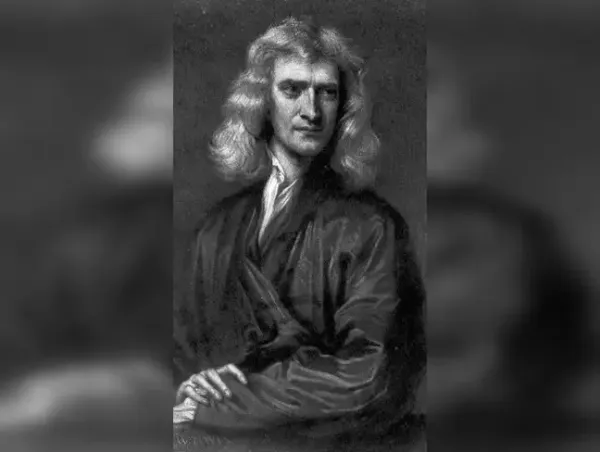
Isaac Newton's Quote of the Day suggests he believed true intelligence comes from staying curious and never stopping to learn
In life, there are moments when even after achieving something big, a strange feeling remains, like there is still so much left to understand. Success may come, and recognition may follow, but true wisdom often brings humility instead of pride.
Some of the greatest minds in history felt this deeply. They understood that knowledge is endless, and no matter how much we learn, there is always more waiting beyond what we know.
Quote of the Day by Isaac Newton: ‘To myself I am only a child playing on the beach, while vast oceans of truth lie undiscovered before me’
Also Read: Quote of the Day by Lou Holtz: ‘It's not the load that breaks you down, it's the way you carry it’ - Why stress reveals your true strength, according to the legendary football coach
This quote is attributed to Sir Isaac Newton by multiple outlets including Good Reads, one of the greatest scientists in history. Even after changing the world with his discoveries in gravity, motion, and calculus, Newton saw himself not as someone who had mastered truth but as someone still exploring its edge.
That is what makes the quote powerful even today; it reminds people that intelligence is not about believing you know everything but about staying curious enough to keep learning.
At first, the quote sounds simple and poetic. A child on a beach may seem small compared to the endless ocean. But that image carries a deep meaning. Newton is saying that human knowledge is limited, while truth is vast and endless. No matter how much a person discovers, there will always be more left unknown.
This idea teaches humility. Often, people think intelligence means having all the answers. But Newton suggests the opposite. Real intelligence means understanding how much you still do not know.
It also encourages curiosity. Like a child picking shells on the shore, learning begins with wonder. Asking questions, staying open-minded, and accepting uncertainty are often more valuable than pretending to be certain.
In daily life, this can be applied everywhere: work, relationships, education, and personal growth. People grow faster when they remain learners instead of assuming they have already arrived.
Also Read: Quote of the Day by Abraham Lincoln: ‘Adhere to your purpose and you will soon feel as well as you ever did; if you falter…’ - A 164-year-old lesson on why giving up too soon brings lifelong regret
Isaac Newton was born prematurely on January 4, 1643, in Lincolnshire, England. He was so small at birth that his mother reportedly said he could have fit inside a quart mug, as per his National Geographic biography. As a child, he loved building things. He made small working models, including a tiny flour mill powered by a mouse running in a wheel. His curiosity was visible early.
He entered the University of Cambridge in 1661, though he did not immediately stand out as a brilliant student. In 1665, when the university closed because of the bubonic plague, Newton returned home for two years. Those quiet years became the most important period of his life.
It was during this time that the famous falling apple story is believed to have happened. Watching an apple fall led him to think deeply about gravity and why objects move the way they do. Newton later showed that the same force pulling an apple to the ground also keeps the moon and planets in orbit.
He also developed the three laws of motion, helped create calculus alongside German mathematician Gottfried Leibniz, and made major discoveries in optics by proving that white light contains all the colors of the rainbow.
In 1687, he published Principia, one of the most important scientific books ever written. His ideas became the foundation of modern physics and space science. Newton died in 1727 at the age of 84 and was buried in Westminster Abbey in London.
Also Read: Quote of the Day by Bohdi Sanders: ‘Focus on making yourself better, not on thinking…’ - The secret mantra to becoming a better version of yourself
Newton did not approach science as someone trying to show off intelligence, as many biographies suggest. He approached it like someone searching for hidden truth.
The famous apple story reflects this perfectly. Most people see an apple fall and move on. Newton saw a question inside it, which was one of the rare defining moments in history that turned the board upside down.
He believed observation and curiosity mattered more than easy answers. His work was built on asking simple questions and refusing to stop until he found deeper meaning. That is why this quote fits him so well. Even after transforming science, he still felt like a child standing before an ocean of mysteries.
For Newton, discovery was never about reaching the end. It was about continuing the search. His humility was not weakness; it was the mindset that allowed genius to grow.
Modern life often pushes people to look confident, certain, and successful. There is pressure to appear like we already know everything. But Newton’s quote offers a healthier way to think.
It reminds us that growth begins when we admit there is more to learn. Whether someone is building a career, raising children, studying for exams, or healing from failure, curiosity matters more than ego.
In education, it teaches students to value questions as much as answers. In work life, it helps professionals stay adaptable instead of rigid. In relationships, it reminds people to listen before assuming they understand others. The quote also reduces the fear of not knowing. It tells us that uncertainty is not failure; it is part of discovery.
Even one of history’s greatest scientists believed he was still only on the shore. That perspective makes learning feel less like pressure and more like possibility.
Some of the greatest minds in history felt this deeply. They understood that knowledge is endless, and no matter how much we learn, there is always more waiting beyond what we know.
Quote of the Day by Isaac Newton: ‘To myself I am only a child playing on the beach, while vast oceans of truth lie undiscovered before me’
Also Read: Quote of the Day by Lou Holtz: ‘It's not the load that breaks you down, it's the way you carry it’ - Why stress reveals your true strength, according to the legendary football coach
This quote is attributed to Sir Isaac Newton by multiple outlets including Good Reads, one of the greatest scientists in history. Even after changing the world with his discoveries in gravity, motion, and calculus, Newton saw himself not as someone who had mastered truth but as someone still exploring its edge.
That is what makes the quote powerful even today; it reminds people that intelligence is not about believing you know everything but about staying curious enough to keep learning.
What the quote on knowledge is actually suggesting
At first, the quote sounds simple and poetic. A child on a beach may seem small compared to the endless ocean. But that image carries a deep meaning. Newton is saying that human knowledge is limited, while truth is vast and endless. No matter how much a person discovers, there will always be more left unknown.
This idea teaches humility. Often, people think intelligence means having all the answers. But Newton suggests the opposite. Real intelligence means understanding how much you still do not know.
It also encourages curiosity. Like a child picking shells on the shore, learning begins with wonder. Asking questions, staying open-minded, and accepting uncertainty are often more valuable than pretending to be certain.
In daily life, this can be applied everywhere: work, relationships, education, and personal growth. People grow faster when they remain learners instead of assuming they have already arrived.
Also Read: Quote of the Day by Abraham Lincoln: ‘Adhere to your purpose and you will soon feel as well as you ever did; if you falter…’ - A 164-year-old lesson on why giving up too soon brings lifelong regret
Isaac Newton: The thinker behind the wisdom
Isaac Newton was born prematurely on January 4, 1643, in Lincolnshire, England. He was so small at birth that his mother reportedly said he could have fit inside a quart mug, as per his National Geographic biography. As a child, he loved building things. He made small working models, including a tiny flour mill powered by a mouse running in a wheel. His curiosity was visible early.
He entered the University of Cambridge in 1661, though he did not immediately stand out as a brilliant student. In 1665, when the university closed because of the bubonic plague, Newton returned home for two years. Those quiet years became the most important period of his life.
It was during this time that the famous falling apple story is believed to have happened. Watching an apple fall led him to think deeply about gravity and why objects move the way they do. Newton later showed that the same force pulling an apple to the ground also keeps the moon and planets in orbit.
He also developed the three laws of motion, helped create calculus alongside German mathematician Gottfried Leibniz, and made major discoveries in optics by proving that white light contains all the colors of the rainbow.
In 1687, he published Principia, one of the most important scientific books ever written. His ideas became the foundation of modern physics and space science. Newton died in 1727 at the age of 84 and was buried in Westminster Abbey in London.
Also Read: Quote of the Day by Bohdi Sanders: ‘Focus on making yourself better, not on thinking…’ - The secret mantra to becoming a better version of yourself
Isaac Newton’s thinking style and philosophy behind the quote
Newton did not approach science as someone trying to show off intelligence, as many biographies suggest. He approached it like someone searching for hidden truth.
The famous apple story reflects this perfectly. Most people see an apple fall and move on. Newton saw a question inside it, which was one of the rare defining moments in history that turned the board upside down.
He believed observation and curiosity mattered more than easy answers. His work was built on asking simple questions and refusing to stop until he found deeper meaning. That is why this quote fits him so well. Even after transforming science, he still felt like a child standing before an ocean of mysteries.
For Newton, discovery was never about reaching the end. It was about continuing the search. His humility was not weakness; it was the mindset that allowed genius to grow.
Why Newton’s quote on knowledge still matters today
Modern life often pushes people to look confident, certain, and successful. There is pressure to appear like we already know everything. But Newton’s quote offers a healthier way to think.
It reminds us that growth begins when we admit there is more to learn. Whether someone is building a career, raising children, studying for exams, or healing from failure, curiosity matters more than ego.
In education, it teaches students to value questions as much as answers. In work life, it helps professionals stay adaptable instead of rigid. In relationships, it reminds people to listen before assuming they understand others. The quote also reduces the fear of not knowing. It tells us that uncertainty is not failure; it is part of discovery.
Even one of history’s greatest scientists believed he was still only on the shore. That perspective makes learning feel less like pressure and more like possibility.