Bengaluru-based start-up launches 1st OptoSAR satellite in the world
03 May 2026
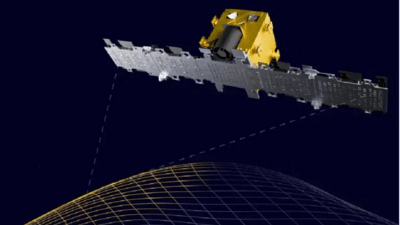
Bengaluru-based space start-up GalaxEye has launched its first commercial satellite, Drishti, into orbit. The launch took place aboard SpaceX's Falcon-9 rocket today.
GalaxEye is calling Drishti the "world's first OptoSAR satellite."
This launch marks a major step forward in Earth observation technology and showcases India's increasing prowess in the global space arena.
It weighs 190kg
Technological innovation
Weighing 190kg, Drishti is India's biggest privately developed Earth observation satellite. It is the first satellite in the world to combine Electro-Optical (EO) and Synthetic Aperture Radar (SAR) sensors on a single operational platform. This unique combination offers all-weather, day-and-night imaging capabilities.
Satellite can see through clouds and darkness
Versatile usage
Drishti can see through clouds, darkness, and even bad weather while also capturing conventional optical imagery.
By synchronizing and fusing both data streams, GalaxEye says the satellite can provide more reliable and usable imagery for users on the ground.
The spacecraft is expected to be used for border surveillance, defense monitoring, disaster response, agriculture, infrastructure planning, insurance assessment among other things.
Drishti features onboard artificial intelligence processing
Advanced tech
Drishti also features artificial intelligence processing powered by NVIDIA's Jetson Orin computing platform.
This enables some of the processing to be done in orbit, cutting down on the time taken to convert satellite imagery into actionable information.
The satellite can provide imagery at a resolution of 1.5 meters and revisit locations worldwide every seven to 10 days.
GalaxEye plans to create constellation of satellites
Expansion plans
The spacecraft, about the size of a small refrigerator, also has a deployable antenna of about 3.5m.
GalaxEye had previously tested its imaging systems via nearly 500 aerial sorties involving drones and Cessna aircraft.
Following Drishti's successful launch, the start-up intends to create a bigger constellation of eight to 12 satellites over the next four years with even sharper imagery in mind.
-
Summer Vacation Announcements for Schools in Delhi and Other States
-
Coal India CIL Management Trainee Recruitment 2026: Apply for 276 Positions

-
Understanding Endometrial Cancer: Risks and Prevention

-
Lucknow's Safety Project Targeted by Thieves During IPL

-
Impact of Middle East Conflict on India's Economy: Challenges and Resilience