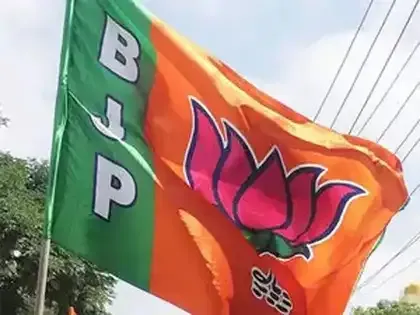
West Bengal has spoken: voters have handed BJP a decisive victory, expanding its hold over eastern India. India is now a Hindutva country: over 70% of its land area, covering 21 states, and almost 80% of its population are now governed, at the state level, by BJP-led NDA. What was once the bastion of secular political parties—communists for 34 years and then TMC for 15 years—Bengal is now a BJP territory.
The party’s victory in Bengal is a setback for competitive democracy in India and narrows the space for political contestation. It reinforces BJP’s growing structural dominance over the Indian polity, giving it a stronger, more consolidated base as it advances toward the 2029 general elections.
The BJP juggernaut has continued unabated since the 2024 general elections. The party received flak for failing to secure an absolute majority without the support of its allies in 2024. The ruling party has more than overcome that setback with a series of state-level victories. It has now added Bengal to its fold while retaining Assam, after winning 4 assembly elections in Haryana, Maharashtra, Delhi, and Bihar over the past 2 years.
Upheavals in the two southern states have left BJP unaffected. Its vote share in Kerala remained at 11%, the same as in 2021, and in Tamil Nadu, it fell marginally from 3% to 2.6%. The big news in the south, of course, is the emergence of actor-politician Vijay with his Tamilaga Vettri Kazhagam (TVK), winning over 100 seats and the overthrow of DMK. In this wave of anti-incumbency, Stalin was unable to retain his seat.
In Kerala, Congress-led UDF has swept to power, bringing an end to a decade of LDF rule and, for now, drawing a close to the last remaining chapter of communist-led governance in the country.
While anti-incumbency was all-powerful in 3 of the 4 elections, in Assam, BJP improved its tally from 73 (of 126 seats) in 2021 to 100 in 2026. Himanta Biswa Sarma entered the field with a heady cocktail of slogans, spreading fears about Muslim infiltrators from Bangladesh.
Careful examination of the delimitation exercise of voters in Assam in 2023 suggests that it involved gerrymandering of constituencies. Muslim-majority seats were dispersed into Hindu-majority seats, whereas Hindu-majority areas from far-flung Muslim-dominated seats were merged into constituencies to increase Hindu domination. Overall, this led to a fall in Muslim-majority seats from 35 (of the state’s 126 seats) to 20–23.
I had argued that winning Bengal would be an uphill battle for BJP. Now we know that this was a false alarm, poor analysis, or even wishful thinking, depending on your politics. Results show that BJP victory is nothing short of a cakewalk, winning 205 of 294 seats and leaving TMC with fewer than 100 seats.
BJP’s vote share, since the last assembly elections in 2021, has increased by 7–8 percentage points. It has swept through regions like Medinipur and Jalpaiguri, which were once TMC strongholds. In the previous elections, Mamata Banerjee had a complete hold over rural voter. But not anymore. While TMC supporters are likely to argue that SIR tilted the playing field in favour of BJP, Mahua Moitra of TMC told journalists before the election that SIR would not affect the outcome.
What greater ignominy could there be for TMC than this: its top leadership fighting for political survival. At time of going to press, Banerjee and Abhishek Banerjee were both trailing—an extraordinary moment that underscores the depth of the party’s crisis.
What went wrong with the analysis that predicted a difficult victory for BJP? In hindsight, it appears that I overlooked several issues.
● Hindu vote consolidation I predicted that the Muslim vote would consolidate behind TMC, but I ignored the possibility of Hindu votes consolidating behind BJP, which is what happened.
● Double engine sarkar This slogan appears to have appealed to the rational voter, in particular, those who lost jobs from MGNREGA cancellations or were deprived of funds under PM Awas Yojana. Voters realised that the flow of central schemes to the state would not resume if TMC remained in power.
● Hindutva appeal Bengali bhadralok is not immune to BJP’s Hindutva appeal. What is surprising is the speed at which it has taken over the polity over the past 15 years, during which BJP’s share of Bengali votes has increased from 4% in 2011 to close to 48% in 2026.
Assembly Elections 2026
Election Results 2026 Live Updates: Who's ahead in which state
West Bengal Election Results 2026 Live Updates
TN Election Result 2026 Live Updates
The BJP juggernaut has continued unabated since the 2024 general elections. The party received flak for failing to secure an absolute majority without the support of its allies in 2024. The ruling party has more than overcome that setback with a series of state-level victories. It has now added Bengal to its fold while retaining Assam, after winning 4 assembly elections in Haryana, Maharashtra, Delhi, and Bihar over the past 2 years.
Upheavals in the two southern states have left BJP unaffected. Its vote share in Kerala remained at 11%, the same as in 2021, and in Tamil Nadu, it fell marginally from 3% to 2.6%. The big news in the south, of course, is the emergence of actor-politician Vijay with his Tamilaga Vettri Kazhagam (TVK), winning over 100 seats and the overthrow of DMK. In this wave of anti-incumbency, Stalin was unable to retain his seat.
In Kerala, Congress-led UDF has swept to power, bringing an end to a decade of LDF rule and, for now, drawing a close to the last remaining chapter of communist-led governance in the country.
While anti-incumbency was all-powerful in 3 of the 4 elections, in Assam, BJP improved its tally from 73 (of 126 seats) in 2021 to 100 in 2026. Himanta Biswa Sarma entered the field with a heady cocktail of slogans, spreading fears about Muslim infiltrators from Bangladesh.
Careful examination of the delimitation exercise of voters in Assam in 2023 suggests that it involved gerrymandering of constituencies. Muslim-majority seats were dispersed into Hindu-majority seats, whereas Hindu-majority areas from far-flung Muslim-dominated seats were merged into constituencies to increase Hindu domination. Overall, this led to a fall in Muslim-majority seats from 35 (of the state’s 126 seats) to 20–23.
I had argued that winning Bengal would be an uphill battle for BJP. Now we know that this was a false alarm, poor analysis, or even wishful thinking, depending on your politics. Results show that BJP victory is nothing short of a cakewalk, winning 205 of 294 seats and leaving TMC with fewer than 100 seats.
BJP’s vote share, since the last assembly elections in 2021, has increased by 7–8 percentage points. It has swept through regions like Medinipur and Jalpaiguri, which were once TMC strongholds. In the previous elections, Mamata Banerjee had a complete hold over rural voter. But not anymore. While TMC supporters are likely to argue that SIR tilted the playing field in favour of BJP, Mahua Moitra of TMC told journalists before the election that SIR would not affect the outcome.
What greater ignominy could there be for TMC than this: its top leadership fighting for political survival. At time of going to press, Banerjee and Abhishek Banerjee were both trailing—an extraordinary moment that underscores the depth of the party’s crisis.
What went wrong with the analysis that predicted a difficult victory for BJP? In hindsight, it appears that I overlooked several issues.
● Hindu vote consolidation I predicted that the Muslim vote would consolidate behind TMC, but I ignored the possibility of Hindu votes consolidating behind BJP, which is what happened.
● Double engine sarkar This slogan appears to have appealed to the rational voter, in particular, those who lost jobs from MGNREGA cancellations or were deprived of funds under PM Awas Yojana. Voters realised that the flow of central schemes to the state would not resume if TMC remained in power.
● Hindutva appeal Bengali bhadralok is not immune to BJP’s Hindutva appeal. What is surprising is the speed at which it has taken over the polity over the past 15 years, during which BJP’s share of Bengali votes has increased from 4% in 2011 to close to 48% in 2026.
(Disclaimer: The opinions expressed in this column are that of the writer. The facts and opinions expressed here do not reflect the views of www.economictimes.com.)


Neeraj Kaushal
Professor, Social Policy, Columbia University, US