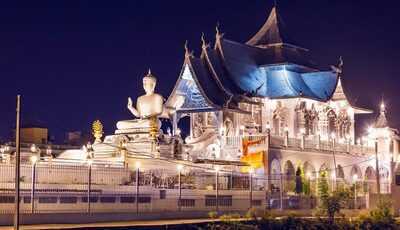
Gaya is a wonderful destination for a peaceful and enriching holiday. Its scenic charm and remarkable architecture captivate visitors, regardless of their beliefs. While the region holds deep religious significance, it also reflects harmony and respect for all faiths. A visit here leaves you with lasting memories rooted in culture, history, and spirituality.
# Mahabodhi Temple
Located about 96 km from Patna, this iconic temple was originally built by Emperor Ashoka in the 3rd century BC, with the present structure dating back to around the 5th–6th centuries. Constructed entirely of brick, it stands as a magnificent architectural and sculptural masterpiece. The temple offers deep insight into the life and teachings of Gautama Buddha.
On its western side stands the sacred Bodhi Tree, where Siddhartha Gautama attained enlightenment. The temple complex features several towers, the tallest rising to 55 meters, along with a gold-painted idol of Buddha in the Bhumisparsha Mudra. Numerous stupas and statues, some over a century old, are scattered throughout the temple.
Visiting Hours: 5:00 AM to 9:00 PM
Best Time to Visit: Early morning or late evening for a peaceful experience
Tips: Dress modestly, remove footwear before entering, and maintain silence
How to Reach:
Nearest airport: Gaya Airport (12 km)
Nearest railway station: Gaya Junction (16 km)
Local transport: Buses and taxis easily available
Things to Do:
Explore this UNESCO World Heritage Site
Meditate in the serene surroundings
Capture the intricate architecture
Witness daily Buddhist rituals
Visit nearby international monasteries
# Bodhi Tree
The Bodhi Tree is one of the most sacred symbols in Buddhism. Located within the Mahabodhi Temple complex, it marks the exact spot where Buddha attained enlightenment after meditating for over a month. Every year on Bodhi Day, followers across the world commemorate this moment.
This tree is believed to be the fifth-generation descendant of the original. According to legend, Sanghamitta carried a branch of the original tree to Anuradhapura, where it still thrives. The current tree in Bodh Gaya is said to have grown from that lineage.
Visitors often see monks meditating, reading, or offering prayers here. The area is surrounded by votive stupas and chaityas, creating a deeply spiritual atmosphere.
Best Time to Visit: Early morning or evening for quite reflection
Tips: Sit quietly for meditation, respect those praying, and maintain decorum
How to Reach: Located inside the Mahabodhi Temple complex
Things to Do:
Meditate under the sacred tree
Participate in prayer sessions
Capture the peaceful surroundings
Learn about its historical and spiritual significance
# Royal Bhutan Monastery
This monastery is a visual delight, especially for those interested in Buddhist art and culture. Built by Bhutanese monks, it beautifully showcases scenes from Buddha’s life through intricate carvings and artwork.
The architecture reflects traditional Bhutanese design, making it one of the most striking monasteries in the region. Inside, you’ll find a serene environment along with a 7-foot-tall statue of Buddha. It’s an ideal place for meditation and quiet contemplation.
Visiting Hours: 7:00 AM to 7:00 PM
Best Time to Visit: Early morning or late afternoon to avoid the heat
Tips: Take time to admire the intricate murals and architecture. Follow monastery rules such as removing shoes and maintaining silence
How to Reach: Located about 1.5 km from the Mahabodhi Temple, easily accessible by foot or rickshaw
Things to Do:
Appreciate the detailed Bhutanese-style architecture, including wood carvings and vibrant artwork
Attend or observe prayer sessions conducted by monks
Spend quiet moments in the meditation hall
Capture the beauty of murals and statues through photography
# Thai Temple
Built in 1956 by the Thai monarchy, this temple is a fine example of traditional Thai architecture. Its curved and sloping roof, adorned with golden tiles, gleams beautifully in sunlight, making it a visual delight.
The temple offers a calm and serene atmosphere, complemented by a bronze statue of Buddha inside. The surrounding gardens enhance its charm, along with a striking 25-meter-tall standing Buddha statue.
Visiting Hours: 6:00 AM to 6:00 PM
Best Time to Visit: Morning or evening
Tips: Enjoy the peaceful gardens for meditation and reflection; be mindful while taking photographs
How to Reach: About 1 km from the Mahabodhi Temple, easily reachable on foot or by rickshaw
Things to Do:
Walk through the landscaped gardens and admire Thai-style design
Participate in meditation sessions
Visit the central Buddha statue
Interact with monks and learn about Thai Buddhist traditions
# Muchalinda Lake
Muchalinda Lake holds great spiritual significance in Buddhism. According to legend, during the sixth week of meditation, Buddha was protected from a storm by Muchalinda, the serpent king.
The site features a statue of Buddha sheltered by the serpent, set amidst lush greenery, making it especially appealing to nature lovers.
Best Time to Visit: Early morning or late afternoon
Tips: Sit by the lake for quiet reflection away from crowds
How to Reach: Located within the Mahabodhi Temple complex
Things to Do:
Take a peaceful walk around the lake
Capture scenic views, especially during sunrise or sunset
Meditate in the tranquil surroundings
Learn about the legend from local guides
# Bodhgaya Archaeological Museum
Established in 1956, this museum houses a rich collection of ancient relics. Exhibits include statues dating back to the 1st century BC, depictions of Hindu deities, and Buddha idols crafted from bronze, silver, and gold.
Visiting Hours: 10:00 AM to 5:00 PM (Closed on Fridays)
Entry Fee: Nominal (approx. ₹5 for Indians, ₹100 for foreigners)
Best Time to Visit: Mid-morning or afternoon
Tips: Spend at least an hour exploring; photography is usually not allowed inside
How to Reach: About 2 km from the Mahabodhi Temple, accessible by rickshaw or on foot
Things to Do:
Explore ancient sculptures and artifacts
Learn about the evolution of Buddhism
Observe rare historical collections
Attend occasional exhibitions
# Chinese Temple and Monastery
Located near the Mahabodhi Temple, this monastery reflects traditional Chinese architectural style. Built in 1945 with support from the Chinese government and monks, it houses a 200-year-old Buddha statue believed to have been brought from China.
The temple also features three golden Buddha statues and underwent renovation in 1997. Historical travel accounts by Chinese scholars provide fascinating insights into India’s cultural past.
Visiting Hours: 6:00 AM to 6:00 PM
Best Time to Visit: Morning or evening
Tips: Observe the unique architectural blend; check timings for meditation sessions
How to Reach: Around 1.5 km from the Mahabodhi Temple, reachable by foot or rickshaw
Things to Do:
Admire pagoda-style roofs and ornate decor
Join meditation sessions
Visit the main Buddha statue
Interact with monks to learn about Chinese Buddhist practices
# Barabar Caves
The Barabar Caves are among India’s oldest surviving rock-cut caves, dating back to the Mauryan period (322–185 BC). These caves, including the famous Lomas Rishi Cave, showcase architecture inspired by ancient wooden huts used by monks.
Between 273 BC and 233 BC, the caves were used by Jain and Hindu ascetics. Their walls feature inscriptions detailing the history and development of Buddhism. The precision of the carvings is so remarkable that they resemble modern laser-cut work.
Visiting Hours: Open throughout the day
Best Time to Visit: Early morning or late afternoon
Tips: Hire a local guide for better understanding; carry water and snacks
How to Reach: Located about 45 km from Bodhgaya; accessible by taxi or bus
Things to Do:
Explore ancient rock-cut caves
Learn about their historical and religious significance
Capture detailed carvings and inscriptions
Enjoy a short hike with scenic views of the surroundings
-
CM Stalin tenders resignation: DMK sources

-
CM Stalin tenders resignation: DMK sources

-
Gas pipeline leak triggers fire in Bidar; major accident averted

-
Bengaluru: Six arrested with MDMA, hydro ganja worth Rs 20 crore

-
Asthma patients using salbutamol blue inhalers told contact GP as 'dangerous' alert issued