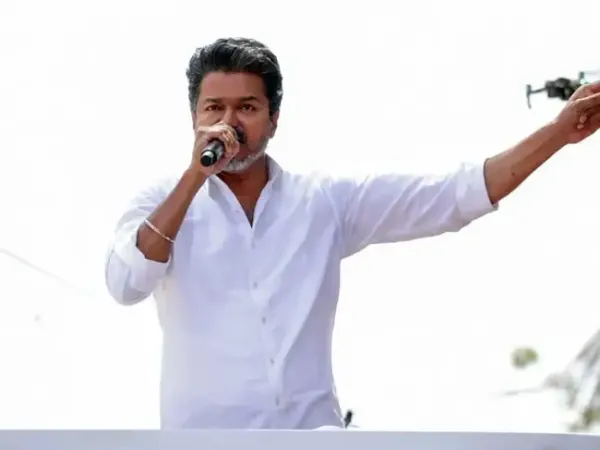
Actor-turned-politician Vijay ran a campaign in Tamil Nadu that looked less like a traditional political push and more like a film rollout—complete with teaser-style messaging, viral content and high-impact digital outreach—an approach strategists say played a key role in his party’s breakthrough performance.
Leveraging a vast network of nearly 85,000 fan clubs, Vijay transformed supporters into “virtual warriors” and micro-influencers. The campaign leaned heavily on holograms, AI-generated content, virtual rallies and hyper-local messaging, with a clear focus on first-time voters and their families. Women accounted for more than 80% of the additional voters, according to consultants tracking the election.
Also Read: TVK can't form govt with Congess support alone: DMK's Elangovan
Marketing experts say the strategy worked because it relied on peer-driven communication rather than direct political messaging. Content circulated through WhatsApp groups, social media threads and local networks, allowing conversations to grow organically without heavy reliance on paid promotions. “The audience itself became the medium,” said a digital strategist familiar with the campaign.
In the final phase, Vijay’s call for a “youth tsunami” saw children and young voters actively urging families to support him, sparking a wave of viral reels—some featuring exaggerated or provocative lines—across social media platforms.
Observers note that the campaign prioritised emotional appeal over policy articulation, with messaging designed for quick consumption in a fast-scrolling digital environment. Viral lines and personalised appeals helped sustain engagement in the days leading up to polling.
The decentralised nature of TVK’s digital push also made it difficult for rival parties to counter narratives online. Much of the mobilisation was driven by supporter networks and independent accounts rather than a centralised IT structure.
Also Read: With Vijay's TVK emerging as single largest party, focus on govt formation
Political analysts say this combination of grassroots digital amplification, fan-driven outreach and unconventional messaging helped Vijay carve out a distinct campaign model—one that may reshape how elections are fought in the state.
(With inputs from TOI)
Assembly Elections 2026
Election Results 2026 Live Updates: Who's ahead in which state
West Bengal Election Results 2026 Live Updates
TN Election Result 2026 Live Updates
Also Read: TVK can't form govt with Congess support alone: DMK's Elangovan
Marketing experts say the strategy worked because it relied on peer-driven communication rather than direct political messaging. Content circulated through WhatsApp groups, social media threads and local networks, allowing conversations to grow organically without heavy reliance on paid promotions. “The audience itself became the medium,” said a digital strategist familiar with the campaign.
In the final phase, Vijay’s call for a “youth tsunami” saw children and young voters actively urging families to support him, sparking a wave of viral reels—some featuring exaggerated or provocative lines—across social media platforms.
Observers note that the campaign prioritised emotional appeal over policy articulation, with messaging designed for quick consumption in a fast-scrolling digital environment. Viral lines and personalised appeals helped sustain engagement in the days leading up to polling.
The decentralised nature of TVK’s digital push also made it difficult for rival parties to counter narratives online. Much of the mobilisation was driven by supporter networks and independent accounts rather than a centralised IT structure.
Also Read: With Vijay's TVK emerging as single largest party, focus on govt formation
Political analysts say this combination of grassroots digital amplification, fan-driven outreach and unconventional messaging helped Vijay carve out a distinct campaign model—one that may reshape how elections are fought in the state.
(With inputs from TOI)