New Delhi: The India Meteorological Department (IMD) has issued a yellow alert for Delhi and the National Capital Region (NCR) as a fresh western disturbance brings a shift in the weather.
Residents can expect moderate rain, frequent thunderstorms, and gusty winds reaching 40–50 kmph, occasionally up to 60 kmph.
While the change promises a break from the early May heatwave, officials warn of potential travel disruptions across the capital.
Heatwave Relief on the Horizon
After a week of soaring temperatures that frequently exceeded 40°C, the mercury is expected to take a sharp dive.
On Tuesday, May 5, 2026, the maximum temperature is projected to hover around 32–33°C, nearly seven notches below the seasonal average.
Despite the cooler surface temperatures, high humidity levels, peaking near 90%, may cause some discomfort during the afternoon hours before the evening storms provide a more thorough cooling effect.
Travel and Infrastructure Warnings
The Yellow alert serves as a cautionary signal for residents and commuters.
The predicted 50 kmph winds and reduced visibility during thundershowers are likely to impact:
- Flight delays or diversions at Indira Gandhi International (IGI) Airport during peak storm activity.
- Waterlogging in low-lying areas and slow-moving traffic on major arteries such as the DND Flyway and the Gurugram-Delhi expressway.
- Potential localised outages due to uprooted trees or snapped power lines.
Authorities have advised residents to stay indoors during the peak of the storm and avoid standing under tall trees or temporary structures.
Short-lived Respite
A gradual rise in temperatures starting May 6, with the mercury likely climbing back to 37°C by the weekend.
However, for a city grappling with an intense summer, these few days of monsoon-like weather are a welcome departure from the scorching sun.
The IMD will continue to monitor the western disturbance and provide real-time updates as the system moves across Northern India.
-
Naagin 7 Producer Ektaa Kapoor Exposes Editor Behind Major VFX Blunder, But Calls Him 'Best': I Can Change A Lover But Can't Change...

-
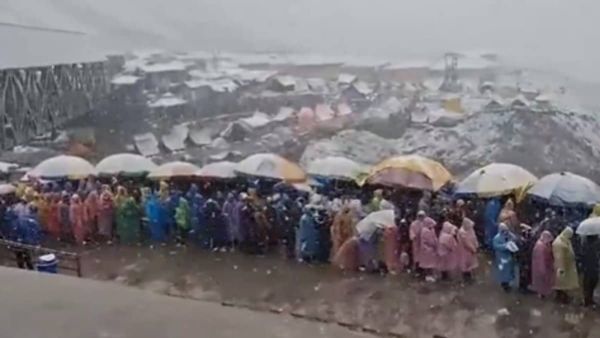
Undettered, Resolute: Devotees Keep Queeing Up At Kedarnath Dham Despite Heavy Snowfall | Watch
-
Iran Winger Gholizadeh Out Of World Cup After Injury In Polish League

-
Lakshya Sen Opens Up After Missing India’s Semi-Final Match In Thomas Cup 2026: 'It Was Very Hard For Me'

-
Injured Kylian Mbappe Reaffirms Dedication To Rehab After Out-Of-Town Trip Before El Clásico