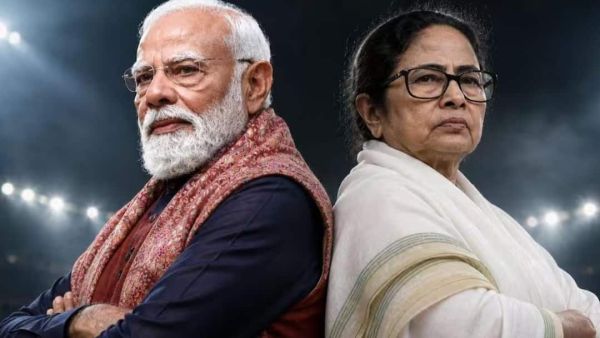
The West Bengal Assembly elections this time witnessed a dramatic shift in political dynamics. The long-standing support base of the Trinamool Congress (TMC), often described as the ‘two M factors’ of women and Muslim voters, appeared to weaken, directly impacting the election outcome.
BJP’s Focus On Women Voters
The BJP strongly campaigned around the issue of the Women’s Reservation Bill, especially after it failed to pass, turning it into a major poll plank. The party also made several key promises targeting women voters. The impact of this strategy was clearly visible in the results. Incidents like the rape and murder at RG Kar Medical College further raised serious concerns about women’s safety, which seemed to erode TMC’s support among female voters.
Fragmentation In Muslim Votes
The second ‘M,' Muslim voters, also appeared less consolidated than before. Traditionally a crucial support base for Mamata Banerjee, the community did not seem to vote as cohesively this time. Within TMC, there has been discussion that issues such as SIR, Waqf, and the exclusion of certain Muslim communities from the OBC list were not effectively addressed by the leadership. This may have contributed to the weakening of the party’s hold over Muslim voters.
The BJP also secured six seats in Malda. Similar shifts were observed in districts like North 24 Parganas, South 24 Parganas, and Paschim Bardhaman, where Muslim votes appeared divided. Experts believe that these two major factors—the shift among women voters and fragmentation of Muslim votes—worked against the TMC.
On the other hand, Hindu voters showed stronger consolidation in favour of the BJP compared to previous elections, which was reflected in the results. Notably, in Muslim-majority districts like Murshidabad—considered a TMC stronghold—the BJP managed to win eight seats.
BJP Gains In Key Seats
In the Muslim-majority Berhampore seat, BJP candidate Subrata Maitra emerged victorious. The party also won seats such as Khargram, Kandi, Nabagram, Jangipur, Murshidabad, Beldanga, and Burwan. In Malda’s English Bazar seat, BJP’s Amlan Bhaduri registered a massive win by 93,784 votes, while Joel Murmu won from Habibpur.
The BJP’s victory was also driven by strong involvement from its central leadership. Prime Minister Narendra Modi campaigned extensively across West Bengal, while Union Home Minister Amit Shah spent nearly 10 days in the state. Leaders like Bhupender Yadav and Biplab Kumar Deb also actively camped in the state. The party’s strategy was not limited to the Assembly level but extended down to booth-level mobilisation, which clearly reflected in the final results.
-
Leo Tarot Horoscope Today, May 13, 2026: Stay patient amid confusion, focus on finances and health

-
World’s biggest firms gain USD 4.18tn during Iran conflict

-
Import duty on gold, silver raised to 15 pc

-
Maha: Bulldozer action on AIMIM corporator linked to TCS accused

-
Want To Live Behind Bars? Hyderabad Prison Launches ‘Feel The Jail’ Experience For Rs 2,000